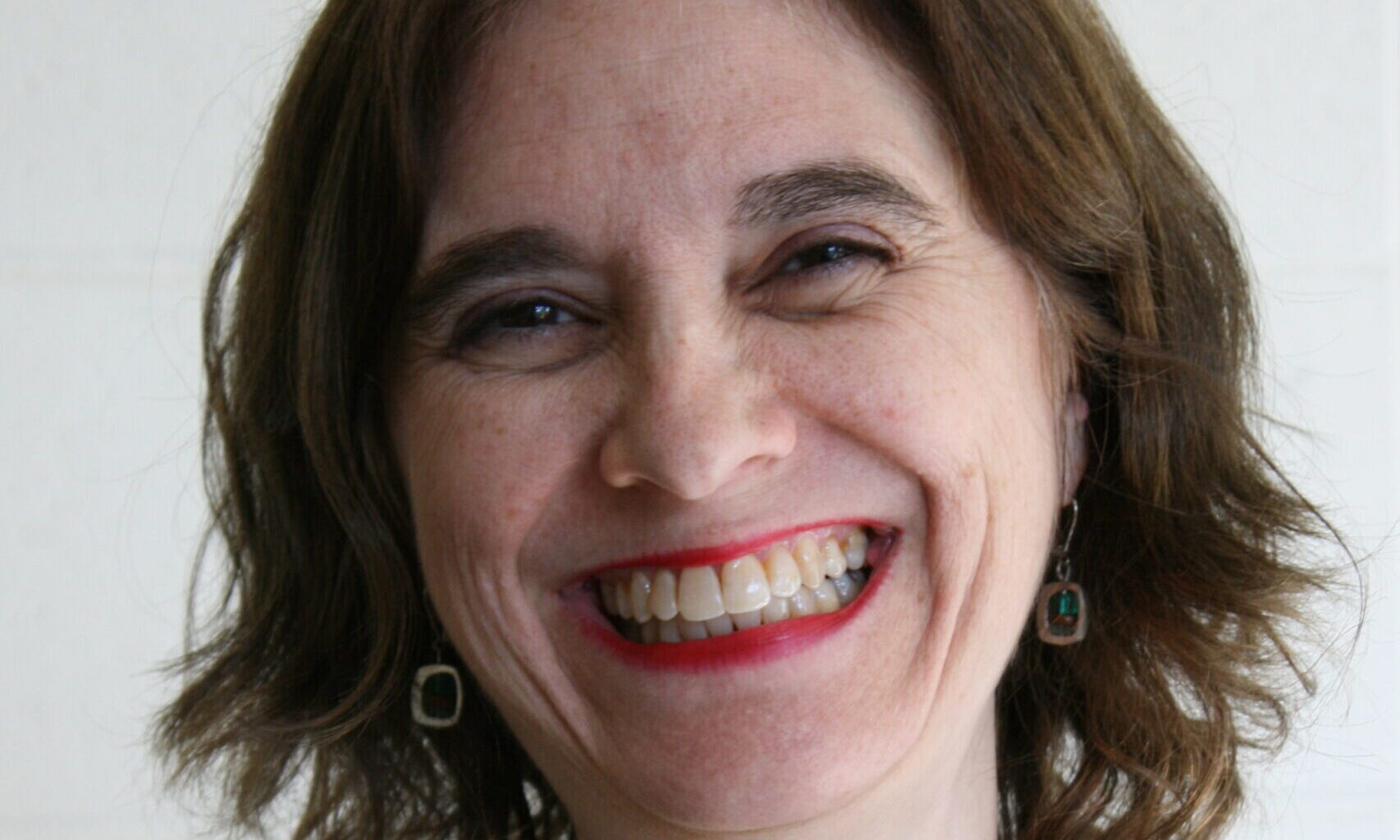
Cindy Schwartz started her life in dance when she was barely out of first grade, when her parents arranged for her to perform for patients at the Donald Berman Maimonides long-term care hospital in Montreal. At the time, they felt her passion for dancing should stay just a hobby. But Schwartz believes her late parents would be very proud that she’s transformed her passion into a decades-long project championing diversity in the arts, that culminated in her being named to the Order of Canada on Dec. 31, 2025.
Schwartz founded “Les Muses”, Canada’s first full-time performing arts training program for adults with disabilities, over three decades ago in Montreal. Since then she landed her students roles in movies, television and onstage: one of her students even won the Canadian Screen Award for best actress in 2014.
The Order of Canada recognition came, coincidentally, just days before Schwartz officially retired on Jan. 5, 2026, at the age of 65. She joins The CJN’s North Star host Ellin Bessner to reflect on her achievements and explain how the Canadian entertainment business still has a long way to go to create space for actors, dancers and singers who live with disabilities—which includes increased government funding.
Related links
Learn more about the latest 2025 Order of Canada winners of Jewish faith, in The CJN.Read more about Les Muses, the training school founded in Montreal by Cindy Schwartz.When autistic artist Adam Wolfond’s poetry, and his mother’s creations, were on display at the Koffler Centre for the Arts in 2025, in The CJN.
Credits
Host and writer: Ellin Bessner [email protected]Production team: Zachary Kauffman (senior producer), Michael Fraiman (executive producer)Music: Bret Higgins
Support our show
Transcript
Gabrielle Marion-Rivard
My gosh, I’m so very happy.
Ellin Bessner
That’s what it sounded like in 2014, when a young Montrealer, Gabrielle Marion-Rivard, delivered her acceptance speech for winning the Best Actress that year at the Canadian Screen Awards. The film tells the story of a young woman who lives with a genetic condition called Williams Syndrome and sings in a local choir of developmentally disabled adults.
When Cindy Schwartz watched the star-studded award ceremony, she was certainly kvelling, fiercely proud of her former students’ success up there on the stage with the other more famous winners that night, including Rick Mercer and the casts of Degrassi and Orphan Black.
Cindy Schwartz founded Les Muses over 25 years ago. It’s Canada’s first and only professional performing arts school for adults who live with disabilities. And today, her school still helps these students find casting agents and auditions. Although the founder admits all these years later, there is still a long way to go.
For her decades devoted to this work, the Governor General awarded Schwartz the Order of Canada on December 31st, New Year’s Eve. She’s one of 80 Canadians who received the including some prominent Jewish leaders, whose names you might have seen in our news coverage, such as Supreme Court Justices Rosalia Abella and Michael Moldaver, and Toronto personal injury lawyer Alf Kwinter.
Unlike Schwartz’s parents, who were in the medical field, she wanted to be a dancer ever since she could remember. She began her studies at Montreal’s Les Grands Ballets Canadien school, then turned to other forms of dance, until an injury sidelined her, but paved the way for teaching and launching her academy, Les Muses. It’s still operating today in Montreal, continuing her struggle to diversify the entertainment world and make room on screen, on the stage, and in the dressing rooms for artists who live with disabilities.
Cindy Schwartz
There needs to be a lot more done in that respect. And that’s important because that’s where we’re going to have more people being represented who are a part of our society. Apparently 5% of Canadians live with a disability, but we’re not seeing that on our screens.
Ellin Bessner
I’m Ellin Besner, and this is what Jewish Canada sounds like for Friday, January 9th, 2026. Welcome to Northstar, The Canadian Jewish News’s flagship podcast, made possible thanks to the Ira Gluskin and Maxine Granovsky Gluskin Charitable Foundation.
Cindy Schwartz is already wearing her New Order of Canada pin in the shape of a snowflake, although the actual formal ceremony at Rideau Hall with all the pomp and circumstance hasn’t been scheduled yet. The Governor General’s citation says, “through her work at Les Meuses, which is described as the first of its kind in Canada, Schwartz has fostered representation, empowered artists, and expanded opportunities for meaningful participation in cultural life.”
Statistics Canada says actually 27% of Canadians live with a disability. That’s 8 million people, or more than one in four, and the numbers are growing.
Cindy Schwartz joins us from Montreal to talk about her hopes for her school in an environment where keeping it going and securing funding remains a challenge.
Ellin Bessner
And we were thrilled to have you. Mazel Tov, congratulations and welcome to The CJN.
Cindy Schwartz
Thank you very much, Ellin.
Ellin Bessner
people who’ve had the Order of Canada. You’ve known, but you’ve had to keep it secret, right? Tell us how this whole timeline has been.
Cindy Schwartz
Well, I got a call sometime lasy October, I guess it was, from the Governor General’s office, from somebody there, Roger, who I got like all of a sudden an email that said it was confidential and could I please call this number? which I did, I waited the whole day because my staff and I are all in an office together. So I waited till they left. Then I gave him a call and I got the wonderful news that, yes, I have been accepted to the Governor General Award. And I could only tell very close family and friends, but that it had to be kept secret until the 31st of December.
Ellin Bessner
But did you think this was a real thing or was it a fake or how did you like, did you, someone told you they had nominated you already?
Cindy Schwartz
No, Well, when I first saw the email part of me, especially since I had been hacked not long ago, unfortunately, I sort of thought, okay, is this legitimate? Should I look this up? Which I did. And his name did appear on the website, which was good.
Ellin Bessner
What has the reaction been when you found this out? How did you feel?
Cindy Schwartz
Oh my God, how did I feel? Touched, honoured, amazed. It’s been, you know, half my lifetime building this organization, I realize. It’s been quite an adventure. So it feels good.
Ellin Bessner
Let’s tell our listeners a bit about the organization you built, for those who aren’t familiar with it. You started it in 1997. So that’s quarter century ago, more, almost 30 years ago.
Cindy Schwartz
Even more than that, actually. I founded it as an official organization in 1997, but you don’t start an organization like that. You start an organization with an idea, which was adapting dance to people with different kinds of disabilities. wanting them to be able to partake in that joy as a recreational activity. And little by little wanted other artists to work with me as well to do the same. And then wanted to go even further and actually wanted it to become a professional program, but started by a community organization that I finally managed somehow to get paperwork together to create something called the Muses in 1997.
Ellin Bessner
Where did you get the idea from? Why did you want to do this?
Cindy Schwartz
Well, first of all, I’ve been dancing for all my whole life, basically. In the classes I was either taking or teaching at that point, whether they be after high school programs or teaching dance to groups that just wanted dance, I found it very sad that there were not people with disabilities in any of those classes ever, not to mention they’re very rarely accessible. And I wanted to bring that joy to other people who don’t have that opportunity. That’s how the small idea started. And so I threw myself into it part-time at first in 1991 and found a way to reach out to… at the beginning, one of the places was the Miriam Home for the recreational program that was years ago now.
Ellin Bessner
In Montreal, tell everybody what that is in case they don’t know.
Cindy Schwartz
The Miriam Home is a rehabilitation center for people with mainly intellectual disabilities of all ages. And at the time, Jim Owens, who was there, I found I was ready to accept the idea and put together groups of adults and even some children that I taught dance to and even in some of the residential areas that they had.
Ellin Bessner
Well known in the Jewish community too, the Miriam home.
Cindy Schwartz
Still there. And we still, we have a couple of clients come once in a while from them as well.
Ellin Bessner
So you started at, is there anyone in your friends or family or where you were at school that influenced you to be more sensitive towards this need?
Cindy Schwartz
Okay, well I guess it starts with my parents. Parents who were a doctor and a nurse and who always told me that it was important to dance was a gift you should give other people to. And so my father had worked at Maimonides at some point and they had me, I was doing ballet at that point at Les Grands Ballets. And they wanted me to dance for the residents at Maimonides. And so that maybe started the gift, but then it stopped after a while. Many things happened in our lives. I continued to dance, though, and to go on to do other studies, because a career in dance is not always the first thing that’s going to make you the most money, right? And decided in 1991 that I wanted to teach, just in general, teach dance more. And as a result, also make it more available to more people, despite what their situation was going to be. And seeing the talent later on, also decided that in 2001, we would establish the professional program, which is what’s running now.
Ellin Bessner
This is for after high school, maybe even after a couple years of university, they have to be 21. And it’s like a full-time art school, five years. It’s like, it’s a serious thing.
Cindy Schwartz
Oh no, this is the real deal. And Yeah, I mean, it depends on the person’s situation. We take people at all levels. So people who have intellectual disabilities, who don’t necessarily get the opportunity, certainly not here in Quebec to go to university, they have to be 21 years and older, basically, and they have to audition. They still have to have, I believe everyone has talent, regardless of disability or not, and if they have, we have talent in different things, though. Not everybody can be an artist. And I’ve actually found out that there are programs in the west of Canada that at university level will take adults with intellectual disabilities in any program. But in my case, it’s the performing arts, and they have to audition, and if they succeed our audition, then we keep them for the full-time program.
Ellin Bessner
I know that there are programs, classes, let’s say, Le Grands Ballets, others that give classes in dance.
Cindy Schwartz
For art therapy.
Ellin Bessner
Or for actual, for disabled people, but it isn’t a whole school. Right, or just as classes, but it’s not a whole program like your…
Cindy Schwartz
It’s not the same goal.
Ellin Bessner
No, and yours is to get them into the careers, into representation on screen, on stage, on TV, in the movies. You mentioned Vancouver, but is there anything like this anywhere? in Canada, like your school?
Cindy Schwartz
Not that I’ve done extensive research, but in the networking that I have done, I don’t know anybody who has a full-time program the way we do. But there have been definitely programs that started perhaps as companies who are willing to integrate people with different disabilities and who now have started sort of academies part-time. Yes, so two in BC and one in Calgary, if my memory is correct.
Ellin Bessner
Back to that, you hope that they will find careers. Can I ask you, when you first started, compared to what you’re seeing now, how has the career for somebody who who’s neurodiverse or disabled change in terms of where we see them on screen now?
Cindy Schwartz
Oh, there’s a lot more to do. I mean, we have definitely covered some ground and there are now some roles out there, at least for people who are differently abled and can play the role. But there’s still actors and dancers out there playing those roles who don’t have a disability also, and that’s very sad. And also we’re still trying to get people to see that, just because you have a different ability doesn’t mean you can’t just audition for the role of the sister who doesn’t necessarily have a disability, but they could play that role. So I would say progress has been made, but it’s slow.
Ellin Bessner
Do we know any of your famous grads? Can you tell us some of your success points?
Cindy Schwartz
So, the first one that you would have heard of in 2013, which really did give, I think, the area a boost, was the film Gabrielle, which was mainly in French. It did come out with English subtitles at one point. It won many awards, and actually Gabrielle won that year, in 2013 or 14, the Best Actress award at the Canadian Screen Awards. Her name is Gabrielle Marion- Rivard. Genevieve Morin-Dupont was our first actress, actually, and who started in 2001, and she had done many roles after graduation and even before that, mainly in plays.
Ellin Bessner
And these are all movies or these are small screen TV series?
Cindy Schwartz
They’re usually small screen. A lot of it, much more of it is live theatre or dance. So there are dance companies like Maï(g)wenn et les Orteils, Les Productions Des Pieds des Mains, The theatre company, Joe, Jack, and John, the dance company, which actually combines people with all kinds of different abilities mixed. It’s always mixed with people who don’t necessarily have a disability who are dancers like Corpuscule Dance. And there are more and more companies or independent dancers starting to work with our clientele. But there is so much more to do, and we actually try to reach, because we integrate our students as well. We don’t just train them and then leave them, to find their own jobs. We’ve had a lot of trouble finding agents who will work for them, so we do that part as well. And we still have a lot of ways to go. We’re working on it. We really are working on it. But I think the film industry needs to open up more. But I think the government also has to fund a bit more because sometimes there is a bit of accommodation needed. It doesn’t necessarily need to be much, but that means funding always.
Ellin Bessner
So accommodation for things like… accessible dressing rooms or…
Cindy Schwartz
It could be accessible dressing rooms. It could be, I mean, it depends which kind of disability we’re talking about. It could be somebody who needs attending for a washroom or other needs. Sometimes it’s just… somebody who can make the link. We often have somebody who can accompany our actors, who can sort of be the bridge between what the director wants and how to put it to our person, or so that the director feels comfortable saying what they want to say, or the other actors around. Yeah, so I mean, it’s not much, but that sometimes takes a little bit of funding. And right now there’s a lot of funding that was developed by the Canada Council for the Arts, the (inaudible) Quebec, and the Montreal Council for the Arts to do that, but not in film and media yet. There needs to be a lot more done in that respect. And that’s important because that’s where we’re going to have more people being represented who are a part of our society. Apparently 5% of Canadians live with a disability, but we’re not seeing that on our screens.
Ellin Bessner
I mean, when I was growing up, and Marlee Matlin, you remember that, the deaf actress, actor, that was like so huge when she was in the movies and it opened up a whole world for other people.
But I want to bring you back to something you said earlier about your folks made you go or encouraged you to go dance at Maimonides when you were, I don’t know, how old were you? Little?
Cindy Schwartz
Oh, I was very little, like 8.
Ellin Bessner
Or 8, not even. Our listeners may not know, but it’s the Jewish nursing long-term care home in Montreal, very, very prominent institution, part of the Quebec public health system. Was your dad a, what kind of, you said he was a physician and your mom was a nurse. What kind of physician was he?
Cindy Schwartz
was a neurologist working, well, obviously at the Jewish General and also at times in Maimonides. My mother at that point had three kids, so in that generation was at home. But the value of, bringing the arts to people and the joy it brings them was always very important to them.
Ellin Bessner
we’re The Canadian Jewish News. I wondered how your Judaism being brought up as a Jewish person is part of the work you’ve done, or do you see it that way at all?
Cindy Schwartz
Well, I think, I don’t know how to put this exactly. Certainly being brought up Jewish has sensitized me to inequality in the world, sadly to say, but I think that’s something that’s happened. And wanting to make things more equal for everybody is a value, I think, that we have in Judaism and that I want to have always believed in for everybody, just everybody.
Ellin Bessner
When you think about Jewish and dance. I always think of Israel about BatSheva Dance Company, a big thing in Israel. I always thought about Israeli dancing because we all did that. Did you know Israeli dancing?
Cindy Schwartz
Of course. On the mountain! That was something we really loved doing that our mother had found about was Israeli dancing on the mountain under the stars in the summer. I haven’t seen that in a long time, but it was a lot of fun at the time. Gee, I wonder if USY, which was part of the Beth El Synagogue when I was in high school and my last year, I think we did some Jewish dancing as well. It was, I mean, dance is dance. All dance is beautiful.
Ellin Bessner
I looked up, you know, to research and it seems like there’s been a big fund, there was a big funding drop from ‘’23 to 24, 2023 to 24 in terms of the programming and expenses. I’m wondering what does your Les muses need or what has happened in terms of?
Cindy Schwartz
Funding. So much more funding. I mean, to run a school full-time five days a week, as well as be responsible for the integration of our graduates into the media, you need more personnel. You need more personnel also to accommodate. The federal government has stepped up in Heritage Canada to look out for organizations that want to be more inclusive. and work with populations of people who have disabilities, amongst other groups who are minority groups. But the Quebec government has not yet, and certainly funding for training in the arts is a struggle. And I hate to say it, but funding in the arts for people with disabilities is a bigger struggle. We seem to fall low on the ladder of funds that people want to give to most of the time. So yes, we tried to get bigger a bit too fast. We’ve now cut back a little bit, sadly, and we are hoping to get bigger again. We need to, we are sort of share space with many different organizations at the moment, and we really need our own space as well. We’re at that point now. It’s over 25 years old, the organization, and we need to find funding for that. So funding is always an issue, and often foundations want to fund for like one or three years and then that’s it. And that’s not the way you keep going in this kind of organization.
Ellin Bessner
I heard that this might be your Order of Canada coming as you’re thinking of stepping away from the group that you founded and retiring?
Cindy Schwartz
Yes. I’m not sure it’s stepping away from the group. The group I know will continue and that’s what I hope they will do. I’m leaving it in the hands of people to continue that journey, whichever way it goes. I plan to continue this fight as an independent consultant, but I am older. It has been half my life. It’s something to create an organization from scratch that does not exist anywhere else, that does not fit into your usual funding criteria. So I just, it’s a question of energy after a while, more than anything, personal energy. But I mean, long live Les Muses and certainly independently, anybody who wants information on what I’ve done and how it might help them, I would be glad to cooperate with.
Ellin Bessner
I wonder how your parents would think about this Order of Canada. Did they want you to be a dancer? Because this is like, how are you going to make money as a Jewish girl? Is this a thing?
Cindy Schwartz
Absolutely they did not. It was not. That was something you did on the side. And that’s pretty much what I did in many ways. I have a master’s in education as well. I worked as a guidance counselor part-time while I was starting to teach dance part-time.
Ellin Bessner
Right. So now, what does your family now think that, this is big recognition for something that was kind of seen as not done for just done, go to law school, go to,
Cindy Schwartz
Absolutely.
They’re very proud of me. I mean, I think all in all, my parents would be very proud as well that of the accomplishment and of what the Muses is.
Ellin Bessner
It’s an honour to have your name on this list. I mean, we need some good news. Our community needs some good news at this time in our history in Canada. The whole country is going to hear about it so well done.
Cindy Schwartz
Thank you so much.
Ellin Bessner
And that’s what Jewish Canada sounded like for this episode of North Star, produced by Zachary Judah Kauffman. And Michael Fraiman is our executive producer with Alicia Richler as editorial director. Check out the links in our show notes. You can find out more about Les Muses and you can read Jonathan Rothman’s article on Cindy Schwartz and other Jewish Order of Canada winners. Thanks for listening.