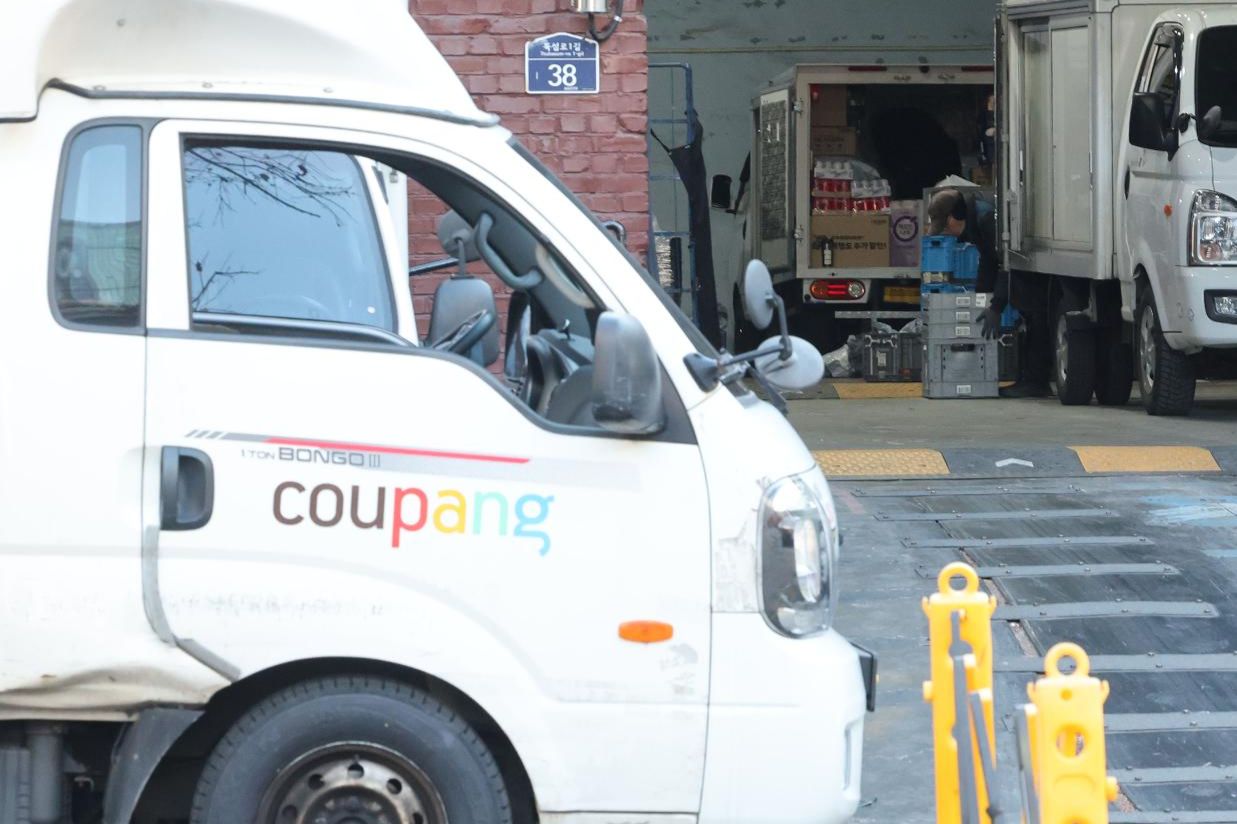
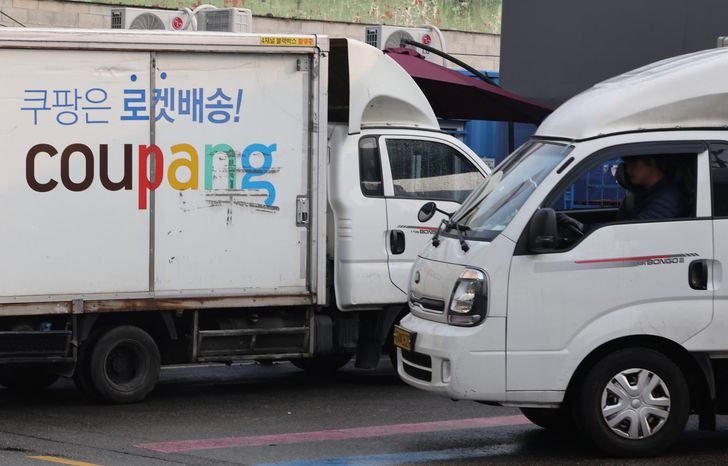
A Coupang logistics center in Seoul, Dec. 29, 2025. Yonhap
Lee Won-son, a woman in her 40s and a long-time Coupang customer, said she could not sleep after hearing about a friend who was almost duped in what appeared to be a voice-phishing attempt linked to the e-commerce giant.
“I keep replaying the story in my head,” she said.
Lee she wondered what she would have done if she had been the one to pick up the phone.
“The details were unsettling. It sounded so real,” Lee said. “They knew her name, her phone number, even mentioned her bank account. I suddenly realized how easily it could have been me.”
She said her friend, also a Coupang customer, recently received a call from a man claiming to be a credit card delivery serviceman.
He told the friend that he had a “Coupang account-related credit card” issued in her name and needed to deliver it to her home.
When the friend said she had not applied for such a card, the caller said that her identity may have been stolen through Coupang, instructing her to call a customer service number beginning with 1544.
When she dialed the number, a person claiming to be a customer service worker cited the last digits of her bank account and said the newly issued card had been set up to withdraw funds directly from that account.
Sensing something was wrong, the friend hung up, later describing the call as a phishing attempt.
“What frightened me most was that the delivery man knew my full name and the call came from a mobile number starting with 010. It didn’t feel suspicious at first, since I had received many phone calls from deliverymen from the post office and numerous logistics companies,” the woman said on condition of anonymity. “Looking back, it was good that I felt something was off right that moment and hung up. Otherwise I would have ended up as one of the victims.”
The experience is one shared among a growing number of Coupang users, as criminals exploit anxiety over personal data leaks at the country’s most widely used e-commerce platform.
Financial authorities say these cases are becoming more common.
According to the Financial Supervisory Service (FSS) and police, many of the suspected Coupang-related voice phishing attempts involve fake credit card issuance schemes and requests to verify personal data through fake public agencies.
Some involved messages urging victims to click malicious links under the guise of compensation or delivery delays.
Other scams involve delayed or missing deliveries to lure users to click links to websites designed to steal money or personal information.
The FSS said phishing rings are reusing personal data obtained in past breaches to craft convincing Coupang-related scenarios.
“No confirmed financial losses have been reported among Coupang-related phishing cases, but closer monitoring is needed,” the FSS said.