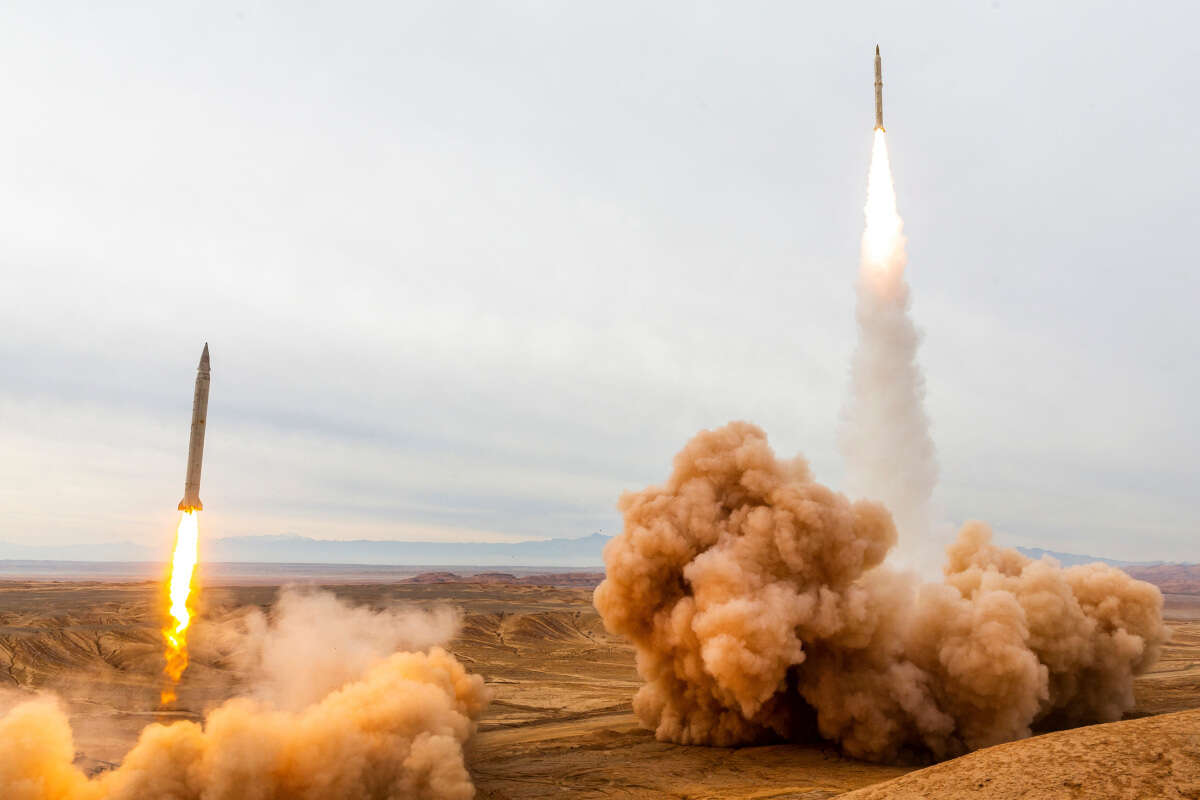
Iranian affairs researcher Dr. Raz Zimmt told Persian radio network Radio Farda on Monday that he does not foresee an imminent Israeli strike against Iran. “Looking at the two primary potential targets for Israeli attack – the nuclear issue and ballistic missiles,” he stated in the interview.
“Regarding the nuclear file, nothing significant has developed. Construction continues at several Iranian installations, but nothing connected to uranium enrichment or weapons manufacturing – at least from what I can determine,” Zimmt explained. “On the ballistic missile front, yes, certain improvements have materialized since June, but the situation hasn’t reached the threshold where Israel would opt to strike. My assessment suggests Iran has likely recovered to somewhere near its pre-war missile inventory – possibly even below that figure.”
For years, Islamic Republic Supreme Leader Ali Khamenei has prevented uranium enrichment to weapons-grade 90% purity and blocked development of miniaturized nuclear warheads capable of ballistic missile delivery.
A report published two weeks ago by Italian research institute ISPI, drawing on Tehran sources, revealed that Khamenei authorized miniaturized nuclear warhead development for ballistic missiles last October – while continuing to withhold approval for 90% enrichment. Meanwhile, intelligence suggests a clandestine enrichment program operates at an undeclared location, beyond International Atomic Energy Agency (IAEA) reporting. Since Operation Rising Lion in June, the IAEA has faced severely restricted access to nuclear facilities.
Zimmt addressed the ballistic missile dimension as well. “This isn’t purely a numbers game – missile characteristics matter enormously. How vulnerable are they to interception? Do they use solid fuel? What precision can they achieve? Production volume tells only part of the story. But my fundamental point stands – I don’t perceive this as demanding immediate action. What troubles me more is that Iran’s deteriorating domestic conditions heighten the danger of catastrophic misjudgment.”
The senior researcher offered this analysis notwithstanding last week’s meeting between Prime Minister Netanyahu and President Trump, where they discussed Iran extensively. “The topic definitely arose, but establishing red lines was the critical question – defining precisely what conditions would trigger an Israeli or American military response if Iran persists in capability restoration. We haven’t arrived at a juncture where Israel considers striking now an imperative.”
“Obviously there’s the argument for capitalizing on the current moment, given Iran’s compromised air defense posture. But even there, I don’t believe the clock demands action tomorrow. Iran may need additional time before presenting a threat magnitude Israel would classify as strategic,” he concluded.
“What occurred in Venezuela, President Trump’s readiness to deploy force when required to generate meaningful change, and Trump’s rhetoric undoubtedly stimulate Israeli hopes that something comparable might unfold in Iran and trigger regime transformation.”
External assistance: Who could accelerate Iran’s nuclear timeline?
While the nuclear threat may not materialize immediately, Tehran remains far from passive, and Khamenei’s authorization for nuclear warhead development signals they’re advancing toward nuclear power status.
Compact warhead engineering represents a pivotal weaponization phase – converting nuclear material into deployable weapons. This constitutes an extraordinarily demanding challenge mastered by only a handful of nations worldwide, particularly daunting for a state that recently lost its foremost nuclear scientists. Pakistan’s experience demonstrates that even absent comprehensive nuclear testing, reaching operational capability required roughly 15 years.
Tehran presumably relies on foreign support to dramatically compress this timeline and offset expertise eliminated through scientist assassinations. Which nation might provide such aid?
China
China leads global oil consumption. The Strait of Hormuz channels approximately 45% of Chinese oil imports, originating predominantly from Saudi Arabia, Iraq, the United Arab Emirates, and Iran. Beijing worries that nuclear-armed Iran would destabilize the region and compromise the vital energy pipeline the Persian Gulf provides. More broadly, nuclear confrontation or warfare involving Iran poses substantial dangers to worldwide energy markets, disruptions that would simultaneously undermine Chinese economic expansion and domestic financial equilibrium.
Facilitating Iran’s atomic weapon acquisition, violating the Nuclear Non-Proliferation Treaty, threatens Beijing’s relationships with Gulf monarchies headed by Saudi Arabia, Washington, and European Union members – China’s two dominant commercial partners. Furthermore, impoverished and subordinate Iran in its current condition generates considerable Chinese revenue streams.
Fundamentally – Beijing confronts enormous potential losses from Iranian nuclearization.
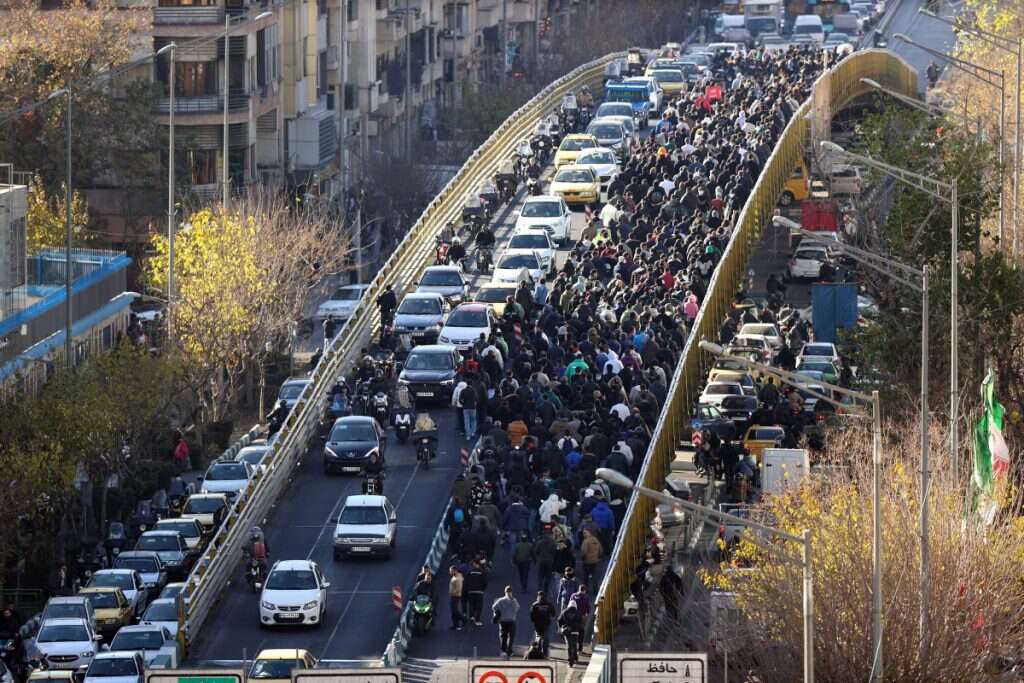 Iranian shopkeepers and traders protest against the economic conditions in Tehran, Iran, on December 29, 2025 (Photo: EPA/STRINGER)
Russia
Moscow-Tehran connections have intensified recently – encompassing a sweeping strategic partnership accord reinforcing military, economic, and energy collaboration spanning two decades forward. Nevertheless, President Vladimir Putin has long regarded nuclear-capable Iran as jeopardizing regional equilibrium, particularly in strategic zones throughout Central Asia and the Caspian basin where Russian interests concentrate, potentially eroding Moscow’s leverage across territories once comprising the Soviet Union.
These anxieties explain Moscow’s policy shift immediately following disclosure of Iran’s clandestine nuclear program in 2002. By 2005, Russia had executed multiple accords with Tehran mandating repatriation of expended nuclear fuel from Bushehr reactor facilities, while broadly constraining collaborative activities with Iran. Ultimately, Moscow rebuffed every Tehran initiative seeking authorization for domestic Russian armament production. Reports following Operation Rising Lion indicated the Kremlin even pressured Tehran toward IAEA compliance.
Moscow comprehends that facilitating Islamic Republic nuclear acquisition would substantially impair Western diplomatic relationships, and paralleling China’s position, the Kremlin derives advantage from Iran’s present circumstances.
Pakistan navigates intricate international dynamics. While India constitutes its primary security challenge, Islamabad concurrently sustains robust security and economic connections with Washington and American-aligned nations, principally Saudi Arabia, representing pivotal elements in its regional defense architecture. Following the American-brokered Pakistan-India ceasefire, Islamabad-Washington relations have thawed considerably, and Islamabad’s October nuclear accord with Riyadh, Tehran’s foremost Muslim adversary, signals the nation’s trajectory toward Iranian disengagement.
Additionally, Pakistan, enduring decades of international weapons-related censure, possesses compelling incentives to avoid nuclear technology transfers to Iran, recognizing such actions would compromise diplomatic standing and invite severe sanctions.
North Korea
While Chinese, Russian, and Pakistani participation appears feasible yet improbable, Tehran’s focus likely concentrates on Pyongyang.
Iranian-North Korean security collaboration stretches across decades, centered predominantly on ballistic missile technologies. Western intelligence assessments confirm Pyongyang previously furnished Tehran with missile capabilities constituting foundational elements of Iran’s current arsenal. This partnership has encompassed military delegations and technical expertise exchanges between the nations.
Distinguishing itself from the previous three candidates, Supreme Leader Kim Jong Un’s authoritarian state maintains overt Western antagonism and conducts virtually zero commercial activity with Western economies. Both regimes characterize American power as representing existential danger, generating mutual incentives for collaboration.
Nevertheless, nuclear warhead assembly constitutes sophisticated operations even possessing requisite expertise. Furthermore, Kim presumably resists knowledge transfers revealing substantial classified information regarding North Korean capabilities, given that warhead engineering demands sustained engineer integration over extended periods, collaborative testing protocols, hands-on instruction, specialized materials, and additional requirements – comprehensive pathways generating detectable intelligence signatures. Moreover, information relocated to Iranian territory multiplies vulnerability to adversarial compromise from Pyongyang’s perspective. Mossad’s documented infiltration depth within Iran doubtless undermined North Korean assurance regarding Tehran’s information security capacity.
Fundamentally – North Korean participation in nuclear warhead engineering remains presently speculative. Israeli discourse continues debating whether Iran approaches “bomb proximity,” while Tehran concentrates on fundamentally different considerations: advancing nuclear weaponization toward accomplished reality – before detection occurs.