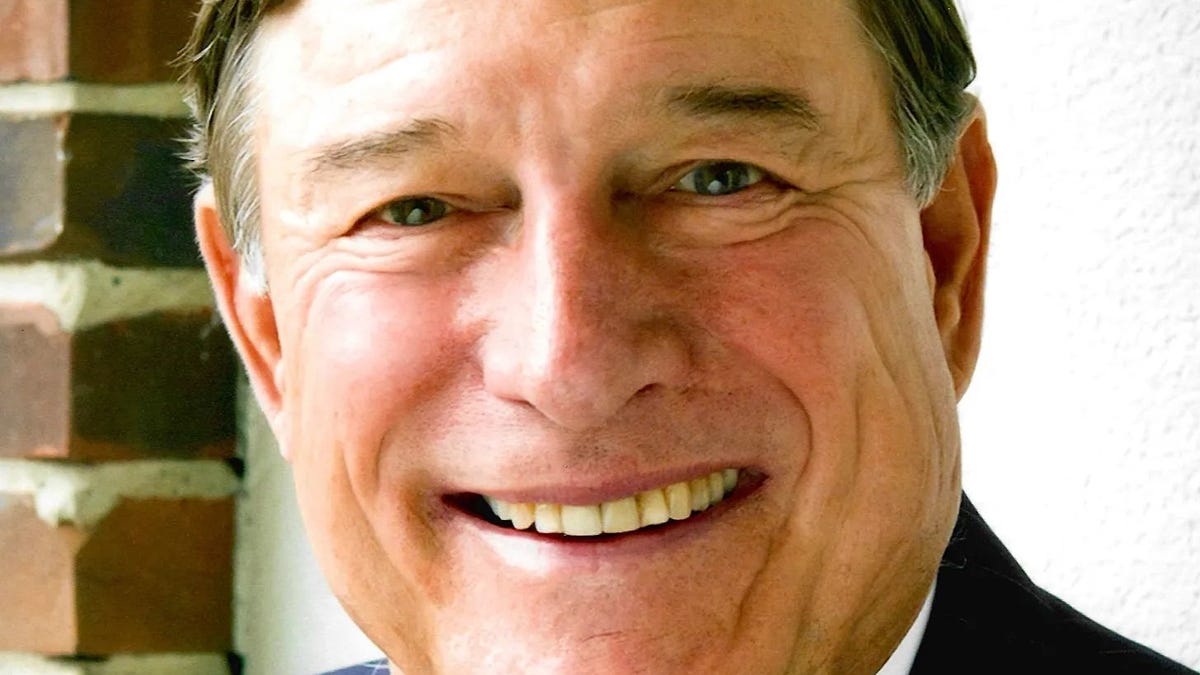
Keel Hunt looks back on the moments that defined the life and character of Lew Conner, a prominent Nashville attorney, philanthropist, and Vanderbilt Athletics and Tennessee Golf Hall of Famer.
The phone calls started coming before noon on Sunday, friends reporting very sad personal news: Our friend Lew Conner had passed, after much personal trial, at age 87.
Lew was a dear friend of many years, through many of life’s highs and lows, his and mine. Very early, I began to think of this big man as in fact larger than life, and not only because of his 6-foot, four-inch frame.
A young lawyer enters Tennessee politics
He was famously a golfer, yes, and an all-round avid sportsman. He had been on the VU golf team as an undergrad, and in time, he became a leader in the organization of professional golf across Tennessee. See Mike Organ’s memory of Lew’s golfing career here.
Soon after Lew’s back trouble began to confine him in his later years, I asked him what was the matter. His straightforward answer was: “Fifty years of bad golf swings, my boy!”
I met Lew in the summer of 1977, when he was already an important law partner of Lamar Alexander and other young attorneys in Nashville. Lew and Lamar had met as undergrads at Vanderbilt in the 1950s. Lamar was now organizing his second try for Governor, that statewide election he won in 1978. Lew was already a brilliant lawyer, a trusted confidant and adviser, and a man with roughly a million friends, plus or minus.
How Chattanooga shaped him
Later on, I would learn, from Lew, how his own childhood in Chattanooga began to shape him — his time at The McCallie School up on Missionary Ridge; how his father Lewis Conner Sr. had been a law partner of Estes Kefauver back in the day. (Lew Jr. himself would become Senator Kefauver’s young driver in due course).
Over his long life, Lew was garrulous and thoughtful and considerate and fair and kind — all that. I rarely saw him have a halfway opinion about the most important things: friendships, families, and the best side of human nature. Marsha, who came to know Ashley and Lew as political friends in the early years, would often say, “Lew will hug your earring off!”
He was a judge, yes, and a lawyer and mediator and counselor. He enjoyed the esteem of other lawyers in his day.
For Lew, it was loyalty over ambition
Lew came very close to running for Governor of Tennessee himself in 1986, but the importance of friendships and loyalties got the better of him. Alexander’s two terms in the Governor’s office were ending, and Lew thought he might jump into the mix for the next round.
On the Republican side, former Gov. Winfield Dunn was envisioning a second term for himself. He and Lew came to a gentleman’s agreement very early.
“I’d like to run,” Lew told Winfield in the fall of 1985
“I would, too,” Dunn replied.
Lew made this request: “I’d like you to let me know what you want to do by the end of the year.” Winfield agreed and kept his word. By the time Dunn announced his candidacy, Lew had quietly bowed out.
“Lew very much wanted to do it,” Lamar recalled over the weekend. “I think he would have made a good race and probably would have made a fine governor. But Winfield kept his word, and Lew kept his word, too.”
This episode, among other things in Lew’s life, positioned him as a trusted, reliable friend of many Tennesseans. His large personality kept him engaged with many of them over the long years that followed. (The first call on Sunday came from our mutual friend, the Democrat Hal Hardin).
He witnessed Tennessee history up close
The rest of the story is that Dunn lost that 1986 general election to the Democrat Ned McWherter, who went on to serve two terms, and it was the end of Dunn’s political career. In Lew’s home in Green Hills, several impressive photo walls capture many memories of his life and many friendships; they also tell of much Tennessee history over the last century. On a recent visit, Lew pointed out for his visitors one particular framed portrait of Governor McWherter, with a special inscription to Lew.
But today, there is much more to know and tell than golf, and sports, and politics at a time like this. Lew was a judge of the Tennessee Court of Appeals, and also a highly skilled attorney and trusted mediator. As a lawyer for General Motors in the early 1980s, he helped to broker the complicated final deal that brought GM’s Saturn plant to Spring Hill. A final private planning session—on the afternoon before the big announcement that changed everything—was held in Lew’s Sugartree home. This is part of the story of how Tennessee became the newest automotive manufacturing powerhouse.
Friendships that crossed party lines
In our current day, so much of politics and government is locked into battling extremist camps that become mean-spirited. Lew and many of his own contemporaries were not like that. They were competitive traditional party regulars, yes, but more willing to “cross the aisle” for good solutions.
My friend Jim Free, in our phone discussion on Monday, described Lew’s robust, positive “exaggerated personality” and how it was very much of that broader gauge, tolerant of disagreement and with an eye always to what real progress required.
Jim likes to tell about the annual golfing trip to Naples, Florida, in August each summer. This excursion involved an assortment of friends from different backgrounds and categories of TN politics – both Republicans and Democrats. Jim recently shared a group photo from this gathering, dating back to 2013 — the last year that John Seigenthaler joined in before he passed the next summer.
In that photo were more than a dozen friends, enjoying a weekend of fine food and wine and fellowship, including the Republicans Bob Corker and Don Sundquist, the Democrats Seigenthaler and Free, together with Lew and Robert Echols, Gary Sisco, and more — all in a merry mix. “…It was an example of a different time,” Jim added. The word ‘bipartisan’ doesn’t quite do it justice.”
Maybe it couldn’t happen today anyway — and that is very sad, too. What we call politics today has become a rigid thing that is stuck in locked-down patterns of so much fear-based behavior.
“It’s all so transactional now, all too narrow and calculating,” Jim observed.
Lew Conner wasn’t that way over his life. He had friends and chums in many categories, both Democratic and Republican, and accepted all of them as worthwhile and capable of constructive thought.
A mountain of memories, lessons, and raucous nights at Memorial Gym
For now, so many memories still tumble: All those summer nights at the old Greer Stadium and the early Nashville Sounds, sitting on Lew’s row behind home-plate; and all our memories of Vanderbilt basketball seasons — those countless raucous nights in Memorial Gym, where Lew’s voice and presence were always such a part of the volume and the magic of that famous field house.
Gone too soon, but what a mountain of memories we can cherish now — all my visits with Lew, all his history lessons. How I wish they had not had to end.
What a good and wise and broad-gauged man Lew Conner was, and what a blessing to know him.
Keel Hunt, who was Special Assistant to Tennessee Governor Lamar Alexander from 1979 to 1986, is the author of Crossing the Aisle: How Bipartisanship Brought Tennessee to the 21st Century (Vanderbilt University Press).