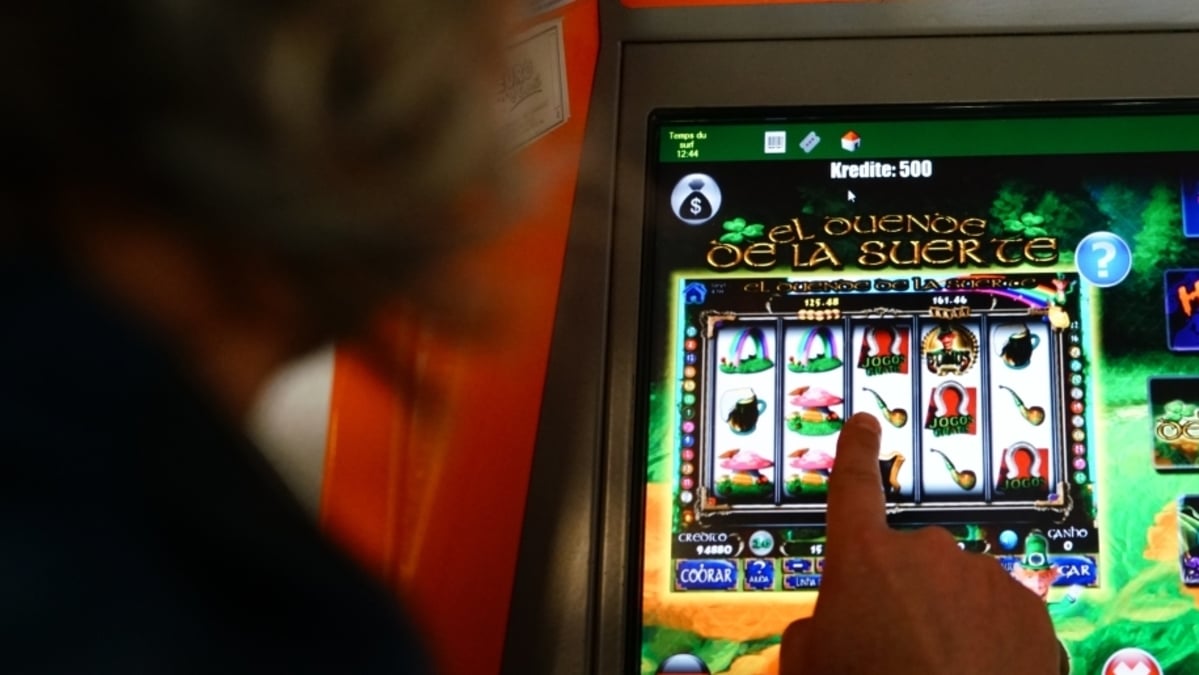
The justice committee in parliament on Thursday approved a bill amending the 1977 law on gambling. That means the bill can now proceed to a vote in parliament, which is foreseen for the end of January.
Justice Minister Elisabeth Margue last year submitted the update to parliament, with the aim to “strengthen the legal arsenal to combat illegal gambling in publicly accessible locations and in private locations open to the public, including cafes and other establishments selling alcoholic or non-alcoholic beverages.”
“It has been noted that in an increasing number of cafés in Luxembourg, illegal games of chance are being offered to the public” on terminals that offer “lotteries, casino games, sports betting, among others,” according to the draft law.
With the arrival of new technologies, certain aspects of the existing legislation have become inadequate, the bill states, adding that gambling machines cause “socio-economic damage to players and their families” and “further increases the profits of organised crime.”
Online games for money can destroy lives and families, according to the ZEV, Luxembourg’s addiction centre.
Also read:Luxembourg to tighten law in face of digital betting boom
Prison sentences and high fines
The updated law foresees tougher penalties. Bar owners face prison sentences of five to eight years and fines ranging from €250,000 to €500,000 if a gambling machine is found on their premises. That is up from sentences of eight days to six months and a maximum fine of €25,000 in the 1977 law.
These sanctions apply even if the bar owner does not operate the machine or did not receive any financial compensation for hosting it, but simply turned a blind eye.
Under the changes “only legal gaming machines, from the National Lottery network, will be allowed in establishments,” Ricardo Marques, a member of parliament for the CSV, told Contacto.
Everyone involved in this process must be held accountable. You can’t play games with people’s lives
Ricardo Marques
Member of parliament, CSV
“Everyone involved in this process must be held accountable. You can’t play games with people’s lives. These illegal games are addictive. Anyone who breaks the law must be penalised,” said Marques.
The bill also provides for “strong monitoring of those who play legal games” on the National Lottery. “The whole process must be monitored, with strong prevention campaigns,” said Marques, adding that “it is very easy to fall into addiction.”
Portuguese national Pedro, 37, previously told Contacto that he wishes the illegal gaming machines in Luxembourg’s bars had been banned a long time ago. “The [gambling] machines should be banned. They are addictive and destroy your life,” he said.
Also read:Demand for Luxembourg gambling therapists triples in five years
Spending entire salary on bets
Since 2023, Pedro has been receiving treatment at the ZEV. He gives his sister all his money, so that he doesn’t have a cent in his pocket and is tempted to go into a bar and gamble. “In a few hours I would spend my entire salary betting on slot machines in Portuguese cafés,” he said.
Pedro wants to tell his story, while remaining anonymous, to serve as a “wake-up call” to all those who like to gamble from time to time on these machines.
For Pedro, playing on the machines wasn’t enough: he moved on to online games on his mobile phone. Today he continues to work, but he has no money and is undergoing rigorous treatment. He dreams of the day when he will break free from his addiction, but continues to fear a relapse.
Gambling on machines in cafés and bars often starts out as an innocent pleasure only to quickly turn into an addiction, warned psychologist and psychotherapist Hamadou Zamarkoye, from the ZEV addiction centre.
Many of the centre’s patients are being treated for gambling addiction, said Zamarkoye, emphasising that slot machines in bars pose the greatest risk of addiction in the country, being more addictive than online gambling or even casinos.
These illegal machines, spread across the country and easily accessible, lead to addictions in between “13-30% cent of players”, said Zamarkoye. This addiction is particularly high among immigrant communities, particularly the Portuguese, he added, with gaming machines a tradition in Portuguese cafés and bars, a meeting point for the community.
Addicts don’t recognise their addiction
One of the biggest problems is that the addict doesn’t acknowledge the addiction, said the psychologist.
“This addiction to slot machines can exist for years and years without the sufferer accepting that they have a problem. But it ends up greatly harming their life, leading to enormous debts due to gambling, divorces, and other problems such as relationship issues,” he said.
The psychologist has long advocated for the elimination of this type of illegal gambling in Luxembourg to combat an addiction that “destroys many lives”. These gaming machines “should be banned in public spaces and reserved for specialised gambling halls,” said Zarmakoye.
In these establishments, which already exist in other countries, the sale of alcohol is prohibited, minors are excluded, and the premises are subject to regular controls. This is precisely what the bill now under discussion also aims to achieve: “The protection of minors and vulnerable individuals; the fight against fraud, money laundering and organised crime, and support for entities involved in the fight against gambling-related addictions.”
(This article was originally published by Contacto. Translated using AI, edited by John Monaghan)