January 9, 2026
By Karan Singh
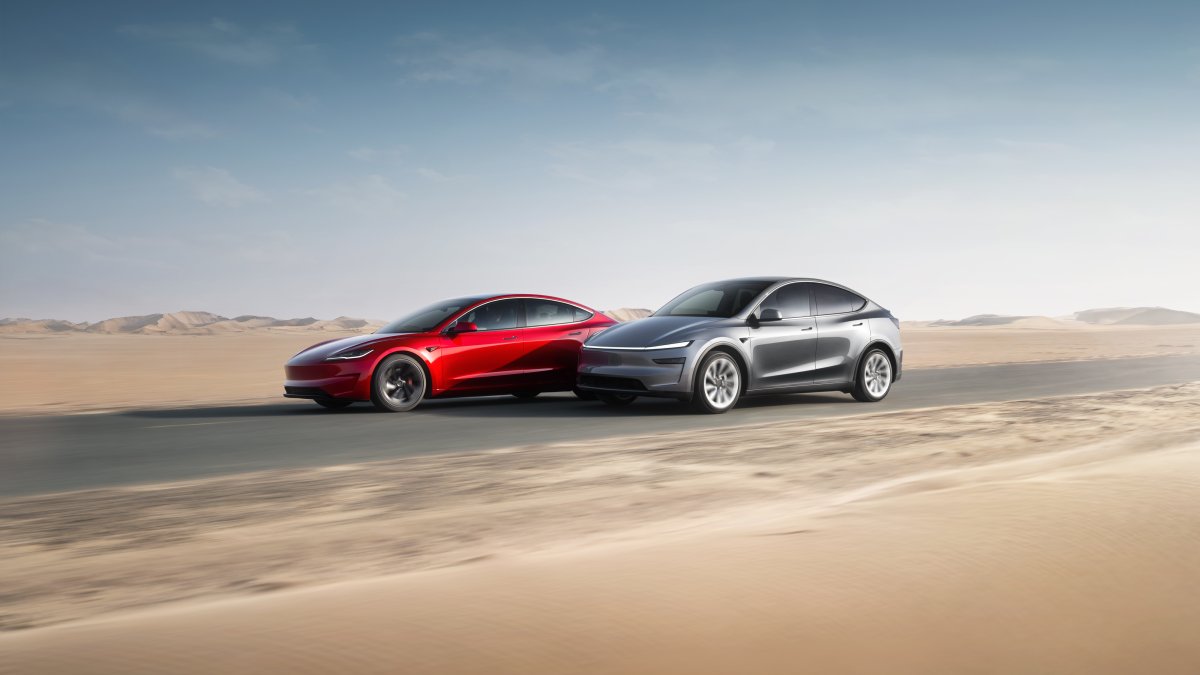
Effective today, all new Model 3 and Model Y vehicles delivered in Australia and New Zealand, and retroactively to those delivered from January 1, 2026, will have a major warranty change.
Tesla now offers a 5-year, unlimited-mileage warranty. This replaces the previous Basic Vehicle Limited Warranty of 4 years or 80,000 km, which had become a competitive disadvantage in a market where rivals offer far more generous terms.
Catching Up to the Competition
While this is a global first for Tesla, the move is largely a response to local market pressures.
In Australia, the 5-year, unlimited-mileage warranty is the gold standard, offered on nearly every vehicle from legacy manufacturers such as Hyundai, Ford, Mercedes-Benz, and BMW. More importantly, Tesla’s direct EV rivals have been aggressive with their warranty offerings:
With Tesla’s sales in Australia dipping 25% year-over-year in 2025 while BYD’s sales surged, sticking to an 80,000 km cap, which an average commuter could hit in just three years, was no longer a viable market strategy.
Unlimited Warranty, Unlimited Confidence
The change to unlimited mileage is a massive win for high-mileage drivers. Under the old 80,000 km (50,000 miles) cap, regional owners or heavy commuters were effectively penalized for taking advantage of cheap electricity prices and simple maintenance requirements. Now, a Tesla owner can drive 50,000 km or more a year and still be covered for the full five years.
The best part is that this warranty covers the entire vehicle (MCU, FSD computer, suspension, motors, ECU), not just the powertrain. The Battery and Drive Unit Warranty remains separate and unchanged.
RWD: 8 years, 160,000 km
RWD LR / AWD LR: 8 years, 192,000 km
Performance: 8 years, 192,000 km
Tesla has recently been improving its warranties in other markets as well. For 2026 models, Tesla extended the propulsion warranty to 7 years. Tesla also started offering extended battery and drive unit warranties for $2,000 USD in North America.
The Fine Print
There is one notable exception to this new unlimited rule. Vehicles used for commercial purposes, such as Uber, rideshare, delivery, taxi, or rental services, are capped at 150,000 km (93,000 miles) over the 5-year period.
This limit is comparable to competitor offerings and still a vast improvement over the old 80,000 km ceiling, giving commercial drivers significantly more breathing room before their coverage expires.
January 8, 2026
By Karan Singh
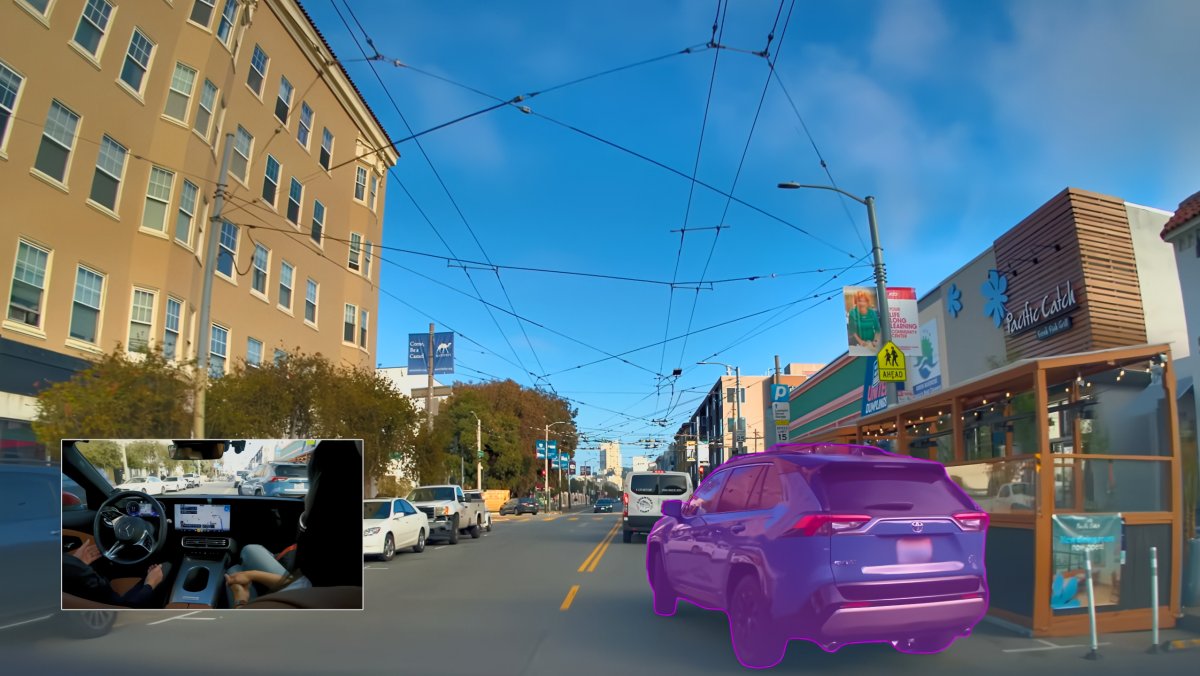
The biggest news out of CES wasn’t a car, but a brain. Jensen Huang, CEO of NVIDIA, took to the stage to announce Alpamayo, a new autonomous vehicle platform launching later this year.
The first vehicle to use NVIDIA’s new autonomous platform will be the 2026 Mercedes-Benz CLA. Huang described it as a breakthrough in artificial intelligence. It isn’t a system that merely reacts to events around it – but one that thinks ahead and reasons.
“It’s trained end-to-end. Literally from camera in to actuation out,” Huang told the audience at CES. “It reasons what action it is about to take, the reason, and the trajectory.”
Here’s a look at NVIDIA’s autonomous system in action:
The promise of Alpamayo is simple: a Vision-Language-Action (VLA) model that can explain its decisions. It offers reasoning traces (similar to the thought traces produced by reasoning LLMs), showing its work and explaining why it took a certain action. NVIDIA also claims that this transparency helps address the black-box problem that has plagued autonomous driving systems.
But while the tech world applauded, the team at Tesla, which has been running end-to-end neural networks on millions of cars for years, offered a stark reality check.
I’m not losing any sleep about this.
And I genuinely hope they succeed.
— Elon Musk (@elonmusk) January 6, 2026 Exactly What Tesla is Doing
Elon Musk’s reaction to the announcement was a mix of validation and warning.
He went on to mention that NVIDIA’s revolutionary approach to end-to-end models is exactly what Tesla began doing in 2023 with FSD V12.
The shift to end-to-end learning, where the car learns to drive by watching videos rather than following hard-coded rules, is a transition Tesla completed years ago. For the Tesla team, NVIDIA’s arrival at this architecture isn’t a leapfrog moment; it’s an admission that Tesla’s path was the correct one all along.
Well that’s just exactly what Tesla is doing 😂
What they will find is that it’s easy to get to 99% and then super hard to solve the long tail of the distribution.
— Elon Musk (@elonmusk) January 6, 2026 The March of 9’s
The core of the commentary isn’t on how AI works, but rather how hard it is to perfect.
Elon noted that NVIDIA and other OEMs that will rely on the Alpamayo stack will learn a harsh lesson quickly. Getting 99% of the way there is easy, but the last 1% is the hardest portion to solve. Ashok Elluswamy, Tesla’s Director of AI, also commented here, explaining the Long Tail Trap.
The final 1% is the bizarre, one-in-a-million scenarios that take years to solve. It’s the person in a chicken suit crossing the road; a roundabout where traffic flows in three different directions; or a sign partially covered in snow saying 5 instead of 50.
Ashok’s comment hints at the brutal grind that Tesla has endured over the last four years. Millions of miles of data are discarded every day to curate the rare edge cases needed to train neural networks to handle the real world. NVIDIA, by contrast (and similarity), is attempting to solve this gap with simulation tools and a much smaller dataset from partners.
The Hardware Lag
Beyond the software challenges, there’s one additional structural disadvantage for NVIDIA and the companies that will rely on it.
NVIDIA doesn’t build cars; it sells chips and software platforms to companies like Mercedes-Benz. Elon pointed out that even if Alpamayo is perfect, getting it onto the road at scale would be a logistical nightmare.
You’re right.
The actual time from when FSD sort of works to where it is much safer than a human is several years.
The legacy car companies won’t design the cameras and AI computers into their cars at scale until several years after that.
So this is maybe a competitive…
— Elon Musk (@elonmusk) January 6, 2026
While NVIDIA launches Alpamayo on the Mercedes CLA later this year, it will likely be a low-volume rollout. Tesla, meanwhile, has millions of vehicles on the road today collecting the long tail data necessary to train that elusive last 1%.
Welcome to the Grind
NVIDIA’s announcement is a massive validation of Tesla’s end-to-end neural network approach. The fact that the world’s leading AI chipmaker has adopted the same architecture as Tesla proves the industry is beginning to consolidate around a single solution.
But as Elon and Ashok point out, the architecture is just the starting line. The race will be won in the data, finding the rare edge cases that cause reasoning to fail. NVIDIA has built a brilliant engine; now they just have to drive it through the same chaotic and messy world that Tesla has been proving itself in for a decade.
Mutual Respect
Of course, Jensen Huang took it in stride, praising Tesla’s approach and tech stack as the most advanced available today.
Nvidia CEO Jensen Huang in new interview today on @Tesla’s FSD:
“I think the Tesla stack is the most advanced autonomous vehicle stack in the world. I’m fairly certain they were already using end-to-end AI. Whether their AI did reasoning or not in somewhat secondary to that… pic.twitter.com/pYuPYdwW3h
— Sawyer Merritt (@SawyerMerritt) January 6, 2026
January 8, 2026
By Karan Singh
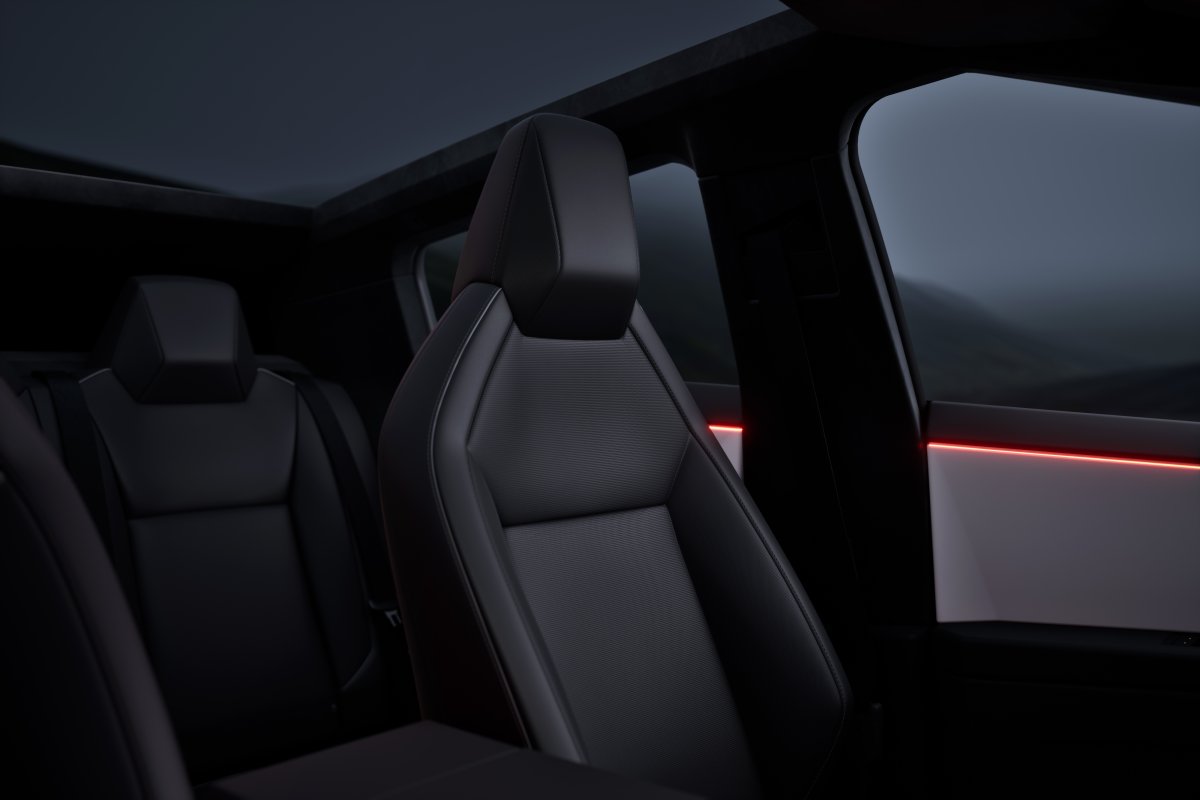
According to a new finding in the Tesla Service Toolbox, the Cybertruck is equipped with all the necessary hardware for Active Noise Cancellation (ANC) — just like the Model S and Model X. However, the feature remains software-locked.
A screenshot from the service diagnostics tool explicitly states: “As of 30-Jan-2025, ANC software is not enabled on Cybertruck even though the hardware is installed.”
While the Cybertruck is already one of the quietest vehicles on the road, it seems Tesla had planned to make it even quieter.
A Flagship Feature
Active Noise Cancellation is currently a hallmark of Tesla’s flagship vehicles — the Model S and the Model X. In those vehicles, the system works much like high-end noise-cancelling headphones. Six microphones embedded throughout the cabin, along with accelerometers near the wheels, monitor cabin noise and wheel frequency.
The audio system then generates anti-noise (inverted sound waves), which cancel out low-frequency road rumble and tire hum.
The presence of this hardware in the Cybertruck (even though it has only four cabin microphones, not six) suggests that Tesla is prepared to offer ANC in its halo vehicle, but for whatever reason, hasn’t implemented it yet.
Why is it Disabled?
The delay in enabling this feature is likely due to the complexity of the Cybertruck’s unique cabin acoustics.
The Cybertruck is essentially a large, angular box with a massive glass canopy and windshield. This creates a unique acoustic environment that is vastly different from the Model S or Model X. In addition, Tesla used the unique castings of the Cybertruck to route audio from the subwoofers through the dead air within the vehicle’s frame, creating more volume for music and sound. That also means the audio system would have to fight through that dead airspace to cancel road noise, which could be a harder engineering challenge than initially thought.
The much larger standard All-Terrain tires also likely generate a different noise frequency than the road-optimized tires on the Model S and Model X, which are likely easier for ANC to mask.
Putting all this together, it’s likely a software engineering challenge to acceptably deaden road noise, which is already more than acceptable in the Cybertruck.
What This Means for Owners
For current owners, this is good news. Your Cybertruck is future-proofed for a future comfort upgrade, if and when Tesla decides to finalize the ANC feature. A simple OTA update could enable the feature once all the tweaking is done, so it may just be a matter of time.