The MED This Week newsletter provides informed insights on the most significant developments in the MENA region, bringing together unique opinions and reliable foresight on future scenarios. Today, we shed light on the recent escalation of protests in Iran and the growing external pressure on the Islamic Republic.
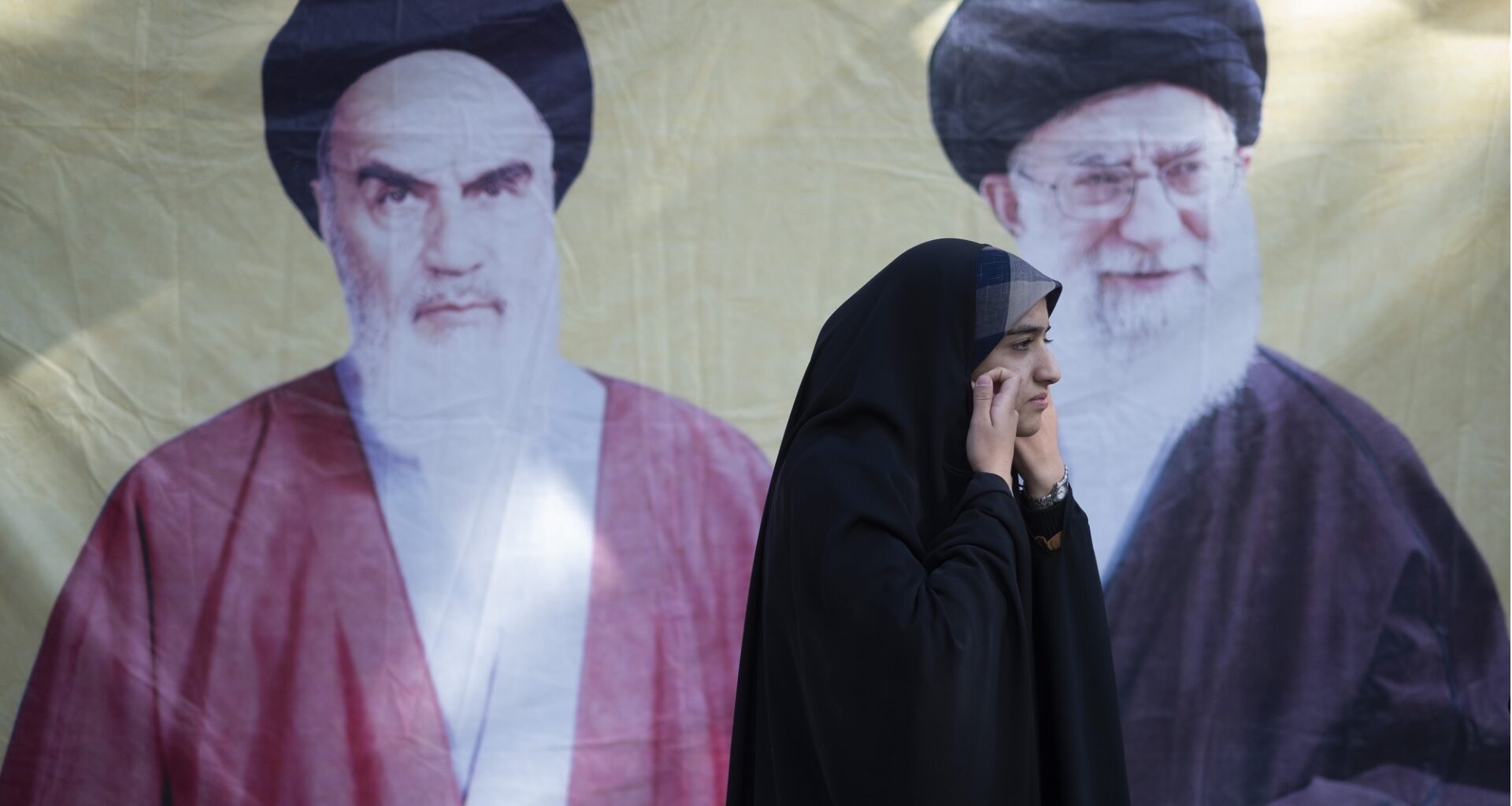
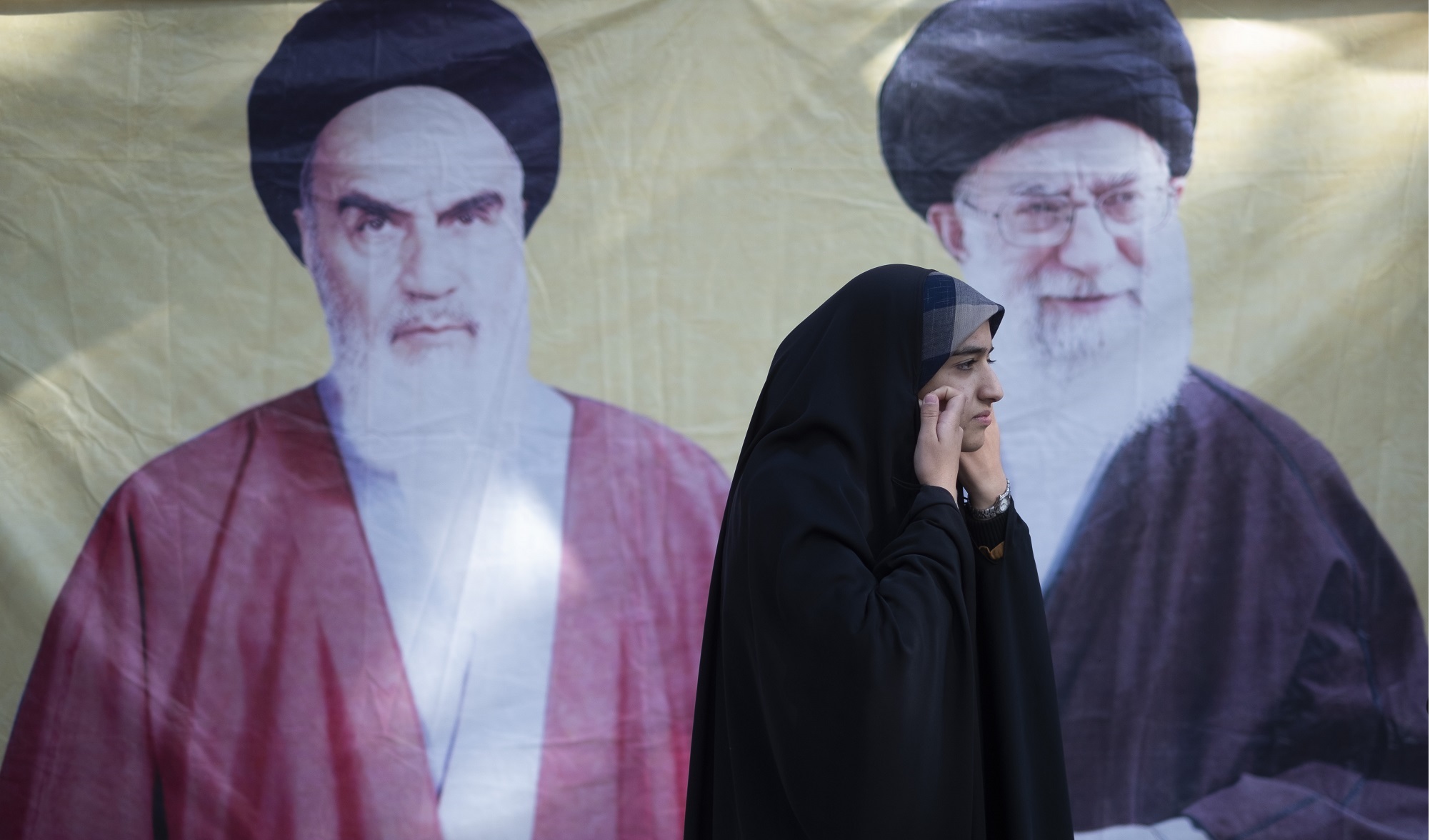
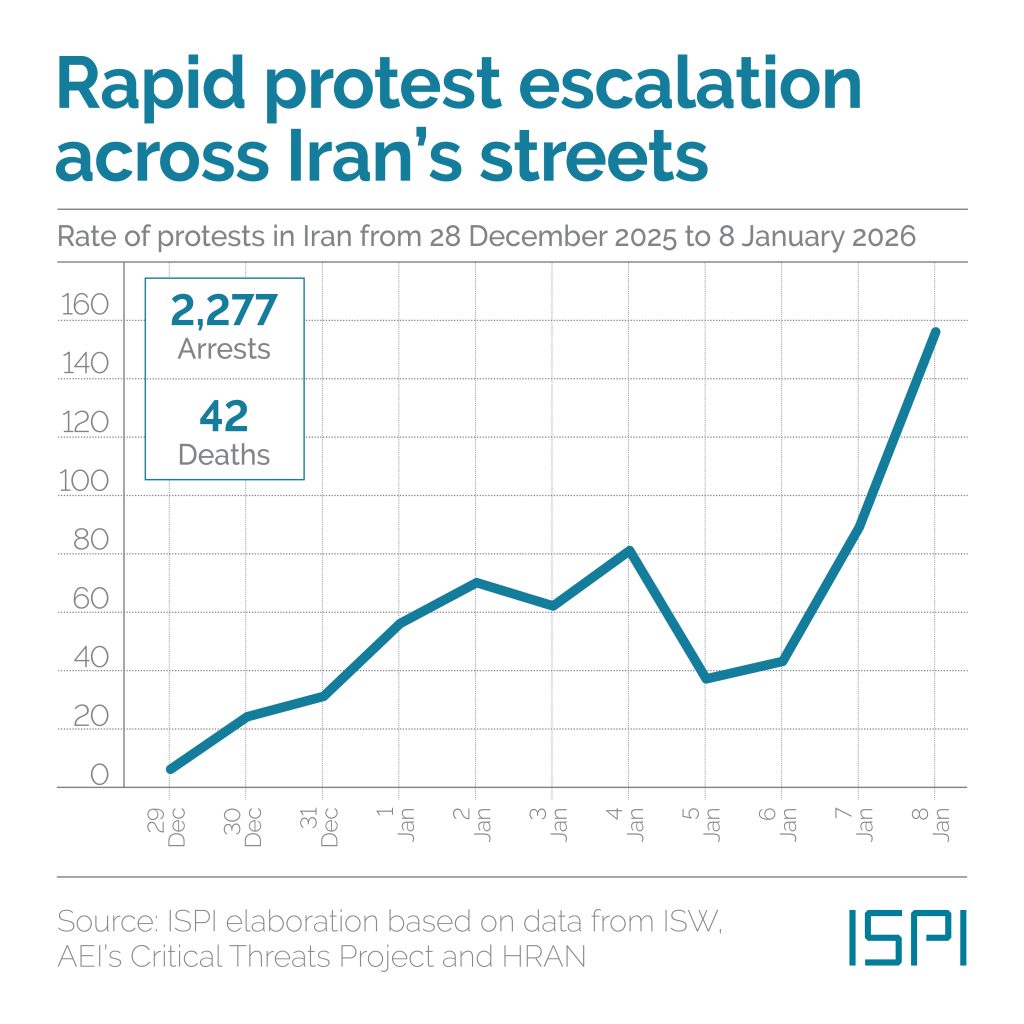
Protests in Iran are showing no signs of slowing, spreading further in both scale and intensity. What started as an economic protest has since evolved into a broader anti-government movement. Although the government has attempted to contain the demonstrations through a series of economic measures – including the end of a subsidised exchange rate for importers –, it simultaneously escalated repression, resulting in numerous deaths, widespread arrests and a nationwide internet shutdown. Iranians began taking to the streets on 28 December to protest against the sever economic crisis, marked by the collapse of the rial and soaring inflation, against the backdrop of persistent international sanctions. Although the protests have now spread across all 31 provinces, the opposition remains highly fragmented. Among its various components are the increasingly numerous supporters of Reza Pahlavi, the son of the former Shah, who, over the years, has positioned himself as a leading voice against the Islamic Republic. In recent days, his name has resurfaced in protesters’ chants, while he himself has used social media to call on Iranians to take to the streets. This situation has further deepened the country’s international isolation, already significantly worsened by the 12-day war in June. Moreover, now that US military operations have targeted the Maduro regime, not only has Iran’s relationship with Venezuela been undermined, but fears have also grown that Tehran could face a similar fate. Indeed, while nuclear negotiations remain completely stalled, President Trump has reiterated that Washington would not tolerate further advances in Iran’s nuclear and missile programmes and, amid the latest wave of protests, has issued repeated warnings in defence of demonstrators, threatening consequences should repression continue. Caught between mounting internal and external pressures, the regime appears – at least for now – unable to find a viable path to quell the unrest. Looming in the background is the risk that Israel could exploit Iran’s current vulnerability to carry out new strikes on Iranian soil.
Experts from the ISPI network discuss on the recent escalation of protests in Iran and the growing external pressure on the Islamic Republic.
Iran’s leadership cornered
“There has been little by way of negotiations on the Iranian nuclear programme since June, while the eruption of protests in late December – initially over economic grievances, but quickly expanding into anti-regime unrest – adds a significant challenge to the Iranian government from below. Trump has at least twice thus far warned of potential US action if the repression intensifies. That puts Tehran’s decisionmakers in a quandary: it has long resorted to the iron fist in quelling past rounds of nationwide unrest, most recently during the 2022 Women, Life, Freedom protests. But reprising that playbook more than it already has to quell discontent now runs the possibility of some form of intervention from abroad – and Tehran’s decisionmakers are likely at a loss to know what covert or overt options may be on the table, and how targeted or sweeping they could be. Looking beyond the protests, the prospect of an agreement with Washington looks even more distant now, with the US unlikely to settle for anything Iran’s government may be willing to offer. That suggests that even an ebb in the ongoing unrest is likely to prove a temporary reprieve as the economy misfires due to mismanagement, corruption and sanctions, and the regime refuses to budge on the fundamentals of its exclusionary approach to governance.”
Ali Vaez, Senior Adviser to the President and Project Director, Iran, International Crisis Group (ICG)
Iran’s fragmented opposition and the Pahlavi question
“Although the January 8 demonstrations did not reach the scale of those seen during the 2022 protest movement, and despite the Iranian protest landscape remaining fragmented along multiple fault lines, Reza Pahlavi’s popularity test appears to have hit its mark. The son of the former shah remains a controversial and divisive figure both inside Iran and abroad. Nevertheless, over the past year he has succeeded in positioning himself as the leading political voice of the Iranian diaspora and is now enjoying growing support within the country as well. Chants in his favour among young people and university students, along with the qualitative escalation of the demonstrations, represent an important source of political legitimacy. That said, doubts about Pahlavi remain widespread, beyond Donald Trump’s remarks suggesting that he is not ready to lead the country. The legacy of his family is marked by repression, forced modernization, and reckless economic policies. Reza Pahlavi was also partly responsible for the failure of the so-called ‘Georgetown Coalition’ which sought to unite Iran’s exiled opponents of the Islamic Republic. Moreover, his political and governing abilities have yet to be proven, and he lacks a well-prepared team capable of effectively supporting him.”
Luigi Toninelli, Researcher, MENA Centre, ISPI
The political risks behind currency unification
“While inflation and the rial’s collapse triggered the protests, the exchange rate regime is among the deeper structural drivers of Iran’s economic decline. President Pezeshkian has moved in recent weeks toward currency unification, taking concrete steps to dismantle the preferential dollar system that long provided subsidised foreign exchange to select producers and importers. The stated goal is to remove these hidden subsidies and redirect their value to households through cash assistance and food vouchers to offset price increases. In theory, this is a more equitable approach and could reduce corruption. In practice, however, currency unification is politically explosive. It raises prices immediately and has provoked resistance from powerful interests that benefited from cheap dollars, including networks tied to the state. While vouchers may soften the shock in the short term, especially for lower income deciles, they are unlikely on their own to defuse social tensions rooted in inflation, inequality, and distrust of the system.”
Sina Toossi, Senior Fellow, Center for International Policy
How Venezuela raised the stakes for Iran
“The recent US operation against Nicolas Maduro of Venezuela has provided a stunning foreign policy victory for President Donald Trump, the long-term durability of which remains to be tested. Trump’s success in this episode may tempt him to turn to another long-time US adversary to consolidate his legacy: The Islamic Republic of Iran. Last Friday, he laid down a red line: The killing of innocent Iranians participating in anti-regime protests by the ruling system-which has already happened-would trigger a US military response. This intensifies Tehran’s dilemma on how to best manage protests: Large-scale violence to quell unrest risks strikes by Washington on the Iranian leadership or other key targets at a time of vulnerability. But being cowed by Trump’s pressure into reducing repression will embolden protests-which gained momentum this week-providing them more space to grow.”
Farzan Sabet, Managing Researcher of the Sanctions and Sustainable Peace Hub, Geneva Graduate Institute
The unpredictability of an Israeli-American attack
“Anti-government protests continue across Iran, expanding into new cities amid deteriorating living conditions for many Iranians. Protests have not yet reached an existential tipping point for the Islamic Republic, but they are unfolding under the shadow of rising regional tensions and the threat of another military attack by Israel and the US. Israeli Prime Minister Netanyahu’s recent trip to the US appears to have been aimed at securing a green light for another round of strikes on Iran. Israeli leaders view Iran’s internal unrest as an opportunity to pair domestic protests with external military attacks in pursuit of regime change, an approach tested during the 12-day war in June without success. In Washington, policy debates remain divided between advocates of escalation and those warning of its consequences. Meanwhile, the Trump administration is engaged in Venezuela, limiting its bandwidth to pursue another regime-change war in the Middle East. Under these conditions, an Israeli attack, whether coordinated with the US or undertaken independently, would pose a high risk of destabilisation and further regional escalation.”
Negar Mortazavi, Editor and Host, Iran Podcast