The US economy added 50,000 jobs in December, according to Labor Department data published Friday, culminating in the worst year for annual job growth outside of a recession since 2003.
Years marked by the financial crisis (2008) and the pandemic (2020) were worse. But even the meager gains seen in 2025 are likely to be further pared when jobs data is revised in the months to come.
The unemployment rate declined to 4.4% in December, unexpectedly falling from a revised 4.5% in November. A Bloomberg survey of economists had estimated a median gain of 70,000 jobs and a 4.5% unemployment rate in the final jobs report for 2025.
Read more: Worried about job security? Take these 5 steps to protect your finances.
Revised data for November, meanwhile, showed a gain of 56,000 jobs rather than 64,000, the Labor Department said Friday, while revised data for October showed a loss of 173,000 jobs compared to the earlier reported decline of 105,000.
In all, monthly payroll growth for the year, including December’s data, averaged 49,000, Jed Kolko, a senior fellow at the Peterson Institute for International Economics, said in a post on X.
“That’s the slowest annual growth outside of recessions,” Kolko said. “Immigration policy slowed workforce growth, which has held back job growth.”
How steep is the dropoff? Payrolls rose by a total of 584,000 in 2025, compared to the 2 million jobs added in 2024. And that meager growth — which has been driven by gains in healthcare and social services — is likely to be revised even lower.
Mark Zandi, chief economist at Moody’s Analytics, told Yahoo Finance that he expects the revisions to potentially show the jobs market contracted lst year.
“For sure, when we get all the revisions, it will show outright job declines in 2025,” Zandi said.

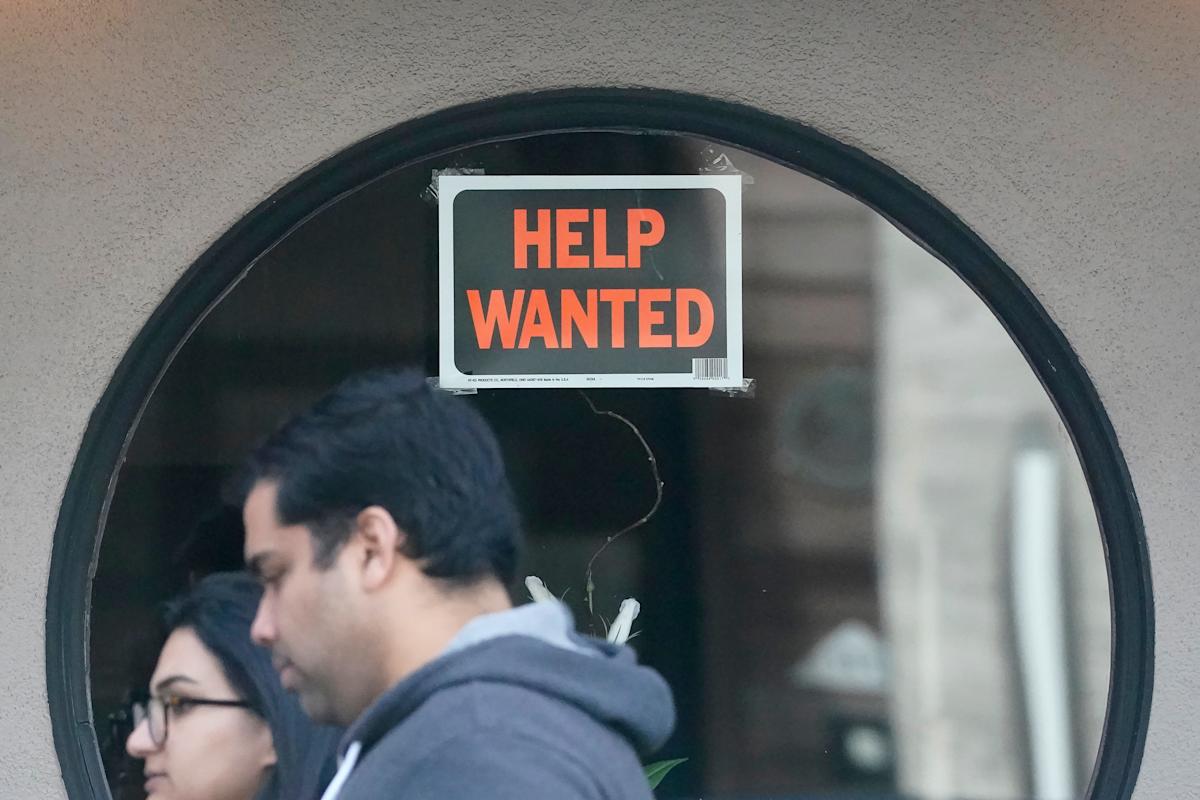
Hiring sign is displayed at a grocery store, in Glenview, Ill., Monday, Dec. 15, 2025. (AP Photo/Nam Y. Huh) · ASSOCIATED PRESS
Navy Federal Credit Union chief economist Heather Long posted on X that 2025 would already show net job losses without the healthcare and social assistance sectors, which added 405,000 and 308,000 jobs, respectively.
The report adds fuel to concerns about the state of the US job market as economists and workers alike grapple with a weak hiring rate and paltry job gains, but relatively low layoffs in what’s been described as a “no-hire, no-fire” economy. Americans are already feeling burdened by it: Consumers’ “perceived probability” of quickly landing work within three months of losing a job hit a record low in December, according to a New York Fed survey.
Indeed, the share of people who have been without a job for 27 weeks or longer as a percentage of the unemployed population hit 26% in December, the highest since early 2022.