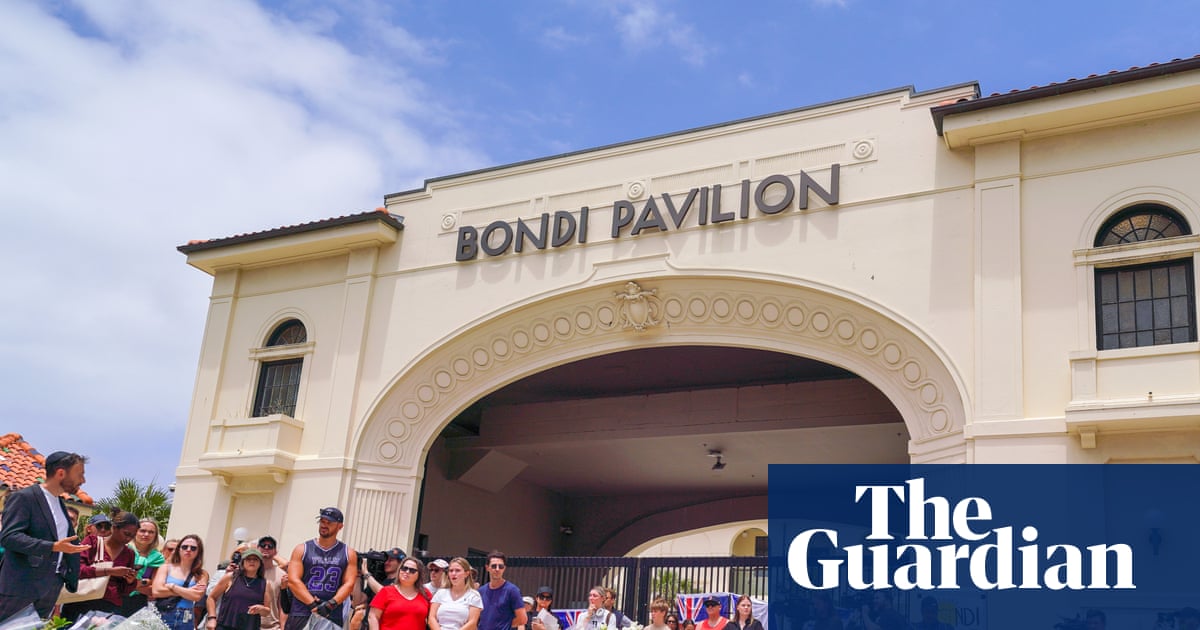
In a video posted online five days after the Bondi beach massacre, the president of Shooters Union Australia, Graham Park, sounded the alarm to gun owners.
“This is the most urgent situation, desperate situation we’ve seen in decades,” Park says in a video hook-up with Tom Kenyon, a former state Labor minister-turned chief executive of the Sporting Shooters’ Association of Australia.
“We’re in the fight of our lives.”
The fight Park was referencing was the Anthony Albanese-led push to tighten Australia’s world-leading gun safety laws after the mass shooting on 14 December, an antisemitic terror attack in which 15 people were slain with guns that were lawfully obtained.
The prime minister secured a deal at national cabinet to renegotiate the national firearms agreement struck after the 1996 Port Arthur massacre, with premiers and chief ministers committing to strengthen gun controls in their jurisdictions while helping to fast-track work on a national gun register.
Albanese also promised a national gun buyback scheme, noting there were more guns in Australia now than at the time of Port Arthur.
“The terrible events at Bondi show that we do need more guns off our streets,” he said.
The New South Wales premier, Chris Minns, moved almost immediately, recalling state parliament before Christmas to restrict the numbers of firearms a shooter could own.
“The first battle got lost in the NSW legislature,” Park said after the laws sailed through parliament after the Liberals split from the Nationals to support them.
“But that’s just the first day of the war.”
The federal government wants other states and territories to commit to their own changes by March and legislate them no later than 1 July.
After last year boasting it was “winning” the fight against gun controls, the gun lobby – with support from the Nationals and One Nation – is now preparing to resist what it claims is an unjustified attack on law-abiding owners.
The groups have launched an advertising campaign, started online petitions, commissioned opinion polling and even begun discussing a legal challenge to the NSW laws as they urge supporters to make gun control a vote-swinging issue at elections this year in South Australia and Victoria, and in NSW in 2027.
The prime minister, Anthony Albanese, centre, and the NSW premier, Chris Minns, left, and the NSW police commissioner, Mal Lanyon. Photograph: Mick Tsikas/AAP
“Make this an issue,” Park told supporters in a 22 December video. “If they go with this [supporting tougher gun laws], make them pay. If they go against it, support them like crazy.”
Stephen Bendle, convenor of the Australian Gun Safety Alliance, urged governments to stand firm.
“We think Bondi has caused a recalibration of the community’s expectations,” he said. “Australians have been very proud of our gun laws – and they have kept us very safe from these sort of events. But the public has been unaware of the growth in gun numbers and the types of guns available.
“Ninety-five per cent of the population don’t have guns and the gun laws can’t be written for 4% or 5% of the population.”
‘Keep Australia Safe’
The foundations for a coordinated national campaign were built in 2025 after several shooting groups met to discuss forming an alliance to speak with a “united voice” for firearms owners and businesses.
In a 6 January update to supporters, Park said the groups involved in the fledging coalition – the Australian Firearms Advisory Council – were “working closely” after the Bondi shooting.
The campaign has spent more than $42,000 promoting messages on Meta platforms since Bondi
The council is running a campaign titled “Keep Australia Safe”, the branding and messaging for which reveals how it it intends to prosecute its argument.
The material emphasises the need to combat terrorism, not “legal firearms ownership”, in response to what authorities believe was an Islamic State-inspired attack on the beachside Hanukah celebration.
The campaign has spent more than $42,000 promoting messages on Meta platforms since Bondi, making it the 11th-biggest spender on political content in Australia in the past month.
Park said in the 6 January video he was optimistic about the prospects of success, doubting other states would follow NSW.
Western Australian tightened its gun laws in 2024 to include firearm limits after a series of shootings linked to either domestic violence or organised crime.
The response to Albanese’s push among other states and territories has been mixed despite the national cabinet agreement.
The Victorian government has ordered a review of its gun laws while the Northern Territory has signalled resistance, declaring it will not “blindly follow” other states. In Queensland, the Crisafulli government has indicated its priority is antisemitism – not gun control.
‘We’re not crazy shooters’
In a video posted on 31 December, Kenyon offers guidance to gun owners on how to frame their arguments to politicians.
He encourages them to state that Bondi wasn’t a failure of gun laws but rather of background checks and a lack of police resources.
The Liberal leader, Sussan Ley, and the Nationals leader, David Littleproud, who said ‘we don’t have a gun problem in this country … we have an extreme Islamic ideology problem’. Photograph: Mick Tsikas/AAP
He encourages them to remind MPs that, with an election on the horizon, they will vote “according to firearms policy”.
He also offers firm advice on what not to do.
“Don’t make threats,” he said. “We cannot give the impression that we are these crazy shooters, right? Because we’re not. We’re not crazy shooters.”
The Nationals leader, David Littleproud, and his colleagues have echoed the gun groups’ talking points, while the Liberal leader, Sussan Ley, and former prime minister John Howard dismissed the government’s crackdown as a distraction from the task of confronting antisemitism.
“We don’t have a gun problem in this country,” Littleproud told Sky News this week. “We have an extreme Islamic ideology problem in this country, one that needs to be unearthed, faced into, and not run away from.”
It is not only conservative politicians who have raised concerns.
The federal Labor MP and Olympic shooter Dan Repacholi criticised the NSW government for rushing firearm limits, which meant he “would no longer be able to compete in all my Olympic events”.
“When you rush things through it has unintended consequences,” he wrote on Facebook. “Shame on the NSW Government.” 
Roland Browne, the vice-president of Gun Control Australia, says the gun lobby’s messaging echoes the language used by the National Rifle Association (NRA) in the US.
“This is taking a page out of the American NRA, where their approach to any public health-related gun control reform is to say that it’s not the guns, it’s the individuals and that there must be a problem with the individual,“ he says.
Kenyon dismisses comparisons with the NRA, insisting Australia’s deadliest shooting since Port Arthur was a failure in the application of the gun laws – not the laws themselves.
“We’re not taking cues from the NRA on this and we’re not talking to them about it,” says Kenyon, who was a Labor minister in South Australia before defecting to Family First.
“But I’ve been involved in politics for a very long time. We employ people who are political professionals, who understand how to run a good campaign, and we are going to use all the tools at our disposal to get a good outcome.”