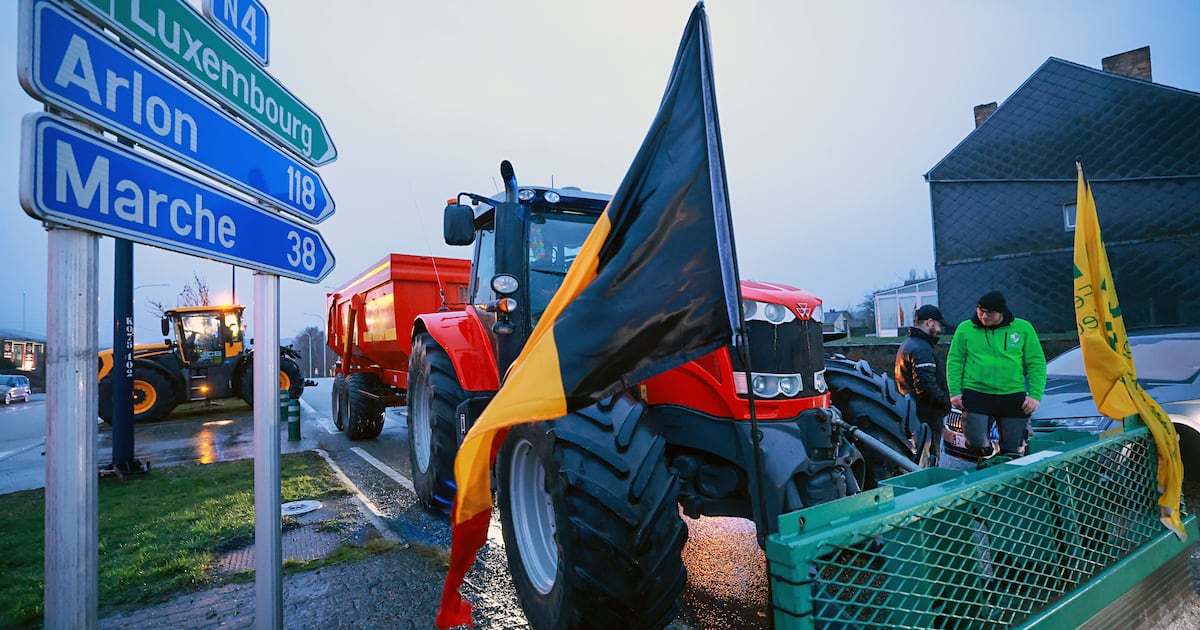
European Union (EU) states have approved a significant trade deal with a bloc of South American countries, opening up a big new market for European producers but drawing backlash from farmers.
The Mercosur trade deal has for years been a contentious flashpoint between efforts to expand the union’s global influence and the powerful farming lobby in many European countries.
A sufficient majority of EU states backed the trade deal in a vote in Brussels on Friday, paving the way for its adoption after years of false starts.
What is the Mercosur trade deal?
Who is for and against it?
Fans of the deal say it offers access to new markets and helps combat US tariffs. In Ireland, France and Poland, farmers fear more beef coming into the EU.
The programme for government codified Ireland’s opposition to Mercosur, committing it to “work with like-minded EU countries” in opposing the deal.
France, Ireland, Poland, Austria and Hungary voted against the agreement and Belgium abstained. Germany, Spain, Italy and the remaining 18 EU states supported it.
The trade agreement will now need to be ratified by a majority of MEPs in the European Parliament, where voting coalitions have become much more volatile and unpredictable.
It appears unlikely that an already shaky centrist majority in the parliament will be able to rely on the support of Irish, French and Polish MEPs. Parties on the far right, the Greens and other left-wing MEPs are also expected to oppose it.
Of Ireland’s 14 MEPs, only Fianna Fáil’s Barry Andrews has said he will vote for the deal.
Fine Gael’s Sean Kelly, Nina Carberry and Regina Doherty did not respond to questions, but all other Irish MEPs have committed to vote against it.
The deal, which has been negotiated on and off for more than 25 years, will lower barriers to trade between Europe and the Mercosur countries of Brazil, Argentina, Uruguay and Paraguay.
Irish farmers are concerned about the extra 99,000 tonnes of beef the deal will allow Mercosur countries to sell into the European market. Farmers fear they will be undercut by cheaper Brazilian and Argentinian products that may not have been produced to the EU’s strict environmental standards.
The Government voted against the deal following pressure from farming organisations, rural Independent TDs who support the Coalition, as well as Fine Gael and Fianna Fáil backbenchers.
In a statement after the vote, Tánaiste Simon Harris said Ireland would continue its opposition to the Mercosur deal as the ratification process moves to the European Parliament.
Mr Harris said the Government is in favour of free trade, but “not at any cost”.
He said the Government had worked “literally up to five-to-midnight to see if changes and improvements could be made in terms of addressing concerns around food safety when it comes to environmental standards”. He said “it wasn’t possible to make enough progress”.
The Tánaiste added that Ireland would continue to work to change the deal to address farmers’ concerns.
[ The Irish Times view on Mercosur: a deal too far for this GovernmentOpens in new window ]
While placating domestic opponents of the deal, Ireland’s vote is likely to damage its standing in Brussels.
The European Commission, the EU’s powerful executive that leads on trade and negotiated the deal, has insisted any negative impacts will not be as dire as beef farmers fear.
Commission president Ursula von der Leyen described the deal as Europe’s response to an “increasingly hostile and transactional” world.
Ms Von der Leyen is expected to travel to Paraguay later this month for a signing ceremony. The trade pact would enter into force once the European Parliament votes to ratify it.
Francie Gorman, Irish Farmers’ Association (IFA) president, said it would now focus its lobbying efforts on the parliament vote in the coming weeks, as a way to block the agreement.
The maximum amount of South American beef the trade pact would permit into Europe at lower tariff rates would equate to about 1.5 per cent of beef produced by all EU states.
 Could Coalition politics hurt Ireland’s influence in Brussels?
Ireland currently only exports a very small amount of agri-food products to Mercosur countries. Steep import tariffs ranging up to 55 per cent effectively make trade unviable, but these duties will be slashed or removed entirely as part of the trade deal.
Irish whiskey and dairy, the Republic’s big pharmaceutical industry and other Irish businesses would be expected to benefit from easier access to the South American market.
EU commissioner Michael McGrath said the deal would bring “concrete economic benefits” and it included adequate safeguards to protect the agriculture sector.
The commission made a number of last-minute concessions to the French and Italian governments, which were seen as crucial to locking in the support of Rome, the key swing vote.
However, the French government could not be brought around, judging that domestic pushback from protesting farmers would be too great if Paris voted for the trade deal.
French far-right leader Marine Le Pen called for France to suspend future contributions to the EU budget, in protest over the trade agreement being approved.
Spain’s prime minister Pedro Sánchez, a staunch supporter of the deal, said it would allow Europe to build “new bridges and alliances” in response to “tariffs and threats” it was facing elsewhere.