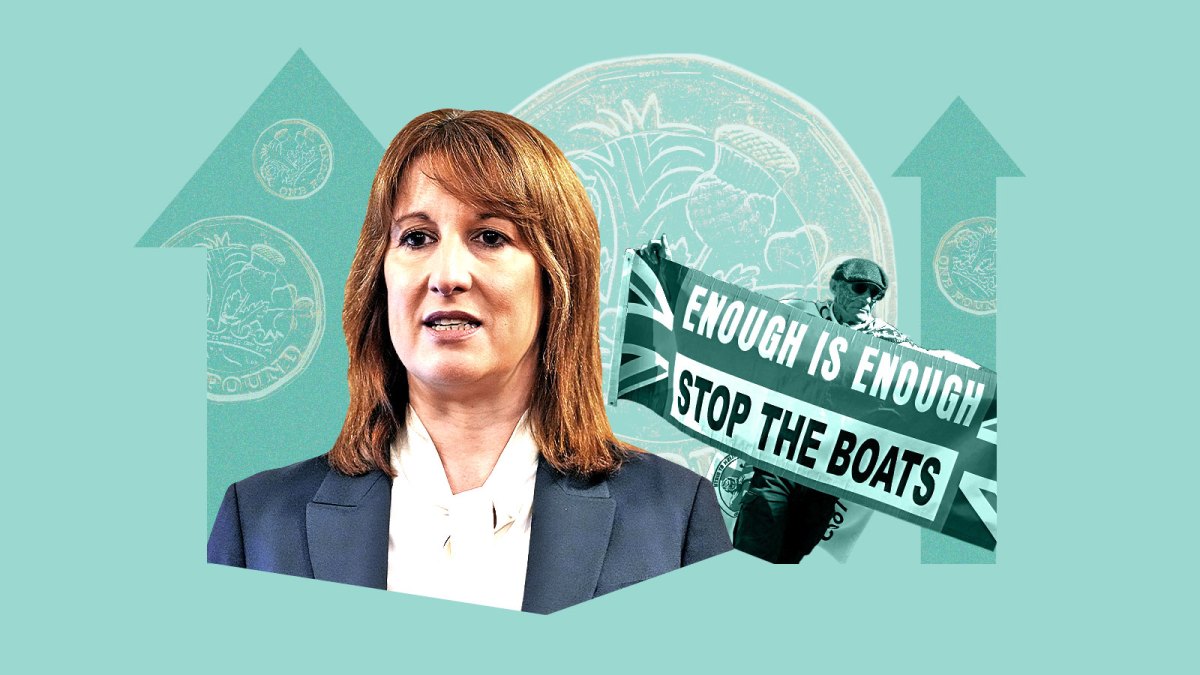
Rachel Reeves could be forced to raise taxes to make up for a shortfall of billions of pounds caused by a collapse in immigration numbers, experts have warned.
Forecasts show that net migration could reach as low as zero or even negative by the end of the year, which would drastically hit the amount brought in by the Exchequer in taxes.
Migration experts agree that the numbers are likely to be significantly lower than the Office for Budget Responsibility (OBR) forecasted in November, and that the watchdog may have to revise down its figures.
Charlie McCurdy, an economist at the Labour-linked Resolution Foundation think tank, said: “If predictions that net migration to the UK turns negative by next Christmas — with more people leaving the country than arriving — there would be serious consequences for the public finances.
“The OBR has previously estimated that a sustained 200,000 reduction in net migration could chip as much as £20 billion off the government’s budget by the end of the decade — even more costly to the Exchequer than cutting 2p from the basic rate of income tax.
“If an unexpectedly sharp drop in migration does materialise, it would solve one political challenge for the government but create a new economic one.”
• Migration pushes UK population to second biggest annual rise in 75 years
Net migration stands at 204,000 for the year to June 2025, down from a peak of 944,000 in the year ending March 2023.
In November, the OBR forecast that the figure would be 262,000 this year, but experts say it is far more likely to be substantially lower.
The predicted drop is partly down to lower numbers of work visas granted after the rules were tightened by the last government. The number of health and social care visas halved last year and visas for skilled workers dropped by a third.
But an increase in emigration could have a significant impact. One is the predicted impact of the stricter rules on indefinite leave to remain (ILR) announced by Shabana Mahmood, the home secretary.

Shabana Mahmood
JORDAN PETTITT/PA
The OBR said in November it did not have “sufficient detail” to calculate the effect of the ILR changes, which will mean that people on a work visa have to wait 15 years before achieving the status.
James Bowes, a data analyst at the University of Warwick, estimates that 70,000 will leave Britain thanks to the change. “Realistically, people can’t just commit to 15 years safe in the knowledge that they’ll get ILR at the end of it. A precedent has already been set that rules can arbitrarily be changed when people are already here, which has broken the trust in the system.” With Reform top of the polls and promising to scrap ILR altogether, Bowes says this could be a “particular concern”.
• Shabana Mahmood: Britain has lost control of its borders
The third major factor for the drop is the expiry of the graduate visa for hundreds of thousands of people who were granted it about two years ago.
Madeleine Sumption, director of the Migration Observatory at the University of Oxford, said: “A large share of migrants to the UK always plan to leave and they tend to do it within two or three years. What happens is if you have a spike in immigration two to three years later you expect a spike in emigration.”
Bowes estimates that the effect of the three factors will see net migration drop to negative 62,000 by the end of the year. Sumption emphasised there was a lot of uncertainty over behavioural changes of emigration, but added: “I would say net zero migration is perhaps a 10 per cent probability — not impossible but relatively unlikely. Somewhere between 100,000 and 200,000 in the short run, by the end of this year, seems most likely.”
• How do you measure migrant costs? The question the OBR can’t answer
The net migration numbers would, however, then tick back up on present forecasts, Sumption said. “If net migration does go down to zero, it will be temporary,” she said. “We are not entering an era of long-term super-low net migration to the UK.”
But the effect could last long enough to affect Reeves’s decision-making in the budget, especially if she is confronted with a change in the OBR’s forecasts.
Stephen Millard, deputy director of the National Institute of Economic and Social Research, said: “If you don’t have the migrants, you have fewer people working so your tax revenue goes down.
“Simply speaking, if that number [of net migration] goes down, that’s a hit to the public finances. The drop in tax revenue would be seen straight away. If over the course of the year, up to September or October, tax revenues were coming in much lower than expected, then we’d have to see a rise in taxes again in the next budget.”
Government sources emphasised that predictions were very uncertain but acknowledged that the OBR had yet to take into account some of the biggest changes on migration policy. A spokesman said the UK “remains a highly attractive place to live and invest”.