Just about everyone knows that Texas and oil go together. But what you may not know is that this week marks the 125th anniversary of the modern age of oil in Texas.
AUSTIN, Texas — It may be hard to believe, perhaps, that it all began in a tiny place called Gladys City, a few miles from Beaumont in southeast Texas.
It was there that a man named Anthony Lucas had a hunch.
Because there was a large salt dome nearby, he was convinced oil could be found if you drilled deep enough. Most geologists in the day had their doubts, but Lucas persisted.
And on Jan. 10, 1901, his hunch paid off.
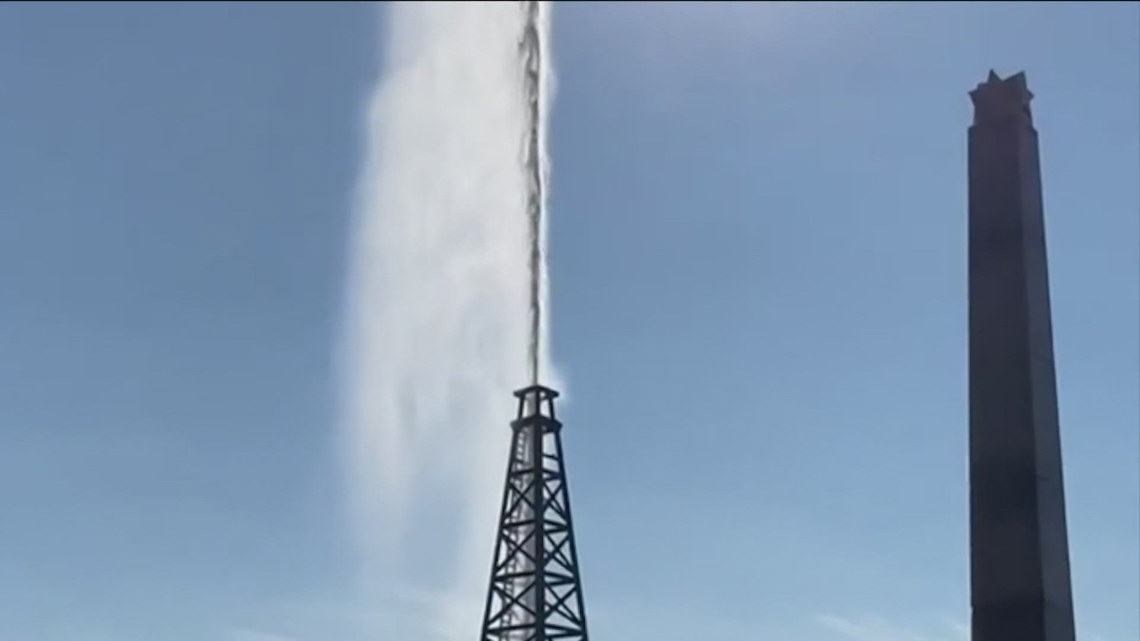
The earth rumbled, drilling pipes came shooting out of the ground, then mud, then gas … and then, oil! A stream of oil so big that it shot 100 feet in the sky and flowed for weeks: 100,000 barrels a day.
Tom Neal, the executive director of the Museum of the Gulf Coast in Port Arthur, says the search for oil at Gladys City had begun in 1895.
“By 1901, they were just about to give up, but they got just a little more funding to drill,” Neal said. “On the last day, when this thing blew, all their equipment just collapsed into a hole they were drilling into. Right after that, that’s when the gusher started blowing, and that’s when history was made.”
Soon, oil wells popped up everywhere around Beaumont and across East Texas.
The so-called “Lucas Gusher” at a place named Spindletop Field changed history. It was the birth of the modern oil industry as upstart companies like Texaco, Gulf Oil and the modern-day Exxon and Chevron got their start, directly from the fields outside Beaumont in 1901.
Today, Texas accounts for 43% of the nation’s crude oil production. In 2025, Texas oil and gas producers paid $27 billion of state and local taxes and state royalties into the Texas Treasury, according to the Texas Oil and Gas Association.
And to think that it all began with a hunch 125 years ago this week.