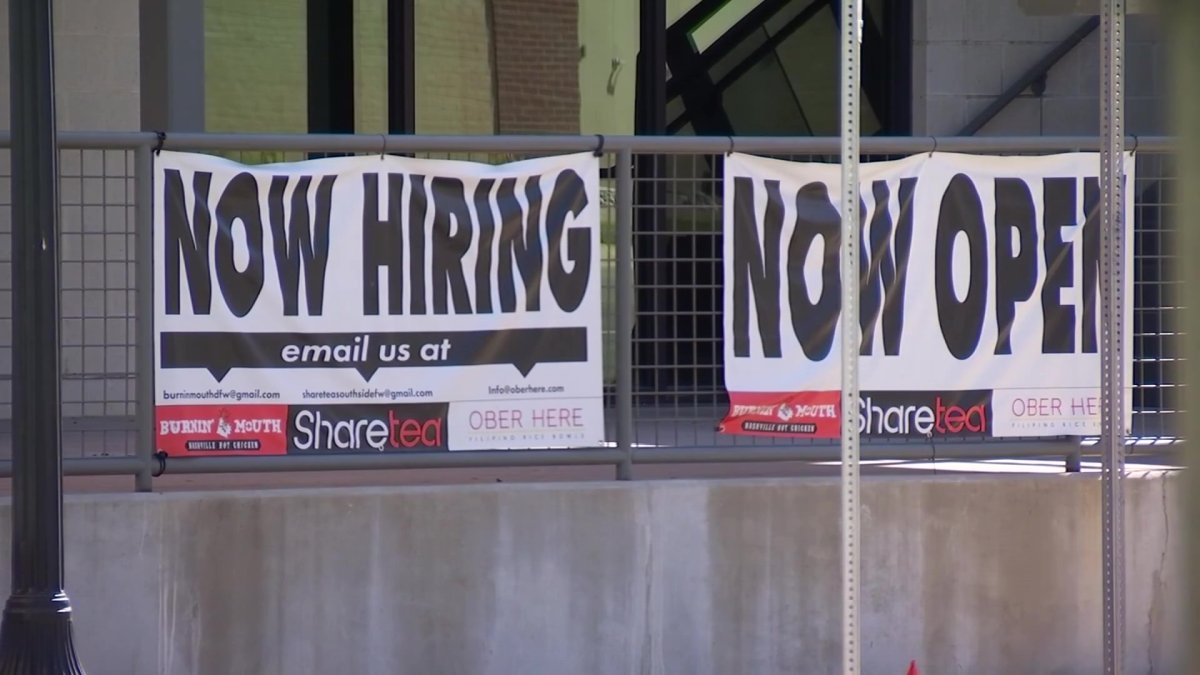
The U.S. economy added fewer jobs than expected in December, capping what economists say was the weakest year for job creation since 2009, aside from 2020.
Data from October shows about 73,000 job openings in Connecticut, according to the Connecticut Business and Industry Association. The state’s unemployment rate stands at about 4%, which is historically low.
Here is the topline information from Connecticut’s October and November jobs report released this week, according to the state’s Labor Department (data was delayed due to the government shutdown):
Overall, Connecticut job growth is +1,800 from November 2024 to November 2025.
Private sector payrolls were up 1,900 in November after a 900 decline in October.
Health Care & Social Assistance is up 1,700 in November and recovered September losses.
Construction is at the highest level since August 2008, a trend expected to continue with infrastructure and housing initiatives.
Retail continues a slow downward trajectory. The sector was up 200 jobs in November, not enough to offset September and October losses.
Initial unemployment claims are just under 30,000, slightly higher than last year at this time when they were around 25,000.
In a press release, Connecticut Department of Labor Commissioner Danté Bartolomeo said: “After several years of strong job growth that created a job seekers’ market, the economy is now more competitive—it takes job seekers longer to find employment than it has in the recent past.”
Experts say the experience of finding a job can be very different for job seekers.
Dustin Nord, director of the CBIA Foundation for Economic Growth and Opportunity, said the state may be seeing what economists call frictional unemployment.
“We’re not seeing huge changes in hiring and quits,” Nord said, adding that it’s possible people who are losing positions are not necessarily seeing positions open in the field that they’re losing their job from.
Although unemployment remains relatively low, Nord said recent trends raise concerns about the direction of the labor market.
“There’s not that many people on the sidelines, but I’d say the trends are definitely not moving in the right direction,” Nord said.
Connecticut faces longer‑term workforce challenges. The state’s labor force has declined by about 19,600 people since January, according to the new data.
“Federal immigration policies may impact these numbers. Connecticut employers rely on an immigrant workforce to offset retirements in Connecticut’s aging workforce and the state’s low birthrate; 23% of Connecticut workers are born outside of the U.S.,” the state’s Department of Labor said.
Connecticut’s labor force participation rate of 64% is higher than the national rate of 62.5%, the Department of Labor said.
The CBIA said since the COVID‑19 pandemic, Connecticut’s labor force has grown just 0.2%, compared with 4.3% growth nationwide.
That gap is occurring even as wages rise. Average weekly earnings in Connecticut are up 5.4% since November 2024, outpacing inflation.
Still, the CBIA says those gains reinforce the need to address affordability across the state.
“If we take the right steps, especially over the next six months, to try to find ways to make it more affordable,” Nord said. “I think there’s no reason we can’t continue to see, at least steady economic activity in the state.”
Nord said those steps include addressing costs tied to housing, energy and childcare.
Overall, the data suggests Connecticut’s job growth has been largely stagnant. Looking ahead, what happens in 2026 will depend both on state‑level policy decisions and broader national economic trends.
Patrick Flaherty, director of research at the Connecticut Department of Labor, said in a review of the data that recent numbers suggest the pace of growth could continue, but at a slower rate.
“The November increase suggests modest job growth that Connecticut’s labor market has shown could continue into 2026, although at a slower pace, as long as the nation avoids a downturn,” Flaherty said.