09
Jan 2026
Denmark immigration rules will tighten from January 2026, raising application fees, increasing salary thresholds, and cutting the number of jobs open to foreign workers.
The changes, announced by Danish authorities, apply nationwide and affect skilled workers, students, and some medical professionals as part of a broader update to work and residency permits.
Start of stricter rules
The updated Denmark immigration rules took effect on January 1, 2026. The changes raise application fees, increase minimum salary thresholds, and narrow the list of job titles eligible for foreign workers under several permit schemes.
According to the Danish Agency for International Recruitment and Integration (SIRI), the revised fees apply to both new applications and extensions. The higher costs cover work permits, residence permits, and applications for accompanying family members.
The updated fee schedule reflects figures set for 2026 and replaces the rates used in 2025.
The changes apply nationwide and affect non-EU nationals most directly. EU and Nordic citizens are not subject to these permit requirements under existing freedom-of-movement rules.
All foreign workers affected
Foreign workers applying under the Pay Limit Scheme and the Supplementary Pay Limit Scheme face higher salary thresholds starting in 2026.
SIRI has confirmed that applications submitted from January 1, 2026, will be assessed using updated income statistics based on recent wage data.
Medical professionals are also impacted. Denmark has suspended the issuance of new temporary residence permits for foreign doctors and nurses seeking Danish professional authorization.
The suspension runs until December 31, 2026, and does not apply to individuals who already hold Danish authorization or qualify under other existing skilled migration schemes.
Non-EU students enrolled in institutions that are not state-approved continue to face limits on employment rights, post-study job search permits, and family reunification. These restrictions remain part of Denmark’s immigration framework going into 2026.
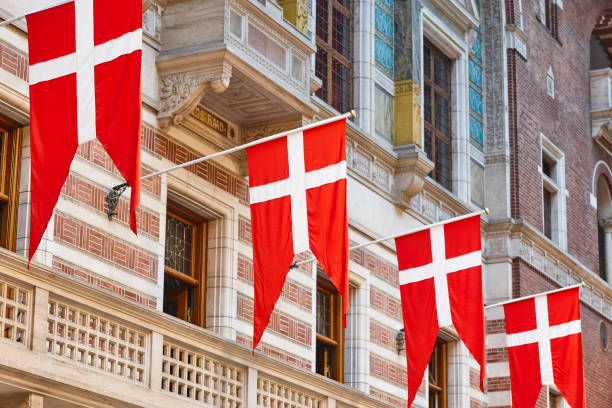
(Image courtesy of ABBPhoto via iStock)
Job options narrow
Denmark has updated its Positive Lists for 2026, which identify job titles experiencing labor shortages that qualify foreign nationals for work and residence permits.
The Positive List for People with a Higher Education and the Positive List for Skilled Work both include fewer job titles than in previous updates.
SIRI has stated that the Positive Lists are revised twice a year and are based on labor market data. Job titles may be removed when they no longer meet shortage criteria or when positions have been listed for the maximum allowable period.
Foreign nationals offered jobs outside the updated lists are not eligible to apply under the Positive List schemes. Employers are required to ensure that job offers match the listed titles and education requirements before submitting applications.
Pressure behind changes
Danish authorities have linked the 2026 changes to updated wage data, administrative costs, and processing capacity.
The Ministry of Immigration and Integration and SIRI have both indicated that salary thresholds and fees are reviewed regularly and adjusted based on economic data.
The changes were finalized ahead of Denmark’s conclusion of its presidency of the Council of the European Union at the end of 2025.
Multiple updates to immigration rules were announced during this period, including revisions affecting workers, students, and posted employees.
SIRI has confirmed that income statistics from the third quarter of 2025 are used to assess applications filed from January 1, 2026.
In cases where employment is not covered by a collective agreement, the agency may assess whether salaries correspond to Danish standards.

(Image courtesy by Kindel Media via Pexels)
Applying under tougher standards
From January 2026, applicants must meet the updated salary thresholds and submit documentation that matches the revised requirements for their chosen permit scheme.
Required documents include job contracts, job descriptions, proof of qualifications, and information linked to standardized job classification codes.
Employers sponsoring foreign workers must pay the updated application fees and submit contracts that meet wage requirements before an application is filed.
Foreign companies posting workers to Denmark must also comply with stricter documentation requirements under the Register of Foreign Service Providers (RUT).
SIRI has stated that applications may take longer if additional documentation is required. Processing times depend on the type of permit and whether further information is requested during review.
Entry rules tighten
Alongside Denmark’s immigration updates, entry rules across Europe are also changing.
The European Travel Information and Authorization System (ETIAS) is scheduled to begin operations in the last quarter of 2026 for visa-exempt travelers entering 30 European countries, including Denmark.
ETIAS is a travel authorization, not a visa. According to EU guidance, it will be required for short stays of up to 90 days within a 180-day period and will be linked electronically to a traveler’s passport.
Travelers must obtain approval before boarding flights or entering participating countries.
EU authorities have clarified that ETIAS does not grant automatic entry. Border officials will continue to verify entry conditions at arrival. Travelers seeking to work, study, or stay long term must still secure the appropriate national permits.
Rules that stay the same
Existing residence and work permit holders are not automatically subject to the new salary thresholds if they apply for extensions under unchanged employment terms.
SIRI has stated that extensions may still be assessed under the salary level in place when the original permit was granted, provided employment conditions remain the same.
Family reunification remains available under current rules, though application fees for accompanying family members increase in 2026. Applicants must continue to meet existing income, housing, and documentation requirements.
Denmark will continue to allow limited permit-free work for certain short-term activities. This includes specific roles at international conferences, trade fairs, and corporate events, subject to defined time limits and conditions.

(Image courtesy of Varlay via iStock)
Next updates to watch
Danish authorities have advised applicants and employers to review official guidance carefully before submitting applications in 2026. The Positive Lists will continue to be updated twice a year, and income statistics will be revised quarterly.
Foreign nationals planning to work, study, or relocate to Denmark in 2026 must ensure that job offers, salaries, and documentation align with the updated rules.
Travelers entering Denmark for short stays will also need to prepare for the rollout of the ETIAS as part of broader changes to Europe’s border entry process.
As the new framework takes effect, applicants are expected to rely on official sources for up-to-date requirements, timelines, and eligibility criteria.