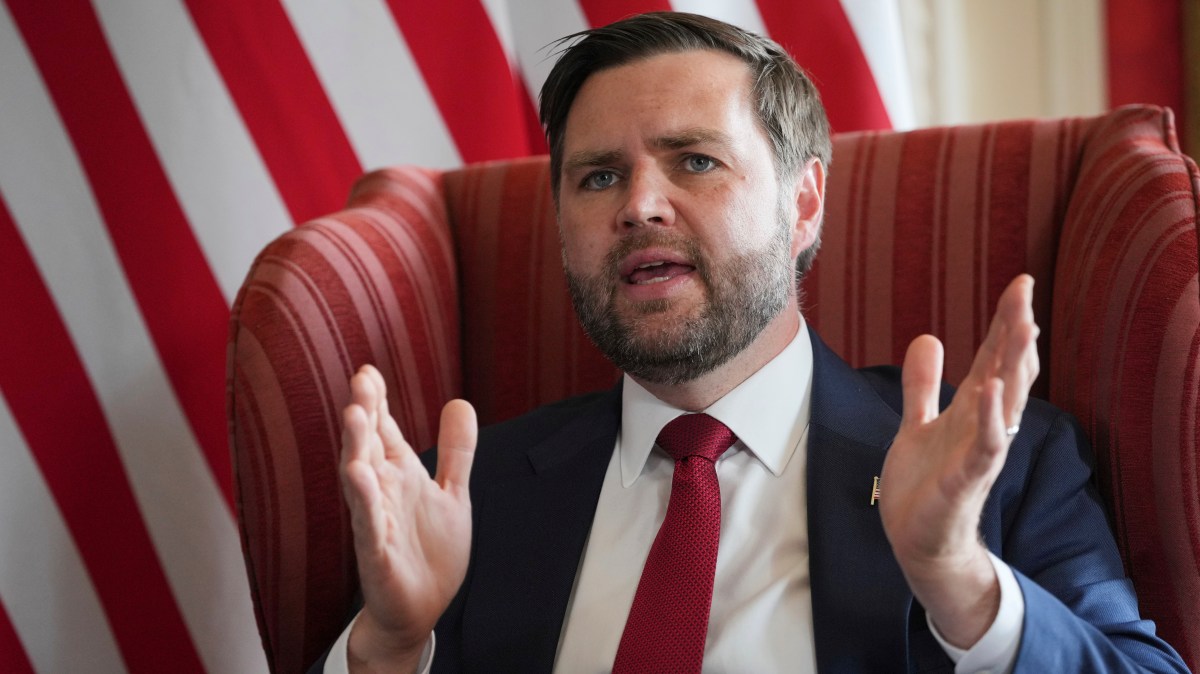
JD Vance has described alleged Islamist radicalisation at British universities as “absolutely insane” as the government faced calls to urgently investigate the issue.
The US vice president’s intervention came after The Times revealed that the United Arab Emirates had cut funding for students who wish to study in the UK over fears about the influence of the Muslim Brotherhood.
Emirati officials are concerned that the Islamist group, which is proscribed as a terrorist organisation by the UAE, has been exposing students to extremist ideology on British campuses.
This prompted the Gulf state to stop giving state scholarships to students seeking to earn degrees at institutions in the UK.
In a post on X, Vance said news of Abu Dhabi’s decision was “absolutely insane”. He added: “Some of our best Muslim allies in the Gulf think the Islamist indoctrination in certain parts of the west is too dangerous.”
Jewish groups and think tanks that monitor extremism in the UK have also called for the government to launch an urgent investigation into the matter.
Russell Langer, director of public affairs at the Jewish Leadership Council, said the Home Office should use “proscription powers” against the group and “all their front organisations”. He warned that their “malign influence” and activities “pose a real danger to the British public”.
The Muslim Brotherhood lacks a formal structure in Britain and does not operate under its own name, making proscription a challenge. But it is believed to have set up a network of front organisations which vary from small community groups to student societies to political bodies.
Dr Alan Mendoza, executive director of the Henry Jackson Society, said the think tank’s concern is “not open extremism but the quiet spread of Islamist ideas on campus”.
This includes Brotherhood-linked activists “influencing student societies and hosting speakers tied to Islamist networks,” he said. “These activities often sit just below regulatory thresholds, which is why universities, regulators and government must take oversight far more seriously.”
Mendoza added: “The UAE’s decision to restrict funding for students coming to the UK should be taken as a clear warning from a close security partner.
“At a minimum, the government, regulators, and university leaders should urgently investigate the extent of Islamist-linked activity within British institutions and be transparent about what they find. Continued inaction not only risks domestic security, but is now carrying real diplomatic and economic consequences.”

Universities UK said British education institutions must support freedom of speech within the boundaries of the law
GETTY IMAGES
Abu Dhabi’s higher education ministry reportedly published a list of global universities in June, for which scholarships would be approved and qualifications certified, as part of reforms that limited funding to the best-performing institutions.
The list included universities in countries such as the US, Australia, Israel and France, but notably not the UK, which is home to many of the world’s top academic institutions.
A list currently published on the website of the UAE’s Ministry of Higher Education and Academic Research sets out “approved universities and majors for scholarships”.
This includes courses at the University of Buenos Aires in Argentina, KTH Royal Institute of Technology in Sweden, the University of Chicago, Peking University in China and three universities in Colombia. More than 50 courses are included at universities in Russia.
The Emirati government is not banning UK enrollments outright, as wealthier families can still send their children to study in Britain if they pay for the fees themselves. But the move will likely have a dramatic impact on the number of UAE students that choose to earn degrees in the country.
Dr Paul Stott, head of security and extremism at the Policy Exchange think tank, also called for the government to investigate, in order to “protect our social cohesion, and the reputation of our universities”.
He said: “The higher education sector is an important part of the UK economy. Reports a Gulf country is reluctant to send its students here because of Islamist extremists on campus is a matter of great concern.”
The UAE’s move is the latest development in its long campaign to encourage European nations to crack down on the Muslim Brotherhood.
The Gulf state believes that the Islamist group poses a serious threat to its autocratic but relatively secular and socially liberal system.
In 2014 it successfully lobbied the UK government to launch a comprehensive review into the group.
David Cameron, who was prime minister at the time, said that “Muslim Brotherhood-associated and influenced groups in the UK have at times had a significant influence on national organisations which have claimed to represent Muslim communities (and on that basis have had a dialogue with government), charities and some mosques.”
However, the inquiry ultimately found that the group had not been linked to terrorist-related activity in and against Britain.
Last year, Sir Keir Starmer’s administration said the matter of the Brotherhood’s proscription was under “close review”.
However, one expert on the Middle East cautioned that the Emiratis were “obsessed” with the Muslim Brotherhood, which is more of an ideology than a structured organisation.
They added: “They complain to the UK about the Muslim Brotherhood to cause a diplomatic stink until they get what they want. It’s often an internal thing. I don’t believe our universities are infested with the Muslim Brotherhood, it’s all about positioning.”
The Home Office said: “All forms of extremism have absolutely no place in our society.
“We have some of the strongest laws in the world to protect our citizens from hatred and terrorism. We will continue to work with law enforcement and our international partners, ensuring we have the tools and powers to keep people safe.”
Universities UK, which represents vice-chancellors, said: “Universities must take steps to support free speech where it is within the boundaries set by law. However they must also demonstrate that they comply with statutory duties under the Prevent regulations which are specifically aimed at countering extremist views.
“Institutions take these duties extremely seriously and work closely with the relevant regulators and agencies in carrying them out.”