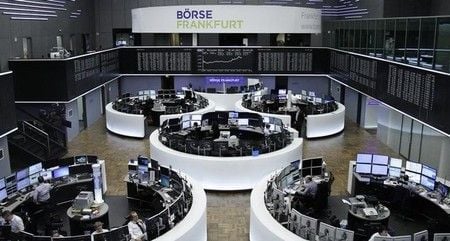
FRANKFURT (dpa-AFX) – After a strong start to the year, the
DAX could continue its recent record-breaking run in the coming week. However, geopolitical risks may prompt investors to act with increased caution. “Following the brisk rally of recent weeks, the market is beginning to move more deliberately,” commented analysts at Index Radar. Investors are likely to keep a close eye on inflation data from the United States. Additionally, US banks are already kicking off the next earnings season.
With a surge to a record high near 25,300 points on Friday, the DAX has extended its robust performance from 2025 into the still-young year. The German benchmark index is thus working on the so-called January effect, wrote capital markets expert Martin Utschneider from broker RoboMarkets. The assumption that stock prices perform above average in January is not a law of nature, he noted. Nevertheless, the DAX has established a short-term upward trend.
The central driver of prices remains hope for a revival of the German economy in 2026. Recent economic data has partly reinforced investors’ belief that the economic downturn has been overcome, observed market analyst Andreas Lipkow. The defense industry plays a particularly important role in the overall economic picture.
On Thursday, the German Federal Statistical Office will release a preliminary estimate of last year’s gross domestic product. Robert Greil, chief strategist at private bank Merck Finck, expects Germany to see more or less its third consecutive year of stagnation. Thanks to high government investment in infrastructure and defense, “an increase in economic output of around one percent is at least realistic” in the new year, Greil said.
Geopolitical conflicts, however, could dampen investor sentiment at any time. Following the US attack on Venezuela, energy markets are especially in focus. The prospect of lower oil prices had recently overshadowed the associated risks. Now, according to Consorsbank chief market analyst Jochen Stanzl, attention is also turning to protests in Iran, which, despite all sanctions, remains an important oil producer.
“Additionally, recent statements from Washington regarding the strategic importance of Greenland have caused irritation among European partners,” commented Martin Zurek of Weberbank. “For capital markets, this means that political decisions are likely to continue to have a short-term impact on commodity prices, trade flows, and market volatility.”
Even aside from these conflicts, investors are watching the US: On Tuesday, fresh consumer price data is on the agenda, which, following the already published labor market report, is also likely to influence the future monetary policy of the US Federal Reserve.
The mixed jobs data tended to play into investors’ hands ahead of the weekend. It increased pressure on the Fed to cut interest rates more quickly to support the economy, which would also mean more favorable financing conditions for companies, explained analyst Frank Sohlleder from broker ActivTrades.
On top of that, US banks are giving the starting signal for earnings season. Over the course of the week, JPMorgan, Bank of America, Citigroup, Wells Fargo, Goldman Sachs, and Morgan Stanley will release their quarterly figures. “As the revenues of the ten largest investment banks once again exceeded 100 billion US dollars in 2025, the pressure here is particularly high,” wrote Hans-Jakob Frey of LBBW.
In Germany, food group Südzucker will also present figures for the third business quarter on Tuesday. In addition, delivery figures for the past year from automaker Volkswagen and aircraft manufacturer Airbus are due on Monday. On Friday, airport operator Fraport will report passenger numbers for 2025./niw/bek/mis
— By Nicklas Wolf, dpa-AFX —