Japan Vitamin K2 Market Overview
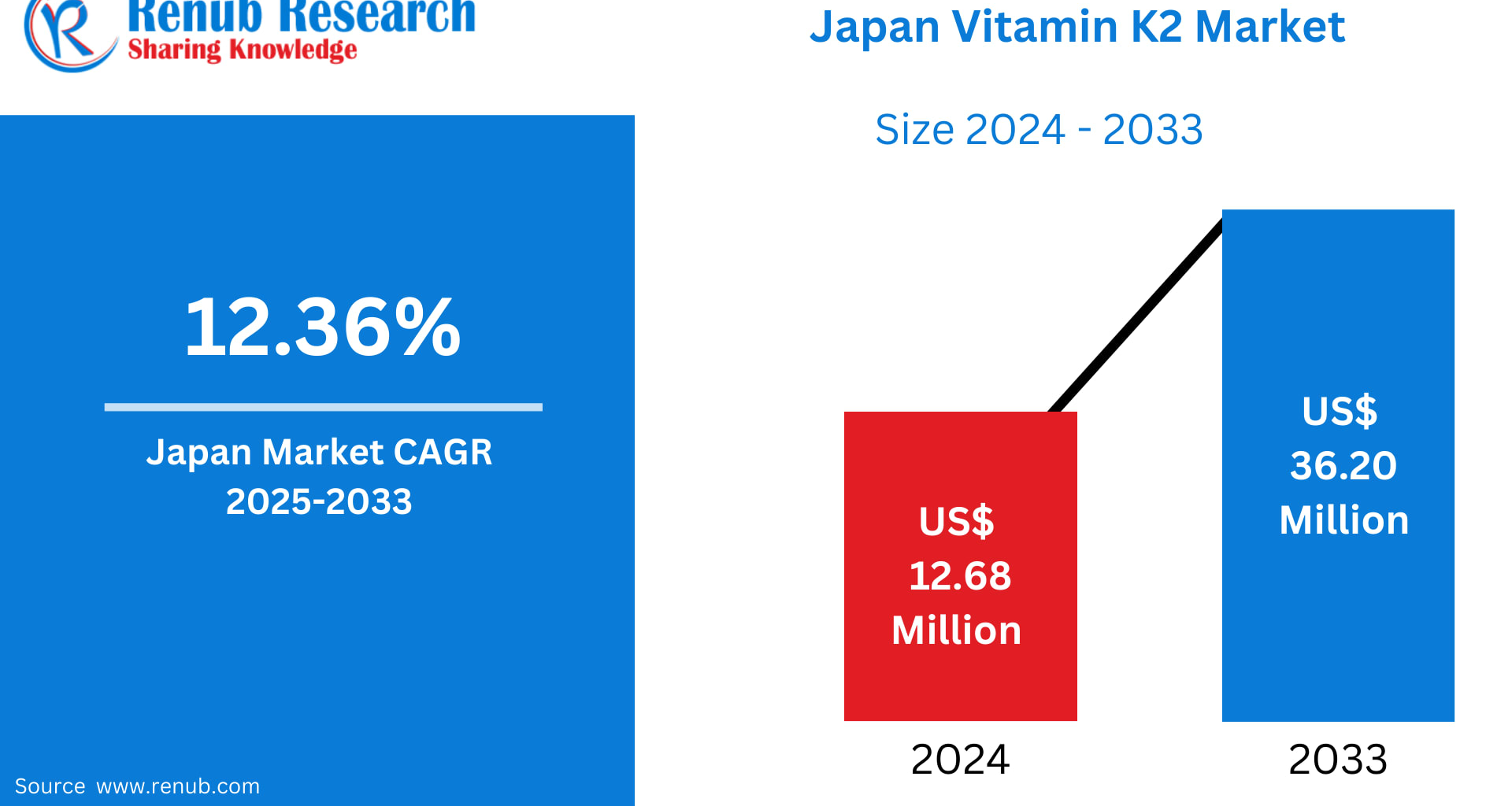
The Japan Vitamin K2 Market is poised for substantial expansion over the next decade, reflecting the country’s growing emphasis on preventive healthcare, healthy aging, and functional nutrition. According to market estimates, the Japanese Vitamin K2 market is projected to grow from US$ 12.68 million in 2024 to US$ 36.20 million by 2033, registering a robust Compound Annual Growth Rate (CAGR) of 12.36% during 2025–2033.
The market’s expansion is further reinforced by Japan’s deep-rooted acceptance of nutraceuticals, strong trust in fermented foods, and proactive government and corporate wellness initiatives. These factors collectively position Vitamin K2 as a cornerstone ingredient in Japan’s evolving health and nutrition ecosystem.
Japan Vitamin K2 Market Outlook
Vitamin K2 is a fat-soluble vitamin that plays a vital role in several physiological processes, particularly blood coagulation, bone mineralization, and cardiovascular health. It exists in multiple forms, with MK-4 and MK-7 being the most commercially significant. In Japan, both forms are widely used, although their applications differ across pharmaceutical, supplement, and food sectors.
Scientific research increasingly highlights Vitamin K2’s ability to activate proteins such as osteocalcin and matrix Gla-protein, which regulate calcium deposition. This function is especially relevant in Japan, where osteoporosis-related fractures and cardiovascular complications are major public health concerns among older adults. As awareness of these benefits grows, Vitamin K2 is becoming a preferred ingredient in preventive health regimens.
Japan’s cultural familiarity with natto—a traditional fermented soybean food naturally rich in Vitamin K2—has also accelerated consumer acceptance. Unlike many Western markets, Japanese consumers already associate Vitamin K2 with everyday nutrition, giving the domestic market a unique advantage in terms of trust and adoption.
Key Growth Drivers for the Japan Vitamin K2 Market
Rising Awareness of Cardiovascular and Bone Health
Japan’s aging population remains the most influential driver of Vitamin K2 demand. As life expectancy increases, so does the prevalence of age-related bone density loss and cardiovascular conditions. Vitamin K2’s role in strengthening bones and reducing arterial calcification has gained attention among healthcare professionals and consumers alike.
Medical recommendations, workplace wellness programs, and public health campaigns are increasingly emphasizing micronutrients that support long-term health. These initiatives are reinforcing Vitamin K2’s reputation as an essential nutrient for aging populations, boosting its uptake in both supplements and fortified foods.
Expansion of Functional Foods and Nutraceuticals
Japan has long been a global leader in functional foods, and Vitamin K2 is now being incorporated into a wide range of products, including dairy items, beverages, powders, and fortified staples. Consumers are actively seeking foods that offer tangible health benefits beyond basic nutrition, and Vitamin K2 fits well within this trend.
Manufacturers are responding with innovative delivery formats such as capsules, soft gels, drinkable sachets, and fortified yogurts. These convenient options appeal to busy urban consumers as well as older individuals seeking easy-to-consume health products. The nutraceutical sector, in particular, is emerging as a major growth engine for Vitamin K2 across Japan.
Preference for Natural and Fermented Ingredients
Japanese consumers display a strong preference for natural, plant-based, and fermented ingredients. Vitamin K2 derived from natto and other fermented sources aligns seamlessly with these preferences. Clean-label positioning, minimal processing, and traditional sourcing significantly enhance consumer trust.
This inclination toward natural ingredients has strengthened the market for naturally sourced Vitamin K2, especially among health-conscious consumers who avoid synthetic additives. As wellness lifestyles continue to gain popularity, natural Vitamin K2 is expected to remain a key growth segment within the broader market.
Challenges in the Japan Vitamin K2 Market
High Production Costs of Natural Vitamin K2
Despite strong demand, the production of natural Vitamin K2—particularly from fermented sources—remains costly. Complex extraction processes, stringent quality controls, and limited scalability increase manufacturing expenses. These higher costs often result in premium pricing, restricting affordability for price-sensitive consumers.
For manufacturers, balancing product quality with competitive pricing poses an ongoing challenge. While premium consumers are willing to pay more for natural formulations, broader market penetration may be constrained unless production efficiencies improve.
Limited Awareness Outside Major Urban Centers
Although awareness of Vitamin K2 is relatively high in metropolitan regions such as Tokyo and Osaka, knowledge levels remain lower in rural and semi-urban areas. Limited exposure to functional foods and nutraceutical marketing slows adoption outside major cities.
Expanding distribution networks, localized education campaigns, and partnerships with regional pharmacies will be essential to unlock demand in these underserved markets. Without targeted efforts, Vitamin K2 consumption may remain concentrated in urban Japan.
Japan Vitamin MK-2 Market Insights
Vitamin MK-2 plays a prominent role in pharmaceutical and clinical applications, particularly in the management of osteoporosis. In Japan, MK-2 has a long history of medical use, especially among elderly patients. Hospitals and healthcare practitioners increasingly recommend MK-2 supplements to support bone strength and reduce fracture risks.
This clinical credibility continues to drive steady demand within the pharmaceutical and prescription supplement segments, making MK-2 a vital contributor to overall market growth.
Japan Vitamin K2 Powder & Crystalline Market
Powder and crystalline forms of Vitamin K2 are widely used in dietary supplements, functional foods, and beverage formulations. Their stability, longer shelf life, and ease of formulation make them highly attractive to Japanese manufacturers.
As functional food innovation accelerates, demand for powdered and crystalline Vitamin K2 is expected to rise steadily, particularly among large-scale nutraceutical producers.
Japan Natural Vitamin K2 Market
Natural Vitamin K2 sourced from fermented foods holds a distinctive position in Japan due to cultural familiarity and consumer trust. Natto-derived Vitamin K2 is perceived as authentic, traditional, and highly beneficial, especially among older consumers.
This segment continues to expand as clean-label trends and holistic wellness philosophies gain traction across the country.
Japan Vitamin K2 Health Supplements Market
Health supplements represent one of the fastest-growing applications for Vitamin K2 in Japan. Capsules, tablets, and soft gels are widely consumed for bone and cardiovascular support. Increased availability through pharmacies, health food stores, and specialty retailers is further strengthening this segment.
Preventive healthcare awareness and rising healthcare costs are encouraging consumers to adopt supplement-based solutions, sustaining long-term growth in this category.
Japan Offline Vitamin K2 Market
Offline distribution channels—including pharmacies, supermarkets, and specialty health stores—continue to dominate Vitamin K2 sales in Japan. Consumers value in-store consultations and product authenticity, especially for health-related purchases.
Despite the growth of e-commerce, offline channels remain central to market expansion due to Japan’s traditional shopping preferences and emphasis on trust.
Regional Market Insights
Tokyo Vitamin K2 Market
Tokyo leads the national Vitamin K2 market, driven by high health awareness, dense retail infrastructure, and rapid adoption of new wellness trends. The city often serves as the launchpad for innovative Vitamin K2 products.
Kansai Vitamin K2 Market
The Kansai region, including Osaka and Kyoto, represents a significant market due to its aging population and strong healthcare ecosystem. High nutraceutical consumption further supports demand.
Saitama Vitamin K2 Market
Saitama is emerging as a key growth region, benefiting from suburban expansion, rising incomes, and access to Tokyo’s retail networks.
Market Segmentation
By Product:
MK-7
MK-4
By Dosage Form:
Powder & Crystalline
Capsules & Tablets
Oils & Liquid
By Source:
Natural
Synthetic
By Application:
Health Supplements
Functional Foods & Beverages
By Distribution Channel:
Offline
Online
Top Regions:
Tokyo, Kansai, Aichi, Kanagawa, Saitama, Hyogo, Chiba, Hokkaido, Fukuoka, Shizuoka
Competitive Landscape and Key Players
The Japan Vitamin K2 market is moderately competitive, with global and regional nutraceutical brands expanding their presence through innovation and premium formulations. Major companies covered in the analysis include NOW Foods, Life Extension, Nestlé, Bronson, NatureWise, Solaray, Natural Factors, and Source Naturals.
Each company has been evaluated across five viewpoints: overview, key personnel, recent developments, SWOT analysis, and revenue performance.
Final Thoughts
The Japan Vitamin K2 Market is entering a phase of sustained and diversified growth, supported by demographic trends, preventive healthcare awareness, and strong cultural acceptance of functional nutrition. With a projected CAGR of 12.36% through 2033, Vitamin K2 is set to become an increasingly important component of Japan’s nutraceutical and functional food industries.
While challenges such as production costs and uneven awareness persist, continued innovation, regional expansion, and natural ingredient positioning are expected to unlock new opportunities. As Japan prioritizes healthy aging and long-term wellness, Vitamin K2 stands out as a nutrient with both scientific credibility and cultural resonance—ensuring its relevance well beyond the forecast period.