The Athletic has launched a Cricket WhatsApp Channel. Click here to join.
An Ashes series packed with drama, controversy, incident and numbers — some good, some bad and some downright ridiculous — has drawn to a conclusion.
The upshot is that England, once again, leave Australia empty-handed with the tourists having now been comfortably beaten in each of the last four series to take place Down Under.
However, Ben Stokes’ side did play their part in a contest that, when it came to the record books if not always the standard of cricket, was stellar.
Here, The Athletic takes a look at some of the remarkable statistics and numbers to emerge from the 2025-26 Ashes series and places them in historical context.
Editor’s note: ‘Completed Tests’ refers to games that were played to a conclusion i.e not including matches that began but were abandoned/heavily impacted as a result of/by the weather, unfit pitches etc.
Blink and you missed it
Two of the five Tests in the series ended inside just two days — the opener at Perth, which Australia won by eight wickets, and the fourth match at Melbourne where England triumphed.
The last time there were multiple completed two-day Tests in a series was in 1912, when the Triangular Tournament between England, Australia and South Africa also had two (from nine Tests). As for the last series between two teams to have two matches finish before the third day of play, that was on England’s tour of South Africa in 1896.
There have been 27 completed two-day Tests in history (there has never been a one-day Test), with more in the last six weeks of 2025 (two) than there were from 1937 to 1999 (one).
There were 847 balls bowled in the Perth match and 852 at Melbourne, with only two completed Ashes Tests in history seeing fewer balls sent down — both of which took place in 1888. Overall, only eight completed Tests have had fewer balls.
Fewest balls in completed Test matches
South Africa v India
Cape Town
2024
642
Australia v South Africa
Melbourne
1932
656
West Indies v England
Bridgetown
1935
672
England v Australia
Old Trafford
1888
788
England v Australia
Lord’s
1888
792
South Africa v England
Cape Town
1889
796
England v South Africa
The Oval
1912
815
India v England
Ahmedabad
2021
842
Australia v England
Perth
2025
847
Australia v England
Melbourne
2025
852
The total number of balls bowled across the five matches was 7,677, which is the fourth-fewest in the 159 five-Test series that have ever been played.
Fewest balls in a five-Test series
England v Australia
England
1902
6,545
England v South Africa
England
1924
7,659
Australia v India
Australia
2024-2025
7,664
Australia v England
Australia
2025-2026
7,677
West Indies v England
West Indies
1986
7,699
England v New Zealand
England
1958
7,785
England v Australia
England
2001
7,868
England v Australia
England
2015
7,920
England v Australia
England
1921
7,971
England v Australia
England
1909
8,145
There were 10,506 fewer balls bowled in this series than there were in the 1928-29 Ashes in Australia, with the 18,183 in that five-Test contest almost 100 years ago the most in history. Those Ashes were also notable as they saw Sir Don Bradman — unquestionably the best batter of all time and arguably the greatest sportsperson, too — make his Test debut.
He didn’t face the most balls though; that distinction went to England’s Wally Hammond with 2,521.
England ended winless run…
England’s victory at Melbourne was their first in Australia in a Test since January 2011, ending a winless run that had lasted 18 matches and almost 15 years.
The drought was their longest ever away against Australia, with their previous worst a 12-Test winless streak from January 1937 to February 1951. That run was also ended by a victory at Melbourne after fielding first.
The recent streak was not, however, England’s longest without victory away from home against a specific opponent. That came in Pakistan, where England went 19 Tests without winning from 1962 to 2000 before Graham Thorpe and The Athletic columnist Nasser Hussain’s famous batting partnership in near-darkness in Karachi helped secure a precious win.
Remarkably, 17 of those 19 games were draws.
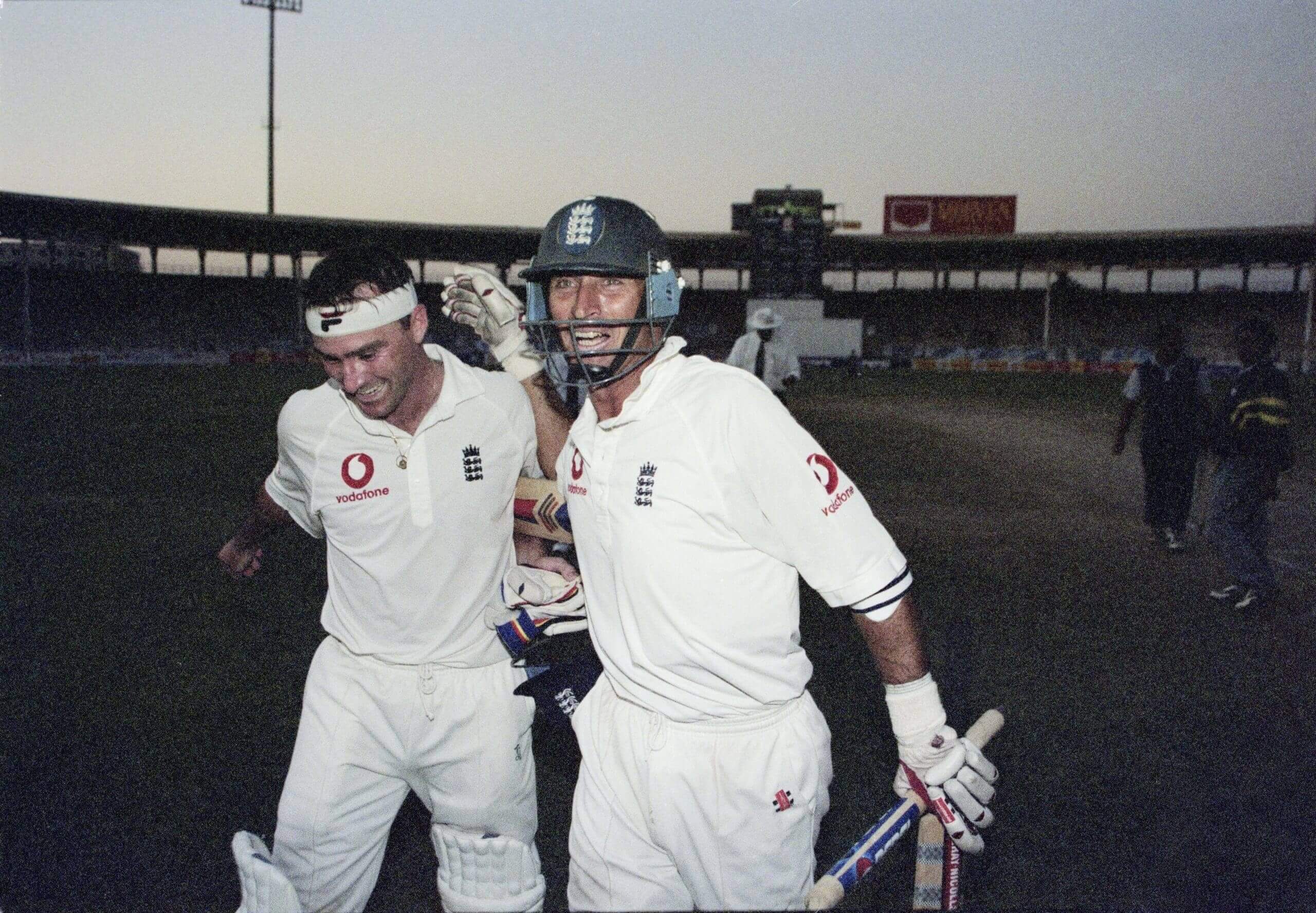
Graham Thorpe (left) and Nasser Hussain after their twilight heroics in Pakistan in 2000 (Laurence Griffiths/Getty Images)
Here are England’s longest winless runs away against each Test-playing nation, with the victory at Melbourne meaning the winless streak in Pakistan was not equalled.
…but Ashes heartbreak Down Under goes on
While England may have at least triumphed in a Test this time around, the 2010-11 series remains the last time they won the Ashes in Australia. It is also their only Test series triumph away against the Aussies since 1986-87.
England have used 46 players in away Ashes Tests in this period, compared to Australia’s 33. Nine of those 46 have featured just once.
Players used by England since last away Ashes series win
Joe Root
19
Ben Stokes
14
James Anderson
13
Stuart Broad
13
Alastair Cook
10
Dawid Malan
10
Jonny Bairstow
9
Zak Crawley
8
Chris Woakes
7
Ollie Pope
6
Moeen Ali
5
Ian Bell
5
Harry Brook
5
Michael Carberry
5
Brydon Carse
5
Ben Duckett
5
Kevin Pietersen
5
Jamie Smith
5
Mark Stoneman
5
James Vince
5
Mark Wood
5
Jos Buttler
4
Haseeb Hameed
4
Will Jacks
4
Ollie Robinson
4
Jofra Archer
3
Gus Atkinson
3
Rory Burns
3
Jack Leach
3
Matt Prior
3
Graeme Swann
3
Josh Tongue
3
Jacob Bethell
2
Tim Bresnan
2
Tom Curran
2
Craig Overton
2
Monty Panesar
2
Jake Ball
1
Gary Ballance
1
Sam Billings
1
Scott Borthwick
1
Mason Crane
1
Matthew Potts
1
Boyd Rankin
1
Chris Tremlett
1
Jonathan Trott
1
In contrast, Jackson Bird (Melbourne in 2017) and Beau Webster (Sydney in 2026) are the only Australians to have played just one Test at home against England in this period.
Joe Root’s 17 Tests without victory in Australia was the longest run of games without ever winning away against a specific opponent in the sport’s history. But, after England’s triumph at Melbourne last month, the longest run without ever tasting victory against a single team returns to India’s Kapil Dev, who played 15 Tests in Pakistan from 1978 to 1989 without a win.
Where have all the spinners gone?
One of the stories of the series was how little spinners featured. In total just 1,050 of the 7,677 balls (13.7 per cent) were sent down by spin bowlers, easily the fewest in Ashes history and the fifth-fewest in any five-match Test series ever.
There were no balls bowled at all by spinners in the Melbourne Test, the first time this had ever happened in Australia and the first such occurrence in an Ashes match since 1981 at Trent Bridge in England. Here is every completed Test in history where there has not been a single ball of spin:
Completed Test matches without a ball of spin
South Africa v Australia
Johannesburg
1902
South Africa v Australia
Cape Town
1902
South Africa v England
Durban
1923
England v Australia
Trent Bridge
1981
New Zealand v Pakistan
Dunedin
1985
England v West Indies
Headingley
1988
West Indies v England
Bridgetown
1990
West Indies v England
St John’s
1990
South Africa v India
Johannesburg
2018
South Africa v India
Cape Town
2024
Australia v England
Melbourne
2025
And then, after Melbourne, Australia did not even name a specialist spinner in their team for the final Test at Sydney — the first time they had done this at the ground since 1888.
Starc ageing like a fine wine
Mitchell Starc, Australia’s 35-year-old left-arm seam bowler, took an impressive 31 wickets in the series — nine more than anyone else.
In doing so he became just the fifth player in Ashes history to take 30+ wickets in a series aged 35 or older, and the first to do so at home since 1921.
Taking 30+ wickets in an Ashes series aged 35+
Shane Warne (Aus)
England
2005
35
40
George Giffen (Aus)
Australia
1894-1895
35
34
SF Barnes (Eng)
Australia
1911-1912
38
34
Mitchell Starc (Aus)
Australia
2025-2026
35
31
Arthur Mailey (Aus)
Australia
1920-1921
35
30
Arthur Mailey took 36 wickets overall in that series in 1920-21, but six of them were as a 34-year-old.
Starc has now taken 433 Test wickets overall and needs just six more to break into the top 10 on the all-time list. His feats in this series saw him move past West Indies’ Curtly Ambrose (405), Pakistan’s Wasim Akram (414), India’s Harbhajan Singh (417), South Africa’s Shaun Pollock (421) and New Zealand’s Sir Richard Hadlee (431)
He’s useful with the bat, too. Starc hit two half centuries in this Ashes, a total only eclipsed by his fellow Australians Travis Head and Alex Carey, who both passed 50 three times.
Indeed, of the 11 players in the game’s history with more Test wickets than Starc, only Indian duo Dev (31.05) and Ravichandran Ashwin (25.75) have a better batting average than the Australian’s 20.47.
Head and shoulders above
As for the stand-out batsman of the series, that was Australia’s Head who scored 629 runs and hit three centuries.
No other player in the series bagged more than 400 runs and England’s Root, with two, was the only other individual to reach three figures in an innings more than once. Head also hit the most fours (73) and sixes (nine), and top scored in four of the five Tests (with 123 in Perth, 170 in Adelaide, 46 in Melbourne and 163 in Sydney).
In the 14 Ashes that have been played in the 21st century, only Australia’s Steve Smith in 2017-18 with 687 has scored more runs at home in a series than Head did in this one.
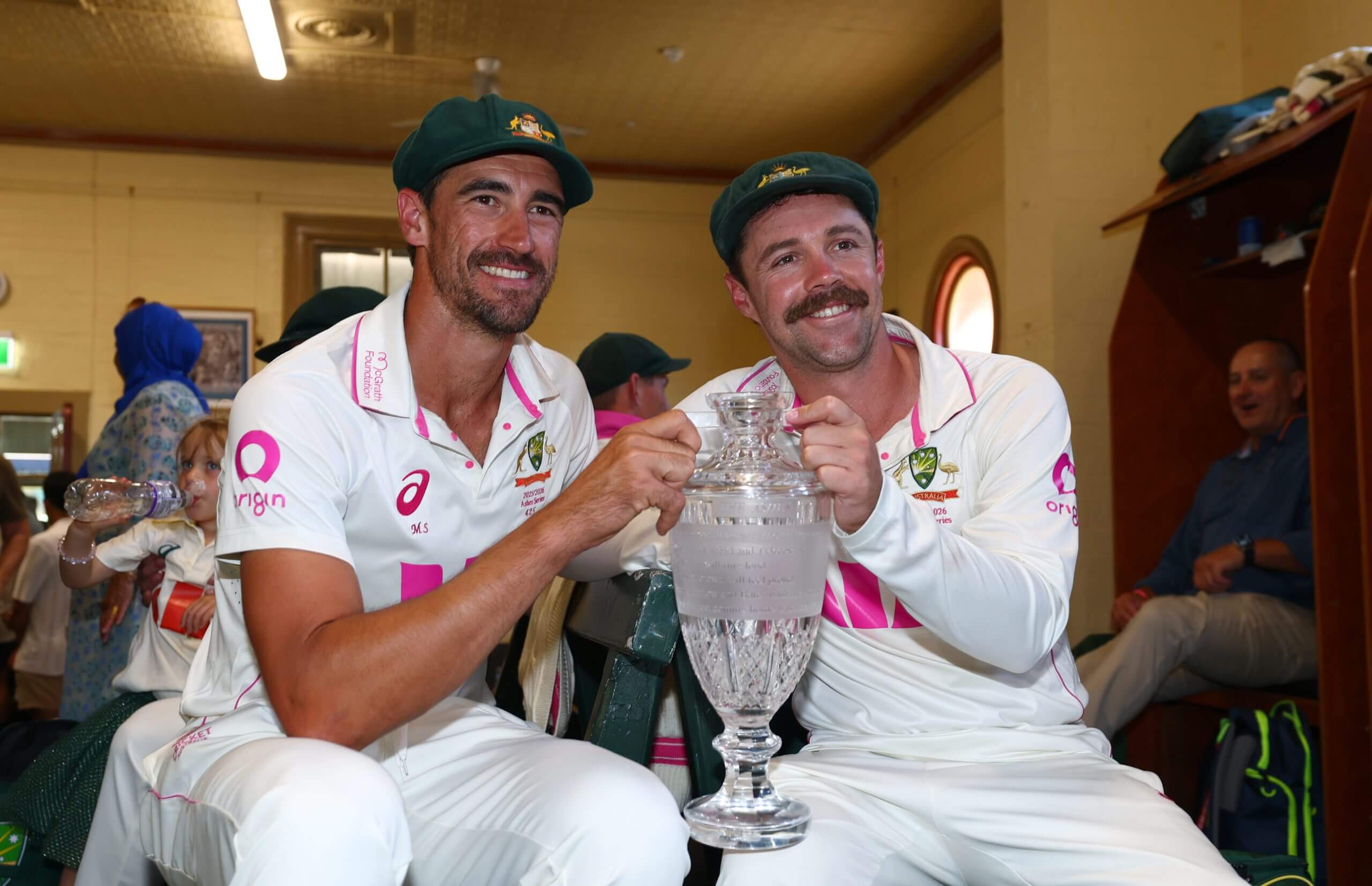
Mitchell Starc (left) and Travis Head dominated these Ashes (Robert Cianflone/Getty Images)
Just Bradman ahead of Smith now
Speaking of Smith, he is now the second-highest run-scorer in Ashes history behind Bradman — with his first-innings knock in the fifth Test seeing him surpass Sir Jack Hobbs’ total.
That innings in Sydney was also the 36-year-old’s 13th Test century against England, with Bradman — also against England — the only player in Test cricket’s 148-year history to have registered more three-figure scores against a specific opponent.
Most Test centuries vs one country
Don Bradman (Aus)
England
19
Steve Smith (Aus)
England
13
Joe Root (Eng)
India
13
Sunil Gavaskar (Ind)
West Indies
13
Jack Hobbs (Eng)
Australia
12
Catches win Ashes matches
The above are not the only lists on which Smith now sits second. He took 14 catches in this series, with Australia’s Jack Gregory in the 1920-21 Ashes (15) the only fielder (non-wicketkeeper) to have ever registered more in any Test series.
Most catches in a Test series by fielders
Jack Gregory (Aus)
England
1920-1921
15
Steve Smith (Aus)
England
2025-2026
14
KL Rahul (Ind)
England
2018
14
Greg Chappell (Aus)
England
1974-1975
14
Meanwhile Smith’s team-mate, wicketkeeper Carey, took 27 catches over the last few weeks — two off Brad Haddin’s all-time record for a series of 29; which the Australian set in the 2013 Ashes in England. Carey did also claim a stumping to dismiss Zak Crawley off the bowling of Nathan Lyon at Adelaide.
Most catches in a Test series by wicketkeepers
Brad Haddin (Aus)
England
2013
29
Rod Marsh (Aus)
England
1982-1983
28
Alex Carey (Aus)
England
2025-2026
27
Rod Marsh (Aus)
West Indies
1975-1976
26
Carey also scored 323 runs, making him the first player in Test history to take 25+ catches and hit 300+ runs in a series.