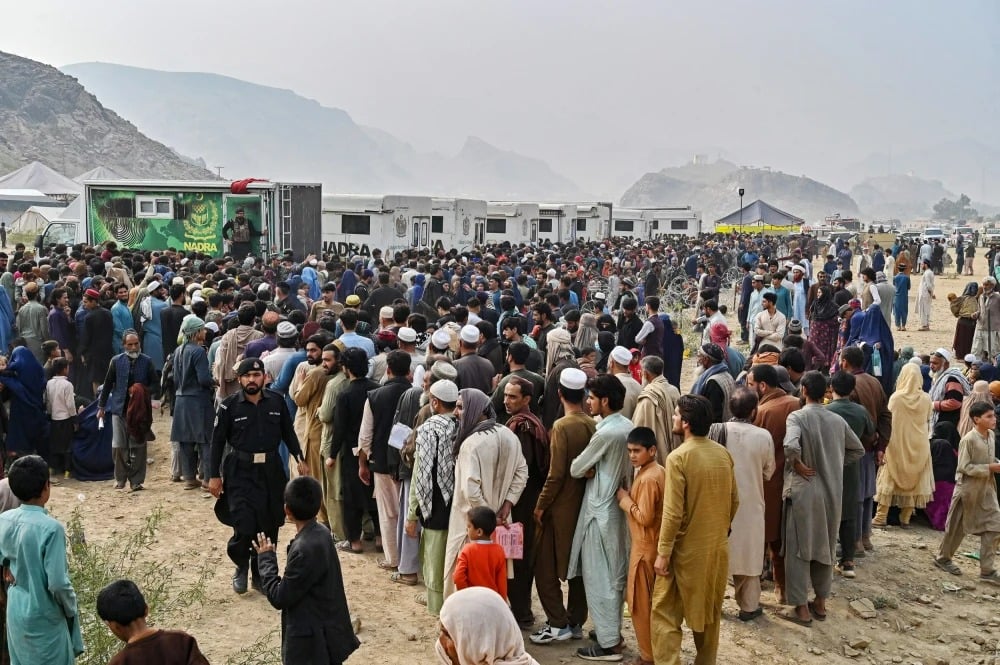
Many asylum seekers from Afghanistan living in Pakistan say their hope for an end to repression, arrests, and forced deportations at the close of the year has faded. Instead of relief, the situation has grown longer, harsher, and more painful. They say police harassment follows them day and night, leaving them in constant fear. These asylum seekers are urging the Pakistani government to resume the visa extension process for citizens of Afghanistan so that asylum seekers and those working in the country can legalize their stay. Today, hundreds of students studying in different fields and at various academic stages, many with two to four years of university education in Pakistan, live in deep uncertainty and face the risk of arrest and deportation. They say that without visa extensions, their education will remain unfinished, and they will be forced to return to Afghanistan.
Thousands of asylum seekers who struggled through severe hardships after the Pakistani government suspended visa extensions last year had hoped the end of the year would bring relief. They believed the restrictions would be lifted, allowing them to pursue immigration cases to Western countries in a calmer environment. Instead, they say the pressure has intensified. Police measures in Islamabad have become so widespread and alarming that asylum seekers avoid hospitals and health centers even when they are sick. Many also speak of extortion and bribery by Pakistani police across the country, including in Faisal Town, a neighborhood in Islamabad.
Muhammad, an asylum seeker from Afghanistan now living in hiding in Faisal Town, told the Hasht-e Subh Daily that his life feels worse than imprisonment. “A prisoner can at least walk freely inside a prison without fear,” he said. “We cannot even step outside our homes. Bread that should cost no more than 20 Pakistani rupees sometimes costs us up to 100,000 rupees. When we go out to buy food, the police wait for us, arrest us, and demand money. If we do not pay, they deport us.”
Zarafshan (pseudonym) is one of the women protesters who fled to Pakistan after the Taliban takeover. She describes a life shaped by fear and disappointment. “We expected the new year to be better, but the situation for migrants keeps getting worse,” she said. “Police come in the middle of the night, break down doors, and storm into asylum seekers’ homes. They arrest everyone they find, women, children, the elderly, and the young. Our situation is terrible, and no one listens to us.” She urges the Pakistani government not to use asylum seekers as leverage against the Taliban, arguing that the Taliban show no concern for the suffering, poverty, or even the deaths of migrants.
Hundreds of students now face an even harsher reality. Many were admitted to Pakistani universities on official government scholarships, while others pay tuition at public and private institutions. They say students who returned to Afghanistan have already lost the chance to continue their studies since the previous semester. Those still in Pakistan remain trapped in uncertainty, constantly fearing arrest and forced deportation. Without student visa extensions, they say, continuing their education will be impossible, leaving them with an unknown future.
Mudabir (pseudonym) is a student at the International Islamic University in Islamabad. He says upcoming exams no longer worry him as much as the fear of arrest. “When I leave for an exam in the morning, I feel more stress about the police than about the test itself,” he said. “If my exam ends and I am forced to return to Afghanistan, what will I do? If my visa is not extended, six semesters of study will be wasted. Even staying here means I cannot leave my room. Our situation is desperate, and no one hears the voices of students.”
Journalists and civil society activists who fled to Pakistan after the Taliban takeover also face the threat of forced deportation. Many escaped security threats, extrajudicial killings, and enforced disappearances. They are calling on the Pakistani government to restart the visa extension process so they can live legally in the country. They say their legal presence could also benefit Pakistan’s security and economy. Their fears have grown as some asylum seekers deported from neighboring countries have been arrested or killed by the Taliban. Recently, Yusuf Qomandan, a commander close to former vice president Marshal Dostum who returned from Iran, was executed by firing squad by the Taliban.
In a recent development, Amnesty International sent an open letter to Pakistani Prime Minister Shehbaz Sharif, calling for an end to illegal arrests, harassment, and the deportation of asylum seekers from Afghanistan. The organization expressed serious concern over the worsening conditions faced by asylum seekers in Pakistan and urged the government to stop detaining people who need international protection.
Amnesty International has labeled the plan to deport migrants from Afghanistan as illegal. The organization stated that arrests across Pakistan are arbitrary and lack basic legal procedures. Detainees are often transferred to detention centers where they have little or no access to lawyers or family members.
The organization also warned that deportations happen rapidly and that authorities impose limits on the money and belongings migrants can take with them. The letter noted that Reporters Without Borders has confirmed the deportation of at least 20 journalists from Pakistan to Afghanistan, while many others live in constant fear. Over the past two months, Amnesty International has received numerous reports of the arbitrary arrest and deportation of human rights defenders, including women. According to the organization, no system exists to ensure that asylum seekers with urgent international protection needs, such as journalists, human rights defenders, women activists, former government officials, and those who worked with foreign governments or organizations, are exempt from deportation.
You can read the Persian version of this report here:
زندهگی زیر سایه وحشت؛ پناهجویان و دانشجویان افغانستان در پاکستان خواهان تمدید ویزا هستند