In the coming years, Austria and, with a high degree of probability, the Czech Republic may join the list of countries purchasing Azerbaijani natural gas. Two well-informed sources familiar with the progress of the negotiations told haqqin.az.
According to available information, as early as 2026 these countries could, for the first time, receive Azerbaijani gas via Italy, which since late 2020 has been one of the key gas entry points under the Southern Gas Corridor. Austria’s geographic position—bordering both Italy and the Czech Republic—makes such a route logistically sound.
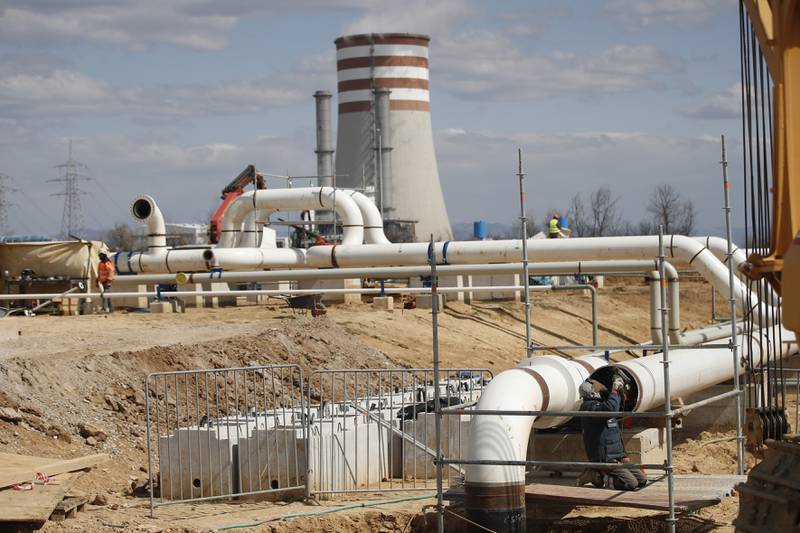
Italy began receiving Azerbaijani gas in December 2020 through the European segment of the Southern Gas Corridor, the Trans Adriatic Pipeline (TAP), which as of January this year is technically capable of supplying up to 13 billion cubic meters of gas to Europe annually. This infrastructure has now become the backbone for expanding the geography of Azerbaijani gas supplies into Central Europe.
According to a source familiar with the negotiations, the state oil company SOCAR is finalizing discussions on the terms of a gas contract with Austria’s OMV. Talks have been underway since 2024 and are now entering their final stage. The volumes and exact timelines will be specified in the near future, but the very fact that the deal is nearing completion reflects fundamental changes in Austria’s energy strategy.
Since the beginning of 2025, Vienna has completely abandoned Russian gas, although until recently its dependence on Gazprom supplies exceeded 80 percent. OMV has terminated all contracts with Russian suppliers and currently receives gas primarily via Germany, where a significant number of liquefied natural gas terminals sourcing LNG from various origins are concentrated. At the end of 2025, Austria supported the European Union’s decision to fully phase out Russian gas by 2028. However, given the sensitivity of this issue for the national economy, Vienna secured the inclusion in the EU-wide regulation of a provision requiring the European Commission to conduct a mandatory effectiveness assessment after two years.
Energy pressure is already being felt on the domestic market. According to data from the NordPool exchange, the average annual wholesale electricity price in Austria rose from EUR 81.5 per megawatt-hour in 2024 to EUR 97.4 in 2025. Against this backdrop, OMV is actively seeking commercially sustainable gas contracts that can reduce the risks of fuel shortages and price volatility, and Azerbaijani gas is seen in this context as one of the most reliable options.
These plans fit into the broader picture of Azerbaijan’s expanding export geography. It is worth recalling that on January 5, in an interview with Azerbaijani television channels, President Ilham Aliyev stated that the country currently supplies gas to 14 states, 11 of which receive it on a regular basis. According to the head of state, two more European countries will be added to this list in 2026, bringing the total number of export destinations to sixteen. He also noted that Azerbaijan uses a flexible supply model, combining long-term contracts with on-demand deliveries, emphasizing that in terms of the number of countries receiving pipeline gas, Azerbaijan has no equivalent in the world.
As early as June 2025, SOCAR and the German state energy company SEFE signed a ten-year natural gas supply contract, which began to be implemented in autumn 2025. Its peak annual volume is equivalent to 1.5 billion cubic meters. Gas is delivered to Germany via Italy as well, the end point of the Trans Adriatic Pipeline. Even earlier, starting in 2020, a similar volume of Azerbaijani gas has been supplied to the German company Uniper under a 25-year contract, with deliveries planned through 2045.
Cooperation in Central Europe is also expanding. In December 2025, Hungary’s MVM and SOCAR signed a two-year agreement providing for the possibility of Hungary purchasing, on request, up to 0.8 billion cubic meters of gas in 2026–2027. In the spring of last year, the Czech Republic also officially declared its interest in Azerbaijani gas; today it is supplied mainly via pipeline deliveries from Norway and liquefied natural gas from various sources.
Notably, Austria, Germany, Hungary, the Czech Republic, Romania, and Bulgaria stood at the origins of the Nabucco project more than two decades ago, which was conceived as a major Caspian alternative to Russian gas. As early as 2002, OMV, seeking to reduce dependence on Russian fuel, began forming a consortium of European companies. The project envisaged the construction of a pipeline approximately 4,000 kilometers long with a capacity of up to 31 billion cubic meters of gas per year, oriented toward resources from Azerbaijan and Turkmenistan, and potentially Iran and Iraq.
However, by the mid-2000s it became clear that Nabucco’s resource base was not guaranteed. After the launch of the first phase of the Shah Deniz field, Azerbaijan had volumes of around 15–16 billion cubic meters of gas per year—only about half of the pipeline’s planned capacity. Turkmenistan opted for an eastern export direction, Iran remained under sanctions, and Iraq was in a state of political instability. As a result, the European Union, lacking firm gas supply contracts, refused to provide financial guarantees for the project.
An attempt to reformat the initiative into the more compact Nabucco West project also failed. The lack of financing, competition from Russia—which offered attractive commercial terms—and the gradual withdrawal of key participants led to the dissolution of the consortium in 2013. Ultimately, the Trans Adriatic Pipeline prevailed, offering Shah Deniz consortium members a shorter route, lower construction costs, and more flexible terms.
It was precisely the choice of TAP that made it possible, in December 2013, to sanction the full-scale development of Shah Deniz, with reserves of about 1.2 trillion cubic meters of gas, and to begin construction of all three segments of the Southern Gas Corridor. With the launch of TAP, Europe gained sustainable access to Azerbaijani gas for the first time, and the geography of supplies began to gradually expand.
It cannot be ruled out that further use and expansion of this route’s capacity will become a subject of discussion during meetings of a high-level Azerbaijani delegation on the sidelines of the World Economic Forum in Davos, Switzerland, from January 19 to 23.
In this context, it is symbolic that the headquarters of the TAP AG consortium is located in Switzerland, and its shareholders include British Petroleum, SOCAR, Italy’s Snam, Belgium’s Fluxys, and Spain’s Enagas.