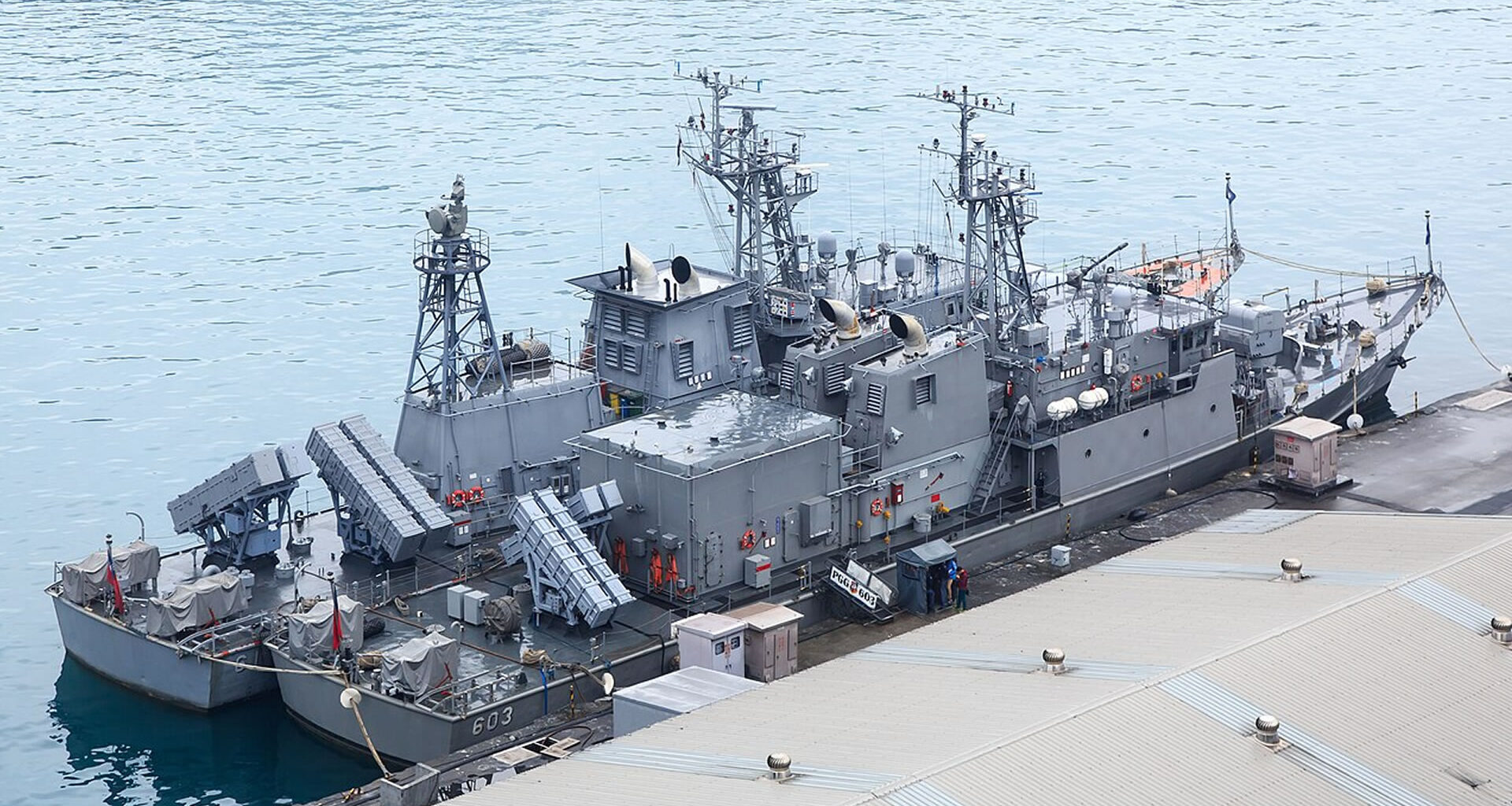
Chinese war planners believe they could circumvent Taiwan’s much-hyped “porcupine” defense strategy through a decisive “decapitation” strike, The South China Morning Post (SCMP) reports.
This is based on a report released by the People’s Liberation Army Navy (PLAN) in an article in the November issue of Naval and Merchant Ships.
“The threat is obvious,” the article said. “It reflects a strategic approach aimed first at stabilising the battlefield situation and then turning the tide in its favour,” it added.
Taiwan’s defense strategy is based on the assumption that the island nation would not be able to resist Chinese forces in a conventional war for a prolonged period.
To this end, they have devised a “porcupine” strategy that would bog down any invasion attempt via death by a thousand cuts. This would make any military action against them painful, slow, and very costly.
Decapitating a porcupine
Therefore, Taiwan plans not to match China ship-for-ship or tank-for-tank, but rather fill the island with thousands of what it calls “quills.” These consist of things like Man-portable air defence (e.g., Stinger) and small loitering munitions (e.g., Switchblade).
They also plan to use anti-tank missiles (Javelin, TOW), long-range rockets (HIMARS/ATACMS), and urban ambush tactics to punish any PLA forces that land. In this sense, Taiwan plans on conducting a Ukraine-style attrition warfare.
This is where the recent record-breaking $11 billion defense deal made with the US last month comes in. Many of the systems needed for Taiwan’s defensive strategy are part of the deal.
In theory, this would bleed PLA forces over time and drag the conflict out long enough for international pressure or intervention. For Beijing, such a strategy would effectively neutralise China’s significant numerical advantage.
It would also force the PLA into urban combat, which is not considered one of its strong points. Urban combat is notoriously tricky for any armed force as it turns every street into a potential ambush.
To overcome this, the PLA would prefer to avoid Taiwan’s “porcupine” entirely if at all possible. This, they believe, should be possible by going for the jugular of Taiwan’s command and control.
This could be achieved by, for example, targeting presidential offices, military headquarters, key data centers, and other telecommunications hubs. The logic is simple enough: if Taiwan’s leadership collapses early, the porcupine never gets to fight properly.
Iraq as a proxy
Similar tactics were employed by allied forces during the 2004 Iraq War. This enabled US forces to push rapidly toward Baghdad, ultimately leading to the collapse of the incumbent regime at the time.
However, Iraq is a much different beast than what the PLA would have to overcome in Taiwan. The first being that Taiwan is an island, not a landlocked nation.
Iraq should also serve as a warning for the PLA, as post-decapitation insurgencies last for many years after. Such an action, therefore, would not guarantee compliance from civilians and would likely lead to long-term guerrilla actions.
When it comes to actually performing such a decapitation strike, the PLA believes it could make good use of drones to get the job done. They also suggest making use of artificial intelligence to provide precise reconnaissance and firing guidance.
If the worst should occur, and Chinese forces do get bogged down in urban conflict, they could use unmanned tanks, armoured vehicles, and robot dogs could be sent in to clear streets.
This, the PLA argues, should significantly reduce casualties and collateral damage.