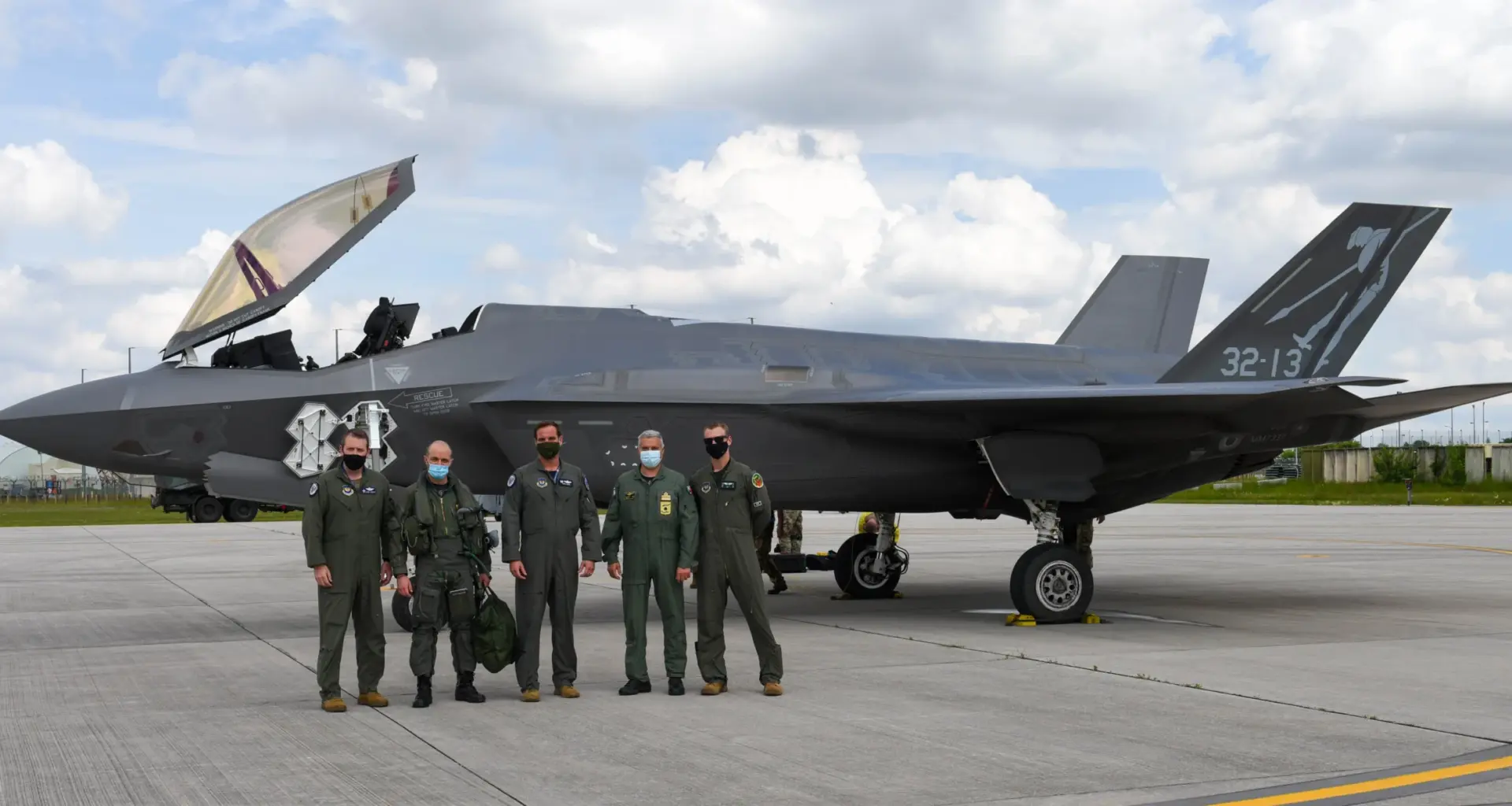
ROME- Italy invests €112.6 million to establish a multinational F-35 Lightning II pilot training center at Trapani-Birgi Air Base (TPS), creating the first dedicated F-35 training facility outside the United States for NATO and European Joint Strike Fighter partner nations.
This center, reported by La Sicilia on January 7, 2026, will function as Italy’s third operational F-35 base while providing international training, with initial capability by 2028 and full operations in 2029, addressing limited US-based training capacity.
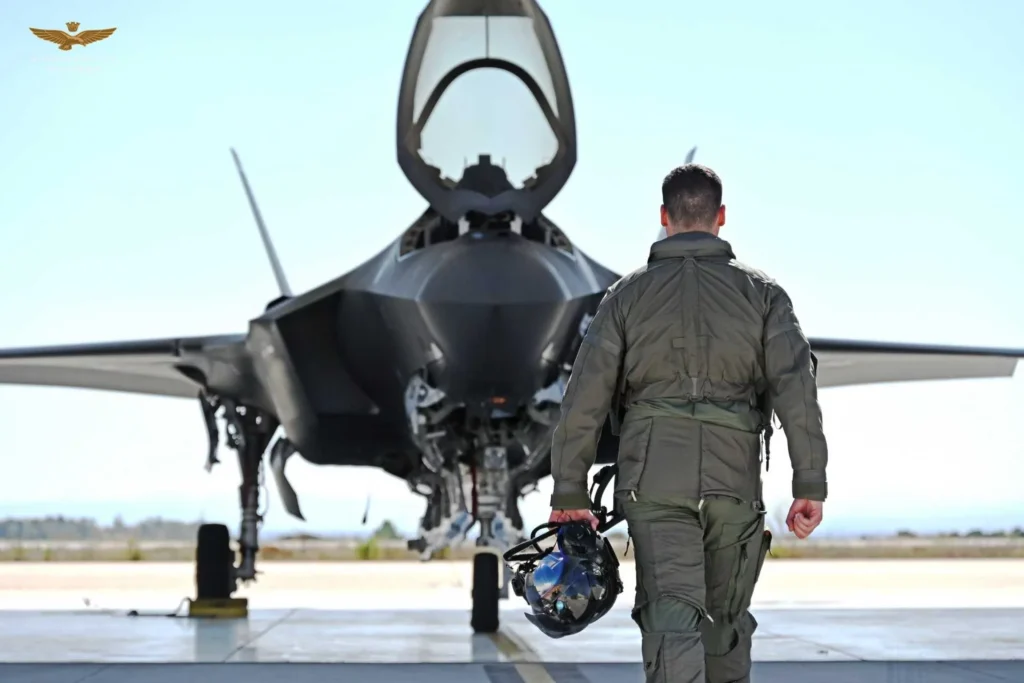 Photo: Italy Air Force
Italy’s First F-35 Pilot Training Hub
Italy’s Ministry of Defense has approved €112.6 million to formally designate the Lightning Training Center at Trapani-Birgi Air Base (TPS) in northwestern Sicily.
According to the Army Recognition Group, this facility marks the first dedicated F-35 training site outside the United States, responding to the steady growth of European F-35 fleets and the constraints of existing training centered almost entirely in the United States.
It positions Italy as a permanent European hub within the global F-35 training architecture. The center combines national operational activity with an international training mission open to NATO and European Joint Strike Fighter (JSF) program participants.
Trapani-Birgi becomes Italy’s third operational F-35 base, joining Amendola in southern Italy and Ghedi in the north, which host the Italian Air Force’s 32nd Wing and 6th Wing.
The base will host one Italian Air Force operational squadron and one international training squadron, supported by shared infrastructure.
This setup integrates daily operations and training within a single installation, hosting foreign pilots, instructors, and aircraft for training purposes.
 Photo: US Air Force in Europe
Project Timeline and Infrastructure Development
Construction begins in 2026 and spans roughly 5 years, with most financial effort concentrated toward the end of the decade as core infrastructure becomes operational.
Initial training capability arrives by December 2028, allowing the first pilots to start sessions before full completion. Full operational capability is scheduled for July 1, 2029.
The project is structured in phases, starting with limited training capability and expanding step by step to include full international and national squadrons.
The first phase focuses on essential facilities under very strict security rules, including a dedicated training building with a Special Access Program Facility to handle highly sensitive F-35 systems and information.
Two Full Mission Simulators are installed during this phase, with space reserved for additional training devices as demand grows.
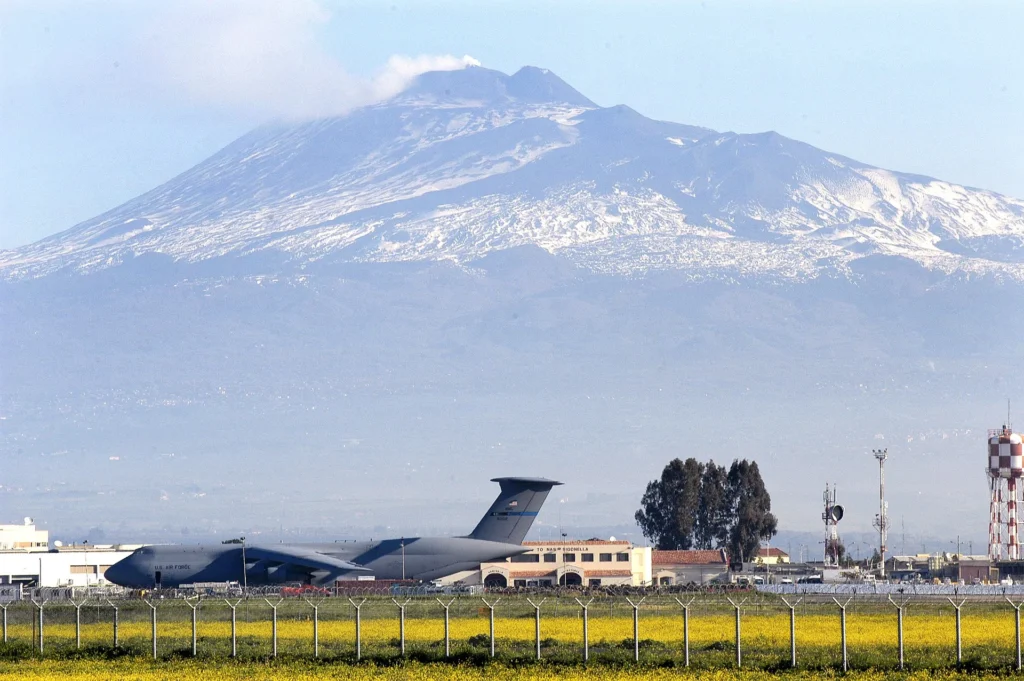 Photo: By U.S. Navy photo by Photographer’s Mate 2nd Class Damon J. Moritz. – This image was released by the United States Navy with the ID 030325-N-9693M-001 (next). Public Domain, https://commons.wikimedia.org/w/index.php?curid=8173555
Site Selection and Advantages
Trapani-Birgi, a joint civil and military airfield in northwestern Sicily, was selected over other considered bases as the definitive site due to its geography and operational experience.
It currently hosts the Italian Air Force’s 37th Wing, operating Eurofighter Typhoon aircraft with established fighter operations and quick reaction alert duties.
Its central Mediterranean position provides proximity to southern Europe and the wider Mediterranean theater, while existing infrastructure adapts to support fifth-generation aircraft and secure training facilities.
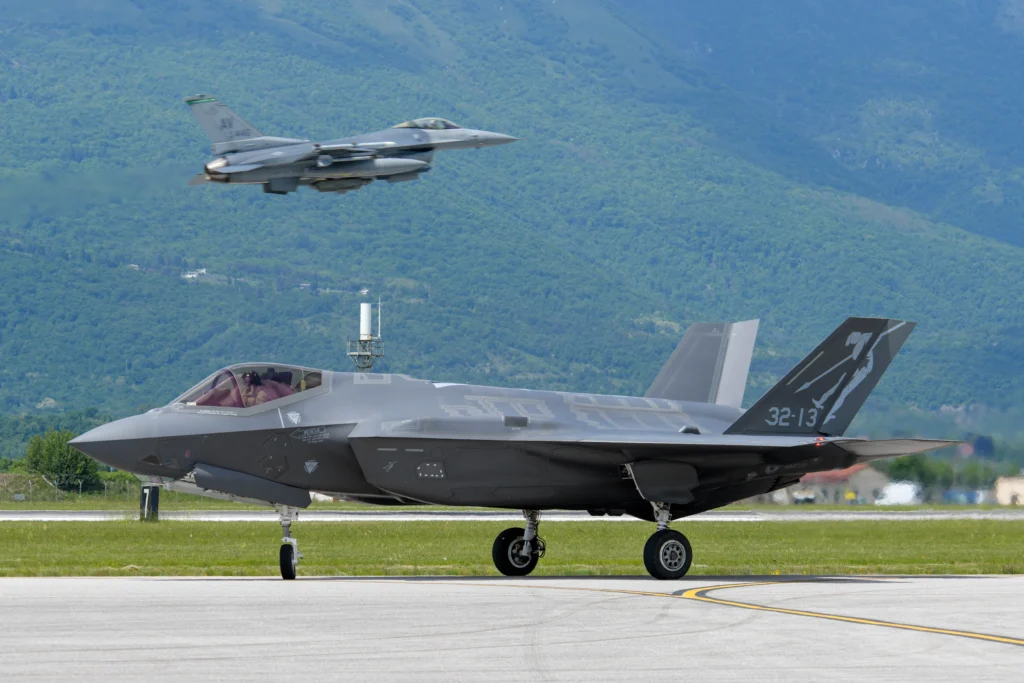 Photo: US Air Force in Europe
F-35 Pilot Training Essentials
The center trains pilots to operate the fifth-generation F-35 in routine and complex combat situations, built around a mix of real flight hours and advanced simulation, where simulators play a central role.
Full Mission Simulators recreate the F-35 cockpit, sensors, weapons, and battlefield environment, enabling practice of scenarios that would be difficult, risky, or very expensive in real aircraft.
These systems prove especially important for networked operations, electronic warfare, and coordination with other aircraft and forces.
Secure facilities ensure classified software, mission systems, and operational methods are integrated into training.
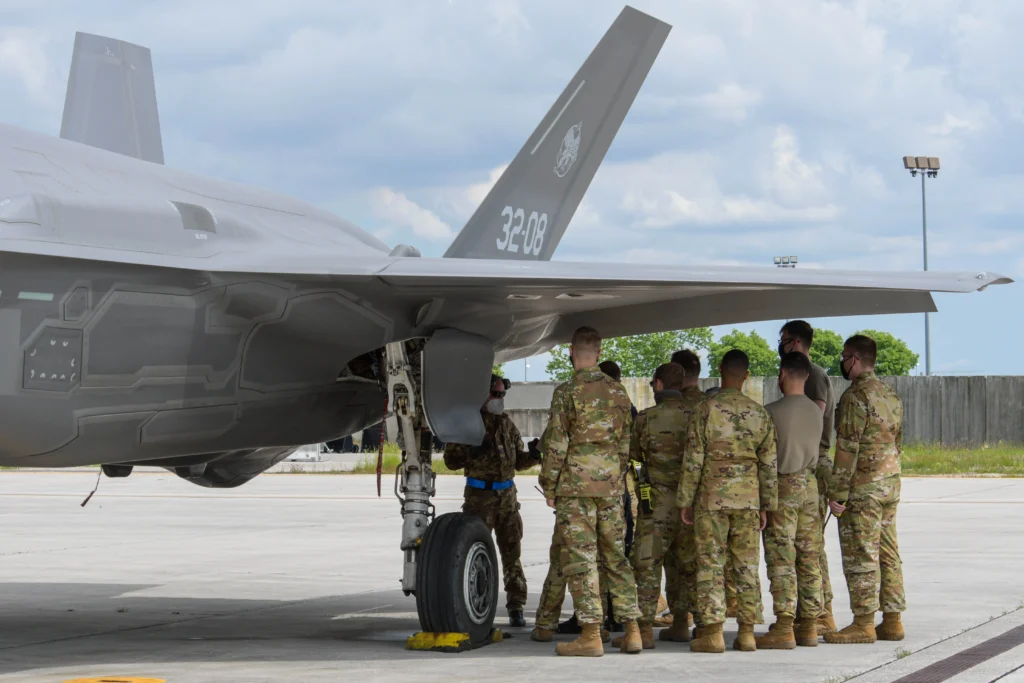 Photo: US Air Force in Europe
Enhancing Interoperability and Efficiency
Beyond basic pilot qualification, the center enables countries to train together and operate uniformly. Pilots from different air forces learn shared procedures, planning methods, and tactics, facilitating joint NATO missions or operations.
This reduces the need for European pilots to travel to the United States for long training periods and shortens overall training timelines.
The Lightning Training Center serves as a European counterpart to Luke Air Force Base in Arizona, linking Italy more closely to the global F-35 training network.
Combined with Italy’s role in assembling and maintaining F-35 jets at Cameri, the project strengthens Italy’s position across operations, training, and sustainment.
Stay tuned with us. Further, follow us on social media for the latest updates.
Join us on Telegram Group for the Latest Aviation Updates. Subsequently, follow us on Google News