
The growth of digital banking has been one of the most significant financial trends in Europe in recent years. France, one of Europe’s largest economies, has seen a big shift towards online banking; most French banks now advertise digital services. bunq, a mobile-only bank that offers services to expats in Europe, or Wise a transparent international money transfer provider, explains how it all works.
This article includes sections on:
With bunq, you can open your full bank accounts in just five minutes using nothing more than your mobile phone. You get real-time access to your account, instant payments and dedicated customer support available in English, Dutch, German, Italian and Spanish.
Banking providers in France are now a mixture of high street banks, international institutions, and internet banks. Many of the big-name banks now offer digital services, as well as traditional services offered at branches. This reflects the increase in online and mobile banking in France. According to Eurostat figures, 66% of the French population currently use internet banking, above the EU average of 55%. Mobile banking is also on the rise, with 40% of internet users in France using mobile banking services in 2018.
Mobile banking providers in France include:
Popular national banks such as BNP Paribas, Société Générale, and CIC all offer mobile services and apps.
Online providers such as bunq, N26, and Revolut offer several language options, including English.
Communications providers such as Orange, Apple, and Android now offer mobile banking and payment services.
Online and positive-impact accounts such as those offered by canB.
Alternative banking solutions like Wise are not banks, but do also offer safe financial services through mobile apps and desktop sites.
Mobile banking capability relies on banking apps being downloaded onto smartphones or tablets. These enable users to perform functions and access services from their devices. Each French bank has its own app, and customers can use these banking apps for things such as:
Making payments from their device, including paying bills, transferring money to different accounts, reimbursing friends for their share of dinner, and even shopping.
Checking account balances, monitoring accounts and budgeting.
Monitoring investments by accessing up-to-date financial information.
Contacting financial advisers at the banks for relevant information and advice.
Accessing money from mobile accounts anywhere in the world.
Having 24/7 access to account services and information.
Advantages of mobile banking for expats in France include the ability to move money around between accounts and across borders with less hassle, speed of service (money can be transferred immediately), lower costs, and availability of services in English. bunq allows you to make international payments in other currencies up to eight times cheaper as well as saving you 3% on card transactions overseas.

For expats who regularly send money internationally, payment institutions like Wise offer a specialized service using the mid-market exchange rate with transparent fees. This approach could help reduce the cost of international transfers compared to some banks in France. Wise also offers multi-currency account capabilities, allowing expats to hold and manage money in over 40 currencies from one account.

There are, however, limitations to smartphone banking compared to desktop and traditional banking. Loan services are limited and you can’t currently move money between foreign currency accounts. Another issue is reliance on a Wi-Fi connection. This could be an issue if you live in a rural area, although there is generally good internet coverage in France.
Like mobile banking, mobile payments in France are also becoming more widespread. This form of financial transaction is an alternative to using cash or credit/debit cards. Around 15.6% of French smartphone users made in-store mobile payments in 2019.
Innovative functions include contactless payment systems where mobile devices can be waved over a payment terminal, digital wallets that link to bank accounts and can store and send money to third parties, and QR codes that can be scanned to pay for goods such as concert tickets.
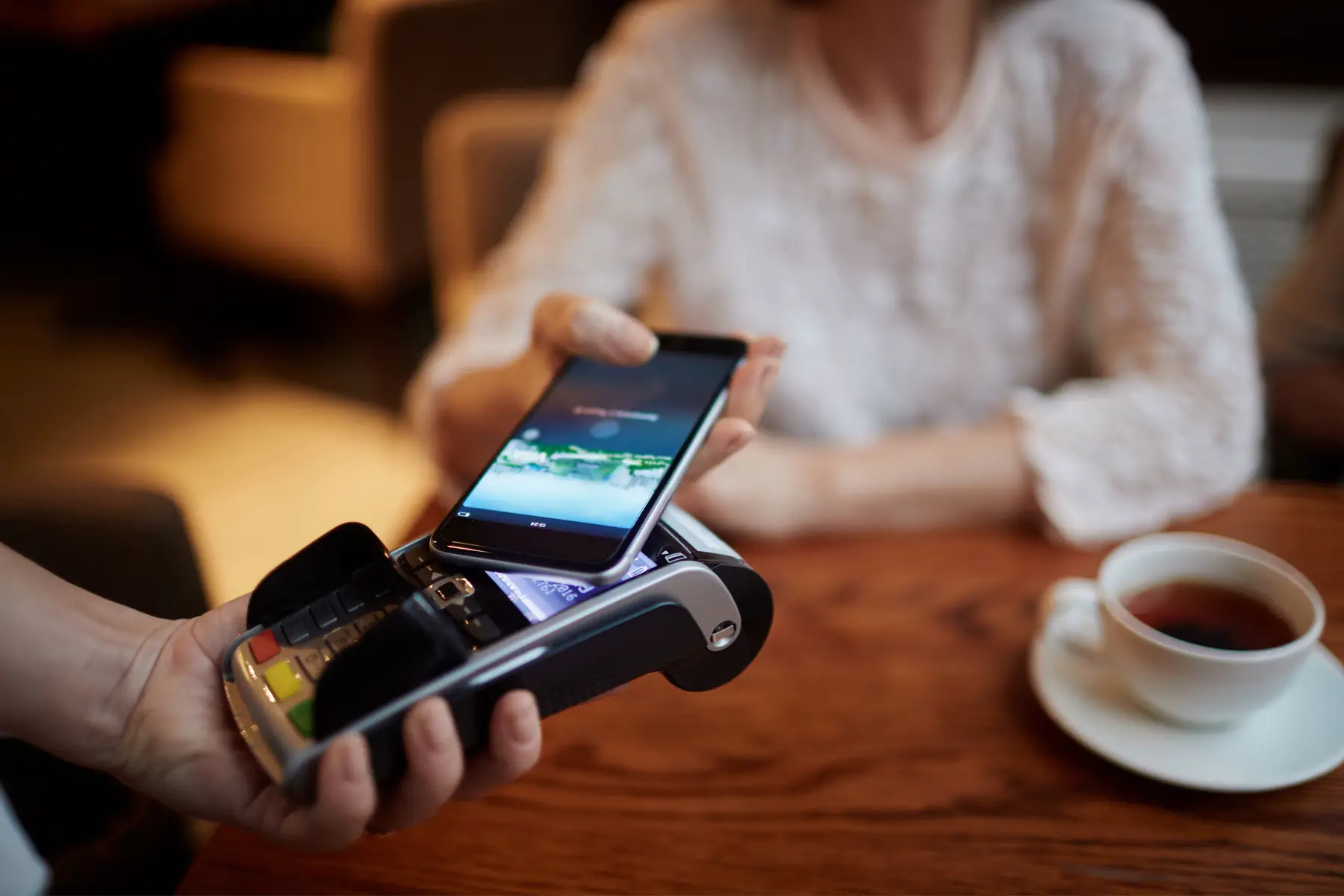
Mobile payment apps installed on smartphones and tablets are usually linked to bank accounts. Two of the most popular apps are Apple Pay and Google Pay, released in France in 2016. Several big stores have also released their own apps, such as French multinational retailer Carrefour which launched its Carrefour Pay app last year. There are also many new companies on the market providing different mobile payment services in France. Examples include Lydia, Lyf Pay, Buyster, and S-money.
Opening up a mobile bank account in France is a straightforward process. You can do this with some banks before you move, which is handy for expats who might want to make arrangements ahead of traveling.
There are no legal restrictions on residents or non-residents opening up an account with a French bank. However, some banks only offer their mobile banking services to residents. To open a mobile account, you typically need to provide contact details such as a mobile number and e-mail address, proof of ID, and residential address. Documentation can be scanned and submitted digitally.
Some traditional French high street banks require you to open a traditional account before accessing their mobile banking services, which may mean providing additional documentation. The advantage of using online-only banks such as bunq, N26, and Revolut is that you can open an account from anywhere in the world in a matter of minutes.
One of the big advantages of mobile banking is reduced fees. Mobile accounts don’t incur so many charges as there are fewer overheads involved in administrating accounts.
Traditional high street banks in France usually charge for services such as general admin fees, debit/credit cards, large money transfers, and using services abroad. A study by Panorabanques found that French banks charged customers an average of €215.50 in 2020.
Charges for these services are cheaper on average with mobile bank accounts. However, you will need to check with individual providers and shop around as French bank account costs can vary considerably.

Some accounts with mobile-only banks are available for free, however more advanced plans come with a monthly fee attached. Many mobile banks offer global ATM withdrawals, P2P payments, and international money transfers either free or low cost. Some limit the number of free transactions per month, however.
Most of the main mobile payment apps used in France don’t charge fees for general payment services. There may be costs for services such as instant transfers to some accounts, payments to foreign currency accounts, or payments above a certain limit.
International transfer costs for expats
For expats in France who regularly send money to family abroad or manage finances in multiple countries, international transfer fees deserve special attention. Banks in France typically charge fees for international transfers and use exchange rates that include a markup above the mid-market rate—the real exchange rate you see on Google or Reuters.
Payment institutions like Wise specialize in international transfers and use the mid-market exchange rate with a transparent fee structure. This approach could help you save on cross-border transactions compared to some banks in France, though the exact amount depends on the specific currency route, transfer amount, and which bank you’re comparing against.*
There have been fears over just how safe and secure mobile banking is. In France, despite the growth of mobile banking, studies show that levels of trust remain lower than with traditional banking, with issues including data protection, transaction safety, and encryption.
However, banking providers are working constantly to tackle challenges and minimize threats. Safety features on mobile banking and payment systems include the use of fingerprint ID with many systems, high levels of encryption and a disconnect function after periods of inactivity.
You can protect yourself against fraud and security breaches by taking measures such as:
installing a high-strength password to protect your account
avoiding public networks when logging into your app
logging out of your account immediately after you’ve finished using it
Mobile banks in France have their distinct advantages over traditional banks although they are not without their limitations. Here are a few areas where comparisons can be made.
Features and services
Mobile banking features are continuing to improve as the technology becomes more sophisticated, with digital financial planning, budgeting, and investment monitoring tools among the more fancy functions now available with many accounts. However, certain services such as loans, mortgages, and insurance are still limited with mobile banks.
Fees
Mobile banks in France typically have lower fees for basic services such as payment charges, money transfers, and foreign ATM use. It’s easier to find free basic accounts with mobile banks than with traditional banks. Additionally, mobile banks tend to offer lower interest rates. However, charges for less common services such as loans and overdrafts are sometimes higher.
Security
Despite public concerns, mobile banking is actually the safest form of banking thanks to added security features such as fingerprint ID account access. Additionally, smartphone operating systems are less vulnerable to viruses and malware than PCs and the high encryption means that accounts are highly resistant to hacking.
Convenience
Perhaps the key advantage of mobile banking is the convenience aspect. With mobile bank accounts in France, you have 24/7 access to your account and can perform daily transactions such as transferring money and making payments at the click of a smartphone button. It’s also a lot easier and quicker to set up an account with a mobile bank. You can do this on your phone in minutes rather than having to visit a branch or make an appointment.
For expats managing finances across borders, payment institutions like Wise offer additional convenience through multi-currency accounts that allow you to hold, convert, and send money in 40+ currencies from one account. This can be particularly useful if you receive income in one currency but have expenses in another.
Ethics
Banks have traditionally had problematic relationships with ethics and sustainability. Some of the big names have financed and invested in industries such as arms and fossil fuels. Mobile banks are typically more environmentally friendly as they don’t use up the same amount of resources. As many of them are smaller startup firms, they are also less likely to have funds tied up in unethical projects overseas.
However, with many traditional banks now moving towards more transparent ethical corporate strategies and making more green investments, it’s important to do your research on individual French banks to see what their record is if this is an important concern for you.
Research carried out so far in France indicates that mobile banks such as N26 and Revolut outperform traditional banks such as BNP Paribas and Society Generale in terms of ethical banking.
Personal service
For those that value face-to-face interactions and being able to build relationships with banking staff, traditional banking remains the best option. Mobile banking does to an extent trade-off convenience with personal service. However, with a strong social media presence and advisers available for online chats, these new banks are changing the ways in which consumers interact with financial services.
What is the difference between mobile banking and online banking?
Mobile banking refers specifically to banking services accessed through apps on smartphones or tablets, while online banking is a broader term that includes any banking done via the internet, whether on a computer, tablet, or phone. Mobile banking apps often offer features optimized for smartphones, such as biometric login (fingerprint or face ID), mobile check deposits by taking a photo, and location-based services. Most banks in France now offer both mobile apps and web-based online banking platforms.
Can I open a mobile bank account in France before moving there?
Yes, many mobile-only banks allow you to open an account before arriving in France, which can be very convenient for expats. Banks like bunq, N26, and Revolut typically allow non-residents to open accounts remotely using just a valid ID and proof of address. However, some traditional French banks require you to be a resident and may ask you to visit a branch in person. It’s best to check the specific requirements of each bank before applying.
Are mobile banking apps in France available in English?
Many mobile banking apps in France offer English language options, particularly those designed for international customers and expats. Mobile-only banks like bunq, N26, and Revolut typically support multiple languages including English. Traditional French banks vary—some major banks like BNP Paribas and Société Générale offer English versions of their apps, while smaller regional banks may only offer French. Always check the language options before opening an account if French isn’t your first language.
What documents do I need to open a mobile bank account in France?
The documentation required varies by bank, but generally you’ll need:
Valid government-issued photo ID (passport or national ID card)
Proof of address (utility bill, rental agreement, or bank statement)
Your mobile phone number and email address
For some banks, proof of income or employment
Mobile-only banks typically allow you to submit these documents digitally by taking photos with your smartphone. The process is usually faster than traditional banks, with some accounts being opened in just a few minutes. Non-residents may need to provide additional documentation depending on the bank’s policies.
How can I send money internationally from France as an expat?
Expats in France have several options for sending money internationally:
Traditional bank transfers: Most French banks offer international wire transfers (SWIFT transfers), but these often come with higher fees and exchange rates that include a markup above the mid-market rate.
Mobile banking apps: Some mobile banks offer international transfer features with competitive rates, though availability depends on the currency corridor.
Specialized payment institutions: Payment institutions like Wise offer international money transfers using the mid-market exchange rate with transparent fees, which could be more cost-effective than some local banks in France for certain currency routes. The amount you could save depends on the specific currency pair, transfer amount, and the provider you’re comparing against.
When choosing a service, compare the total cost including both fees and the exchange rate markup to find the best option for your specific needs.
What are the best options for managing multiple currencies in France?
If you’re an expat who needs to manage money in multiple currencies, you have several options:
Multi-currency mobile bank accounts: Some mobile banks like Revolut and bunq offer the ability to hold balances in multiple currencies within a single account.
Specialized payment institutions: Payment institutions like Wise offer multi-currency accounts where you can hold, convert, and manage over 40 currencies in one place. These accounts can be useful for expats who receive income or have expenses in different countries, as they allow you to hold money in the currency you need and convert it when the exchange rate is favorable.
Multiple bank accounts: Some expats choose to maintain separate bank accounts in different countries, though this can be more complex to manage.
Consider your specific needs—how many currencies you work with, how often you transfer money, and whether you need local bank details in multiple countries—when choosing the best solution for your situation.