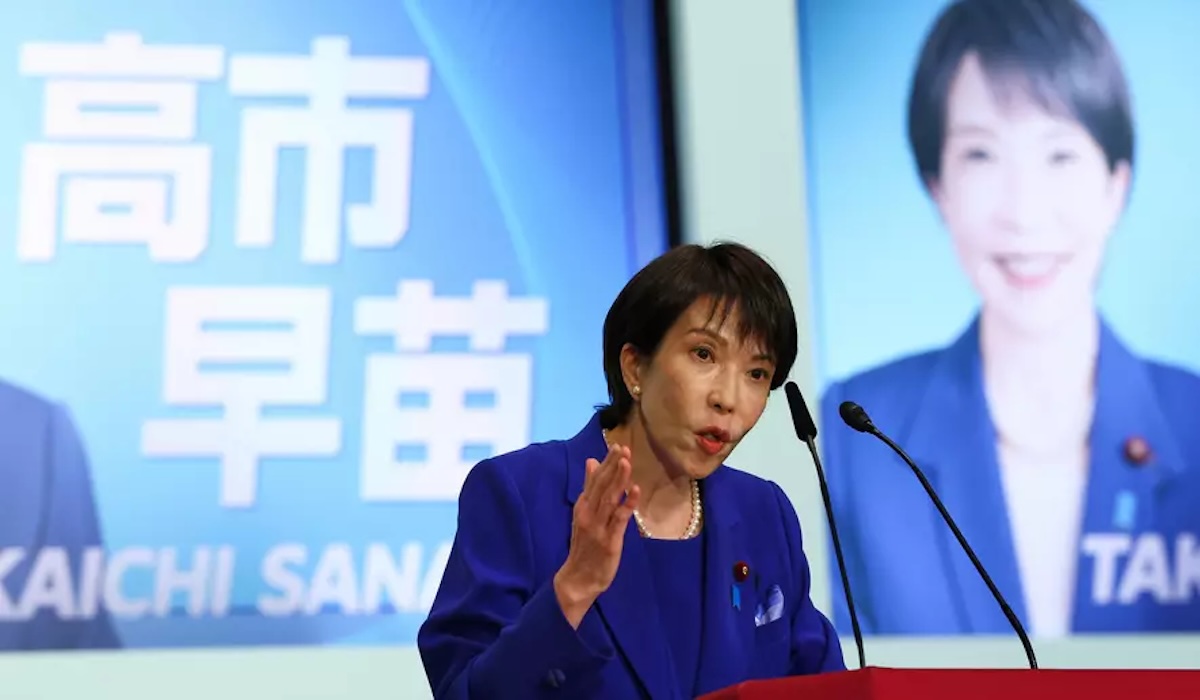
On the evening of Friday, January 9, the Yomiuri Shimbun issued a news flash for a report saying that Prime Minister Sanae Takaichi has begun considering dissolving the Diet when the ordinary session opens on 23 January and calling a snap election for the first half of February (either the 8th or the 15th). Mainichi confirmed the Yomiuri report, saying that a snap election plan has “surfaced,” but added that the prime minister will decide carefully.
This report follows seemingly ineffectual efforts by Takaichi and senior Liberal Democratic Party (LDP) leaders to stabilize the Takaichi government by bringing the Democratic Party for the People (DPFP) into the ruling coalition.
It is possible that having made no headway with DPFP leader Yuichiro Tamaki – Tamaki was noncommittal in a TV appearance Friday, and there are meaningful obstacles to the DPFP’s participation in a coalition – Takaichi may try to shake up the political system through a snap election, hoping that an electoral victory that confirmed Takaichi’s dominance could force the DPFP to cooperate.
Indeed, because the government’s biggest problem now is the upper House of Councillors, where the LDP and Ishin no Kai are still six seats short of a majority, she will have to find a way to control the upper house no matter how successful the LDP is in the general election, which chooses only the members of the lower House of Representatives.
And success, despite Takaichi’s approval ratings is by no means guaranteed, given uncertainty following the breakup of the LDP-Komeito coalition and the rise of Sanseito.
Meanwhile, if she calls a snap election for February, she will greatly compress the time available to pass the 2026 budget before the new fiscal year begins on April 1, reducing the government’s margin for error if something unexpected happens during the deliberations to delay the process.
If the budgetary process is delayed it also makes it unlikely that Takaichi could travel to the United States before April, meaning a narrower window for her to meet with US President Donald Trump before he visits China.
In short, as some including Takaichi ally Koichi Hagiuda have suggested, a snap election now seems like a high risk for relatively low reward. She could win the election and still have to work with multiple partners just to govern and, in the meantime, would have lost for the moment an important tool for disciplining her own party.
As such, for now it may be better to read the Yomiuri scoop as more of a trial balloon, an attempt to cajole Tamaki into cooperating, than a serious threat to dissolve the House of Representatives. In the meantime, the yen fell after the Yomiuri story broke, presumably on expectations that an early election would bolster Takaichi’s fiscal dovishness.
Takaichi announces social security conference
At a meeting of government and ruling party officials on January 9, Takaichi announced that her government would convene its proposed multi-party National Conference on Social Security Reform before the end of the month.
However, while Takaichi has ambitions that the conference can help forge a broad consensus on the social safety net and its funding – including questions regarding the consumption tax – not every party shares her vision.
The Constitutional Democratic Party (CDP), for example, has said that it will participate but, as CDP policy chief Satoshi Honjo said Friday, the party wants the conference to focus narrowly on proposals to introduce a refundable tax credit system. Other parties may be preparing to use the conference as an opportunity to press for consumption tax cuts and other proposals.
Instead of a broad discussion on how to balance social security spending and funding, the conference could turn into an opportunity for grandstanding (particularly if all participants are bracing for a snap election within weeks).
The normalization of a ‘normal Japan’
The Cabinet Office released the results of its latest survey of public attitudes toward the Self-Defense Forces (SDF) and defense issues on Friday, January 9. The survey, available here, shows that Japan’s progress toward becoming a “normal nation” in defense affairs continues apace.
Public interest in the SDF climbed to 82.6%, an all-time high. While the public still appreciates the SDF first and foremost for its role in disaster relief, there is growing appreciation for the SDF’s role in defending the nation: the share of respondents who say they appreciate the SDF for its role in preserving Japan’s peace and independence rose from 28.9% in 2022 to 35.1%.
Of the respondents, 93.1% said that they have a good impression, including 41.6% who said that they definitely have a good impression, up from 32.3% in 2022
Meanwhile, the public’s support for strengthening Japan’s armed forces is growing too. There are now nearly as many respondents (45.2%) who think the SDF should be strengthened as respondents (49.8%) who think the SDF should be maintained at current levels. Those figures were 41.5% and 53% in 2022. Only 2.2% said they should be reduced.
Interestingly, while support for the SDF is robust, the survey found that the public is slightly less worried about threats to Japan. 80.6% of respondents said that Japan faces a risk of being attacked or drawn into a war – 32.6% who said definitely and 48% somewhat – down from 86.2% in 2022, with virtually all of the decline coming from those who think Japan definitely faces this risk.
Also interesting is that among those who said that they think Japan does not face this risk, the most common reason for believing this is the existence of the US-Japan security alliance and the share of respondents citing the alliance rose from 56.6% in 2022 to 65.2% in 2025.¹
Other findings of interest:
Support for the 2015 security laws rose from 63.8% to 73.4%;
When asked which partners (other than the US) would be most useful for Japan, South Korea went from second with 51.4% in 2022 to first with 57.1%, leapfrogging Southeast Asia.
Those who approve of arms exports in accordance with rules like the “three principles on arms equipment transfers” amounted to 68.3% of respondents. (There is no data on support for relaxing arms export rules.)
Cabinet ministers prepare for US trips
Both Defense Minister Shinjiro Koizumi and Finance Minister Satsuki Katayama will travel to the US this coming week for lengthy visits.
Koizumi announced Friday that he will be in the US for talks with Secretary of Defense Pete Hegseth from January 12-18, focusing on Japan’s impending national security policy review and the regional security environment.
Katayama, meanwhile, will be in the US from January 11-14 to attend a meeting of finance ministers hosted by the US Treasury Department to discuss supply chain security for rare earths and other critical minerals.
Further reading on politics
After remarks earlier in the week about the desirability of being a governing party again, Komeito leader Tetsuo Saito clarified that he meant in the future, saying that “returning to the current LDP-led government would be meaningless.”
Ishin no Kai is being lambasted as a “party of delinquents” (chinpara).
… and on foreign and security policy
The tone was muted at an LDP discussion of the situation of Venezuela Friday, though lawmakers still said they wanted the Japanese government to clarify its position.
As this session suggests, Japan is taking the “Donroe doctrine” and its implications for Asia seriously.
Prime Minister Takaichi confirmed that she will meet with South Korean President Lee Jae Myung in Nara January 13-14. The summit could include discussion of Korean membership in the Comprehensive and Progressive Agreement for Trans-Pacific Partnership.
Meanwhile, Italian Prime Minister Giorgia Meloni will visit Japan January 15-17.
Former prime minister Shigeru Ishiba will visit the United Arab Emirates from January 15-17 as Takaichi’s envoy.
After several rounds of working-level discussions, the US and Japanese governments will have a ministerial-level meeting this month to discuss Japanese investment projects in the US as part of the US-Japan trade and investment agreement.
The government wants to include the yet-to-be-established national intelligence agency in the yet-to-be-established committee on foreign investment in Japan.
… and on the economy
DPFP leader Tamaki raised eyebrows with a suggestion on a TV program that the Diet return to approving government bond issuance on an annual basis. Currently the Diet authorizes issuance every five years; it will consider this legislation during the upcoming session.
Real consumer spending rose 2.9% in November, the first increase in two months, driven largely by increased spending on food.
Japanese sake and food products may be being held up by Chinese customs.
Japan politics analyst Tobias Harris is the author of The Iconoclast: Shinzo Abe and the New Japan. As the founder and principal of Japan Foresight LLC he publishes the daily newsletter Observing Japan, of which this article, republished with permission, is the Friday, January 9, edition. To see the newsletter’s home page and consider subscribing, click here.