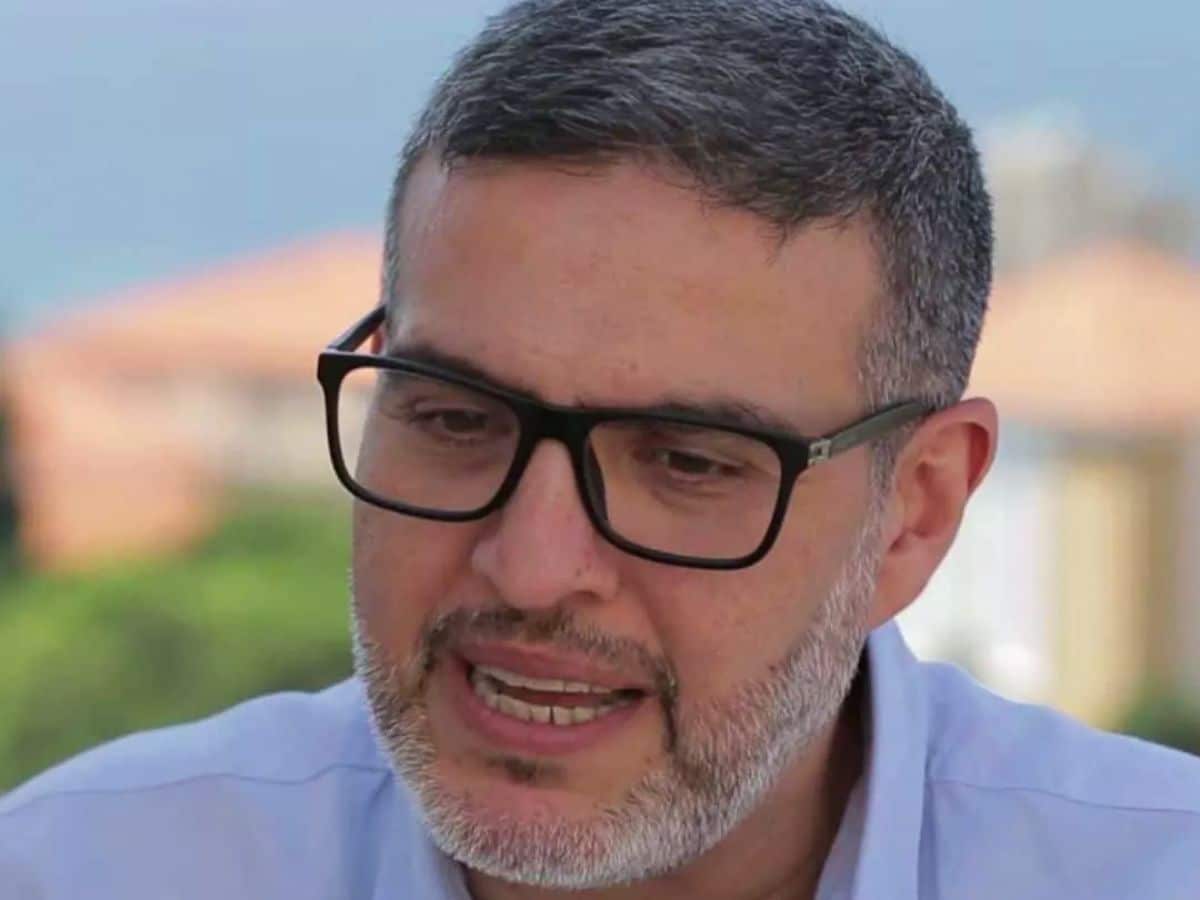
As Skwawkbox reported yesterday, the Medical Practitioners Tribunal Service (MPTS) comprehensively threw out an attempt by the General Medical Council (GMC) and UK Lawyers for Israel (UKLFI) to remove the medical licence of Dr Ghassan Abu Sitta. Abu Sitta is a Palestinian-British surgeon who has volunteered in Gaza.
It was the tenth attempt against Abu Sitta by UKLFI, a notorious Israel-lobby pressure group closely linked to the Israeli regime. The group has been described by human rights group CAGE as one of two main actors in ‘Britain’s apartheid lobby’ and under investigation for its use of vexatious complaints and legal action.
Skwawkbox has seen the MPTS’s full judgment on the case. This includes the allegations against Abu Sitta and the full rejection of the shoddy case. More than that, the judgment includes findings that humiliate not just UKLFI but the whole Israel lobby for its conclusions about their conflation of Jewish people with Israel and Zionism.
Abu Sitta case — the allegations
UKLFI and the GMC accused Abu Sitta of writing an article in a Lebanese newspaper and posting (later amended to reposting) Twitter/X posts that they claimed were either antisemitic, supportive of organisations ‘proscribed’ as terrorist by the UK government. Abu Sitta acknowledged writing the article and reposting the tweets, so those parts of the allegations were accepted by the tribunal — but they were the only parts it accepted.
‘Balance of probabilities’
The MPTS noted in its findings that:
It was using the lowest ‘civil’ bar for evidence, ie ‘balance of probabilities’ rather than the criminal ‘beyond reasonable doubt standard’.
That its primary obligation was to protect the public.
Both of these meant that the system was stacked against Abu Sitta. UKLFI did not have to prove its case, simply show that it was more likely than not to be correct; and if in any doubt, the MPTS would have to assume the worst and ‘protect’ the public by giving the benefit of the doubt to Abu Sitta’s accusers.
Despite this low bar and the stacked presumptions, the UKLFI-GMC case failed on every point.
Israel/Zionism ≠ Jews
On every point where antisemitism was alleged, the MPTS came to the conclusion that the allegations were unfounded — and specifically differentiated among Zionists/Israel and Jewish people. The tribunal even went as far as to call Israel’s military the “Zionist occupation forces”, a term sure to trigger pearl-clutching among Israel lobbyists. For example:
33. The Tribunal is satisfied that the reader would understand this to be criticism of the Palestinian Authorities and Zionist occupation forces and not hostility towards Jewish people as a group.
The tribunal’s ruling made clear that the arguments submitted by the complainants and their barrister Rosalind Emsley-Smith were not just inadequate but irrational and unreasonable. It kept finding that the ‘ordinary and reasonable reader’ would not come to the conclusions they were claiming — even on the lowest bar of evidence. For example:
the objective and reasonable reader… would not consider this part of the article antisemitic…
…Dr Abu-Sitta’s comments within the article published in the AI Akhbar publication, as set out in Schedule 1, were not objectively supportive of violence and terrorism, and were not antisemitic.
35. [The tribunal] therefore found paragraph 2a (i – iii) of the Allegation not proved.
‘No evidence supplied’
The complainants had accused Abu Sitta of supporting a proscribed organisation because he retweeted a couple of posts that mentioned Palestinian resistance organisations. Shoddily, however, they did not even submit any evidence that the reposts were made after the UK government proscribed the groups mentioned — and didn’t even bother asking Abu Sitta during his testimony. The tribunal found that their case did not approach even the low evidence bar it was using:
48. During the proceedings, no evidence was elicited nor was Dr Abu-Sitta asked as to when the actual comments were posted or when he reposted them. In the absence of any definitive evidence, the Tribunal considered that the repost which Dr Abu-Sitta undertook could have been prior to November 2021. The Tribunal has no evidence either way.
49. In the circumstances, and on the basis of the evidence before it, the Tribunal determined on the balance of probabilities, that it could not say that it was more likely than not that the repost was supportive of an organisation that was at the time proscribed under the Terrorism Act 2000. Further, that the repost was not intended to be supportive of an organisation proscribed under schedule 2 of the Terrorism Act 2000. It therefore found paragraphs 4a(i) and 4b of the Allegation not proved.
The same pattern was repeated time after time, on point after point. The tribunal rejected every UKLFI claim as groundless or unreasonable; it accepted every explanation by Abu Sitta. Even more infuriatingly for the Israel lobby, it chose to view his comments through the eyes of Palestinian and other Arab readers. It noted the “solidarity between Iranian and Palestinian people in their fight for Palestine:
62. In considering this particular, the Tribunal had regard to the principles established in the case of Stocker v Stocker. It, therefore viewed the post through the lens of the ordinary reasonable Arab reader and user of social media.
63. The Tribunal noted that the post related to historical events which took place during the 1970s, some fifty years ago. The post was prescriptive in dates and of historical political figures involved in the fight for Palestine. The Tribunal was satisfied that the ordinary reasonable reader would interpret that the purpose of the post was to demonstrate the solidarity between Iranian and Palestinian people in their fight for Palestine and pre-dated the 1979 Iranian revolution.
64. The Tribunal considered that the ordinary reasonable reader of the post, mindful of the fact that the post referred to events that took place over fifty years ago, would not consider they supported violence or terrorism today. Further, there was nothing within the post which would incite violence or terrorism.
65. In the circumstances, based on the evidence before it, on the balance of probabilities, the Tribunal determined that the content of the repost would not objectively be seen to be supportive of violence or terrorism.
Tellingly, the tribunal also noted that one UKLFI complaint fell because Israel kills Palestinians without putting them on trial. Abu Sitta had mentioned a resistance fighter that the lobby group claimed had killed a rabbi. The MPTS rejected the claim, accepting Abu Sitta’s evidence that:
I wrote this article in 2018 following the extra-judicial killing of Ahmad Jarrar with the assistance of the Palestinian Authority. Jarrar was suspected of killing an Israeli settler. Because Jarrar was killed, rather than arrested and tried, nobody knows whether he killed the settler in question or, if he did, the circumstances in which he did so.
It concluded, again, that:
39. The Tribunal was satisfied that, having considered Dr Abu-Sitta’s evidence, there was no intention on his part to be supportive of violence. Paragraph 2b of the Allegation is therefore not proved.
One final point is worth noting for what it illustrates about the hypocrisy and sense of entitlement of the Israel lobby. UKLFI and co had tried to rule out submissions by Abu Sitta’s lawyers, claiming that they had been submitted too late. However, UKLFI’s lawyers then made submissions right at the end of the hearing, after Abu Sitta’s testimony to the tribunal had closed.
A resounding defeat
UKLFI’s resounding defeat is probably not quite on a par with the recent humiliation of its fellow ‘apartheid lobby’ member CAA (the so-called ‘Campaign against Antisemitism’). A judge ruled CAA’s attempt to prosecute comedian Reginald D Hunter to be vexatious and dishonest. It was in fact so vexatious and dishonest that he ordered CAA to attach a copy of his damning judgment to every prosecution application that it makes in future, without limit.
The Abu Sitta ruling was perhaps not quite that humiliating for UKLFI — but it’s not far off. It was certainly explosive to those who understand the context of the UK government and Israel lobby’s ‘lawfare’ war on pro-Palestinian speech. This was reflected in how those in attendance described the ‘utter fury’ of UKLFI’s supporters when the ruling was given.
Well done Dr. Abu Sitta, his legal team, and all those who went to stand with him.
Featured image via The Legal Agenda