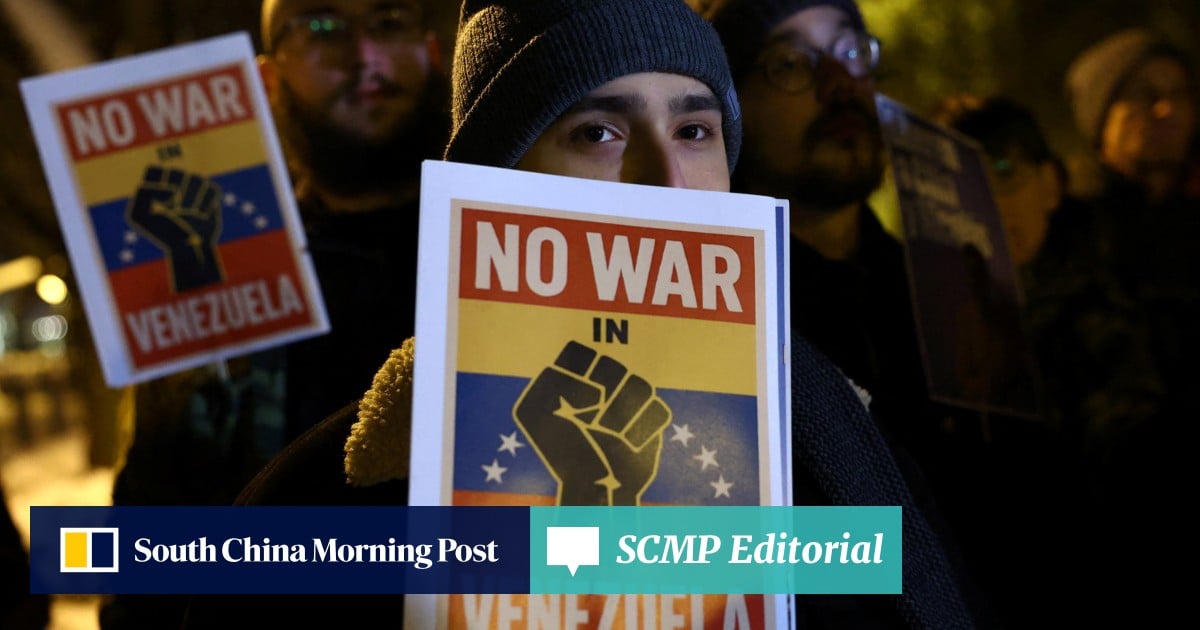
The world is still digesting the implications of the capture of Venezuela’s president and his wife to face drugs and arms charges which they deny. Meanwhile, President Donald Trump has said the US could be engaged for years in running an oil-rich country laid to waste by economic mismanagement, a collapse in oil output, decaying infrastructure, unemployment and crime, food and medicine shortages, corruption, poverty and political instability, to name some of its ills.Even the leader of the world’s most powerful nation will need a detailed plan to make a real difference for the better. So far, any ideas have been confined to reviving the decrepit oil sector, with American oil companies at the forefront, not to mention an interest in the rare earths and critical minerals needed by US technology and defence firms.
The biggest concern, in the absence of a plan, has to be that Trump will try to run the country as a colony, under a governor installed by Washington. This is the stuff of 18th and 19th century colonisation, when Western countries sent warships to conquer territories and installed governors to oversee the exploitation of their resources.
The United States has portrayed its attack on Caracas and the capture of Nicolas Maduro as the liberation of Venezuela. That remains to be seen. A worrying scenario is colonisation and resource exploitation in the absence of even a historical or cultural background like that of Russia’s territorial war with Ukraine. For the US, what connections are there between the two countries aside from a long friendship that deteriorated after Maduro’s predecessor Hugo Chavez took over as president? If the US can take over the running of a country in this way, it could be the beginning of a slippery slope.
At least, in the case of the first Iraq war, the US portrayed it as a security issue, following the invasion of Kuwait, and acted with United Nations backing. The second Iraq war, launched amid a global war against terrorism without full UN backing, involved the pretext of unsubstantiated claims that Iraq was armed with weapons of mass destruction. This time, it would be good to be reassured that the violation of international law is more than just a resource grab and that the Venezuelan people can look forward to a better life than the one that has seen nearly 8 million leave, mostly for other countries in Latin America or the Caribbean.So what happens next, or what the plan is for Venezuela, is a leading issue for the international community, given that the White House has threatened to intervene in other countries or territories to secure or defend US interests, including Greenland for its strategic significance and rich resources.