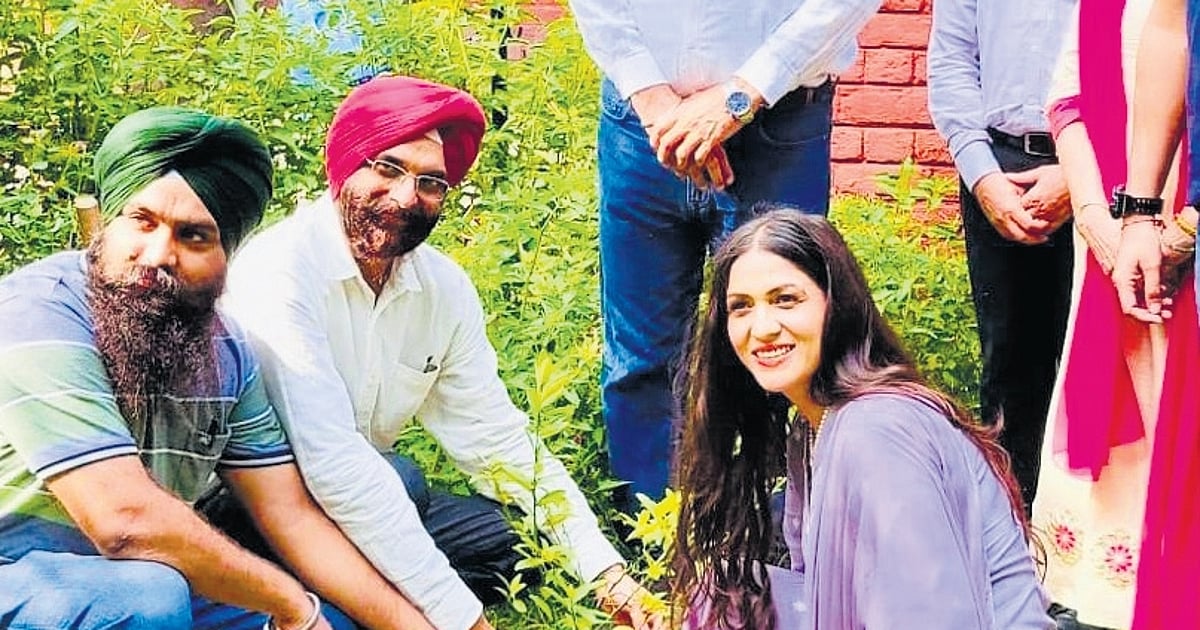
Following the floods, Doda pursued formal training in environmental science, including advanced academic exposure at IIT Kharagpur. Recalling the period, she says, “After the 2018 Kerala floods, I, along with my crew, was stuck for more than ten days and then got evacuated through Tamil Nadu. This changed my life. Then I started doing research and in 2022 started making my documentary ‘India: The Golden Sparrow-Disaster Risk Reduction’ which got released the next year.”
The documentary focuses on disaster preparedness, policy gaps and the importance of shifting from reactive relief to preventive planning. Its international screening opened new platforms for dialogue. “Then in 2024, I was invited to Russia by the Save and Preserve Festival and organization to speak on environmental issues, an event that was covered by Russia 1 as my documentary was officially selected at the film festival, Russia,” she adds.
She believes her environmental consciousness was shaped early in life. Doda credits her parents for instilling discipline, responsibility and a sense of service. “In particular, my father’s deep love for nature and the respect he practiced taught me about the natural world and left a lasting imprint on me.”
For Doda, environmentalism is not limited to awareness alone but extends to accountability and action. She views cinema as a powerful tool for social change. “I don’t see acting and environmentalism as separate. Cinema is one of the most powerful tools we have to shape consciousness,” she adds.
Beyond filmmaking, she has conducted capacity-building programmes and collaborated with policymakers and academic institutions.
She has been training government officials across the country on topics such as the role of officers in climate mitigation and adaptation, and the risks of global warming at the Mahatma Gandhi State Institute of Public Administration (MGSIPA) in Chandigarh, the National Academy of Direct Taxes, Regional Campus, Mumbai, the Income Tax Department, and other places.