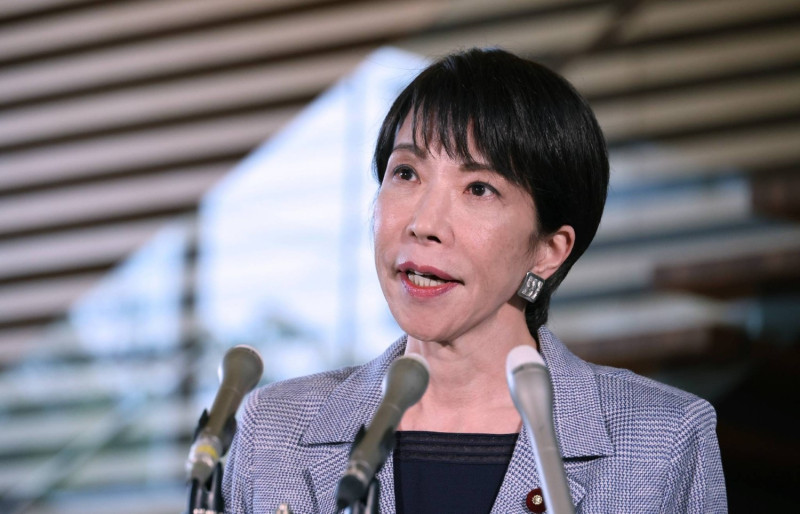
JAPANESE Prime Minister Sanae Takaichi may be preparing to call an early general election, potentially as soon as February, after the leader of her coalition partner indicated that her thinking on the timing of a vote has entered what he described as a “new stage”.
Hirofumi Yoshimura, leader of the Japan Innovation Party, known as Ishin, said on Sunday that he would not be surprised if Takaichi moved to dissolve parliament, following media reports that she was considering a snap election on Feb 8 or Feb 15.
“I wouldn’t be surprised if she made the decision as reported by the media,” Reuters cited Yoshimura telling public broadcaster NHK, adding that he had met the prime minister on Friday.
He said, however, that they did not discuss specific dates.
The Yomiuri newspaper reported on Friday, citing government sources, that Takaichi was weighing an early election.
The conservative leader, Japan’s first female prime minister and an admirer of Britain’s Margaret Thatcher, has enjoyed strong approval ratings since taking office in October and has yet to face voters in a national election.
Takaichi declined to give a clear indication of her plans during an interview with NHK recorded on Thursday and broadcast on Sunday. Instead, she said her immediate priority was economic management.
“At present, I am focusing on the immediate challenge of ensuring that the public feels the benefits of our stimulus policies aimed at cushioning the blow of inflation,” she said, adding that she had instructed cabinet ministers to ensure the timely execution of the supplementary budget for the current fiscal year and parliamentary approval of next year’s budget.
Her stance has fuelled debate within the ruling coalition and opposition ranks. Komeito leader Tetsuo Saito warned that a February election could derail the budget process.
“A February election would make it impossible to pass the budget by the fiscal year-end, at a time Japan’s economy faces a critical phase,” Saito told NHK, saying he was surprised by reports that Takaichi might dissolve parliament when it convenes on Jan 23.
Takaichi’s proposed US$783 billion budget, her first as prime minister, underpins her flagship spending programme. Markets reacted nervously to the election speculation, with the yen weakening against the dollar after the Yomiuri report.
Japan’s economy has weathered the impact of higher US tariffs, but persistent food inflation continues to weigh on consumer spending. Failure to pass the budget by the end of March would force the government to introduce a stop-gap budget, potentially delaying key measures.
The Internal Affairs Ministry said on Saturday that it had urged regional election committees to begin preparations in case of an early election, describing the move as a response to media reports. Political analyst Shigenobu Tamura, however, said the statement suggested the election was a “done deal”.
Former prime minister Yoshihiko Noda, now leader of the main opposition Constitutional Democratic Party of Japan, said he had expected Takaichi to pass the budget before calling an election but now believed she would dissolve parliament on Jan 23.
Beyond domestic politics, Takaichi’s government faces mounting economic risk from strained relations with China.
Tensions escalated in November when she said a Chinese attack on democratically governed Taiwan could be deemed an existential threat to Japan, potentially triggering a military response.
Beijing, which claims Taiwan as its territory, has since urged its citizens not to travel to Japan, cancelled bilateral engagements, and imposed curbs on exports of dual-use items for Japan’s military.
Takaichi said Chinese export restrictions targeting Japan alone were “against international protocols and unacceptable”.
She added that Japan was engaging China through diplomatic channels while working with Group of Seven partners to build supply chains that reduce reliance on “a particular country”.
Japan’s next lower house election is not due until October 2028. A strong result in an early poll would strengthen Takaichi’s grip on power, as her Liberal Democratic Party and Ishin hold only a narrow majority in the lower house and remain in the minority in the upper chamber.
Takaichi became prime minister after winning the Liberal Democratic Party leadership race following a series of electoral defeats under her predecessor, Shigeru Ishiba. While approved by parliament, she has yet to seek a direct mandate from the electorate. – January 11, 2026