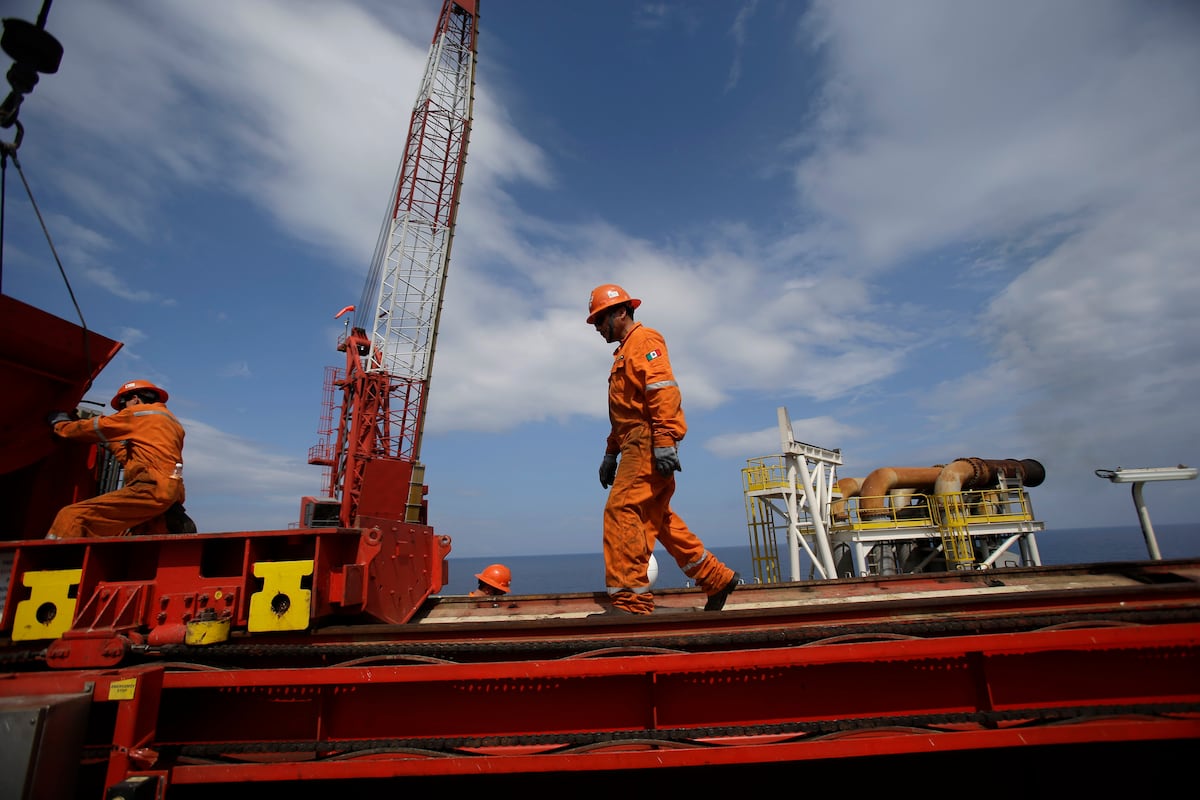
The oil tanker Ocean Mariner departed Coatzacoalcos, in the Mexican state of Veracruz, on Monday. It was bound for Havana, and was scheduled to arrive on the island Thursday afternoon. It might seem like just another one of the thousands of vessels that transport crude oil daily around the world, but this Liberian-flagged ship is carrying a cargo of Mexican oil that could provide Cuba with the energy it needs to survive another day. Following the United States’ attack on Venezuela, President Donald Trump announced that his country would take over the export of Venezuelan oil, effectively ending shipments from that country to Cuba. In a matter of days, Mexico and the Ocean Mariner have become one of the few remaining options for supplying fuel to the island.
Mexican President Claudia Sheinbaum acknowledged on Wednesday that the new regional landscape has positioned Mexico as “a significant supplier” of oil to Cuba. Sheinbaum has been insisting for weeks that the relationship between the two countries is longstanding and that, ever since the presidency of Carlos Salinas de Gortari (1988-1994), the Mexican government has been sending hydrocarbons to the island as a humanitarian act. The president admitted that the shipments made since 2023 include both solidarity contributions and some contracts signed with the Cuban regime. The figures are not entirely clear. Some energy monitoring firms report data that would place Mexico at the forefront of oil contributions to the island amid the crisis in Venezuela. However, Petróleos Mexicanos (Pemex), the state-owned oil company, has yet to clarify the terms of the shipments, their contents, or their cost. “We are not sending more oil than has been sent historically. There is no particular shipment,” Sheinbaum insisted.
The Ocean Mariner’s voyage to Cuba is its second in less than a month. Two weeks ago, the University of Texas Energy Institute located the vessel leaving the Pajaritos terminal in Coatzacoalcos, en route to the island via the Gulf of Mexico. At that time, monitoring estimated that Mexico delivered 80,000 barrels of hydrocarbons. During 2025, this vessel—with a capacity of up to 110,000 barrels—made several trips between the Mexican port and various points in Cuba. The shipments have not gone unnoticed in the United States, where several members of Congress have alerted the State Department and even suggested that the Trump Administration exert pressure on Mexico through the review of the free trade agreement (USMCA), scheduled for July. “Make no mistake: if the Sheinbaum government continues to give away free oil to the terrorist dictatorship in Havana, there will be serious consequences as we renegotiate the USMCA,” threatened Florida Republican Congressman Carlos Giménez.
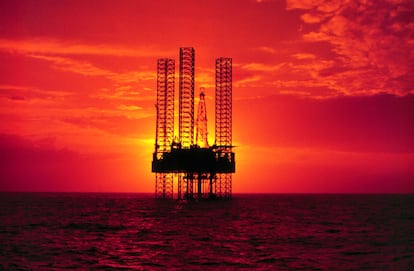 Drilling Rig In The Gulf Of Mexico.Getty Images
The energy industry in the United States has also drawn the Trump Administration’s attention to Pemex’s dominant role in Mexico. In November, a group of congressmen announced a proposed law to include dispute resolution panels for the energy sector within the USMCA. The proposal stemmed from the same argument that executives from major oil companies have been making to Mexico since 2018: the Latin American country monopolizes the market with its state-owned company and prevents investment from US firms. Trade is one of the most sensitive issues in the relationship between Mexico and the United States, which in the last year—the first of Trump’s second term—has forced the Sheinbaum administration to work at breakneck speed on agreements outside the USMCA on issues such as migration and security.
Pemex has reported to the U.S. Securities and Exchange Commission (SEC) that since July 2023 it has been shipping various hydrocarbons to Cuba through its subsidiary, Gasolinas del Bienestar. The state-owned oil company estimated in its latest report that, through this model, Mexico exported 17,200 barrels of crude oil per day in the first nine months of 2025, representing 3.3% of its total exports. It is currently unknown whether other countries besides Cuba receive hydrocarbons through Pemex’s subsidiary. Gasolinas del Bienestar was created during the administration of Andrés Manuel López Obrador (2018-2024) with the aim of opening gas stations in rural and remote regions of Mexico, where fuel is sold at lower prices than the market rate.
Since 2023, López Obrador has promoted the shipment of energy to Cuba, while simultaneously strengthening relations with Cuban President Miguel Díaz-Canel. In 2024, with Sheinbaum already in the presidency, the Mexican government made an extraordinary shipment to the island following Hurricane Rafael and the growing energy crisis, which has persisted throughout 2025. The latest oil shipments to Cuba have sparked criticism from a weakened opposition to Morena, the ruling party. “Of course, the truly responsible thing would have been to cut off their power, paralyze transportation, and shut down hospitals. Because nothing combats an ideology better than directly punishing the civilian population. An impeccable humanitarian strategy, without a doubt,” José Ramón López Beltrán, López Obrador’s son, responded ironically to the opposition in a social media post.
Following the U.S. operation in Venezuela, which resulted in the arrest of Nicolás Maduro and Cilia Flores, uncertainty has grown in Cuba due to shortages and the uncertain future of oil imports. Meanwhile, critics of the Cuban regime in the United States are pointing the finger at Mexico, hoping Trump will censor the oil activities of his southern neighbor. “Mexico continues to finance the tyranny, sending resources to a criminal regime while the Cuban people suffer hunger and repression. This hemisphere does not need neutrality. Neutrality is complicity. Mexico is too large and too important to serve as a lifeline to dictators in Havana and Caracas,” declared Republican Congresswoman Maria Elvira Salazar of Florida.
Sign up for our weekly newsletter to get more English-language news coverage from EL PAÍS USA Edition