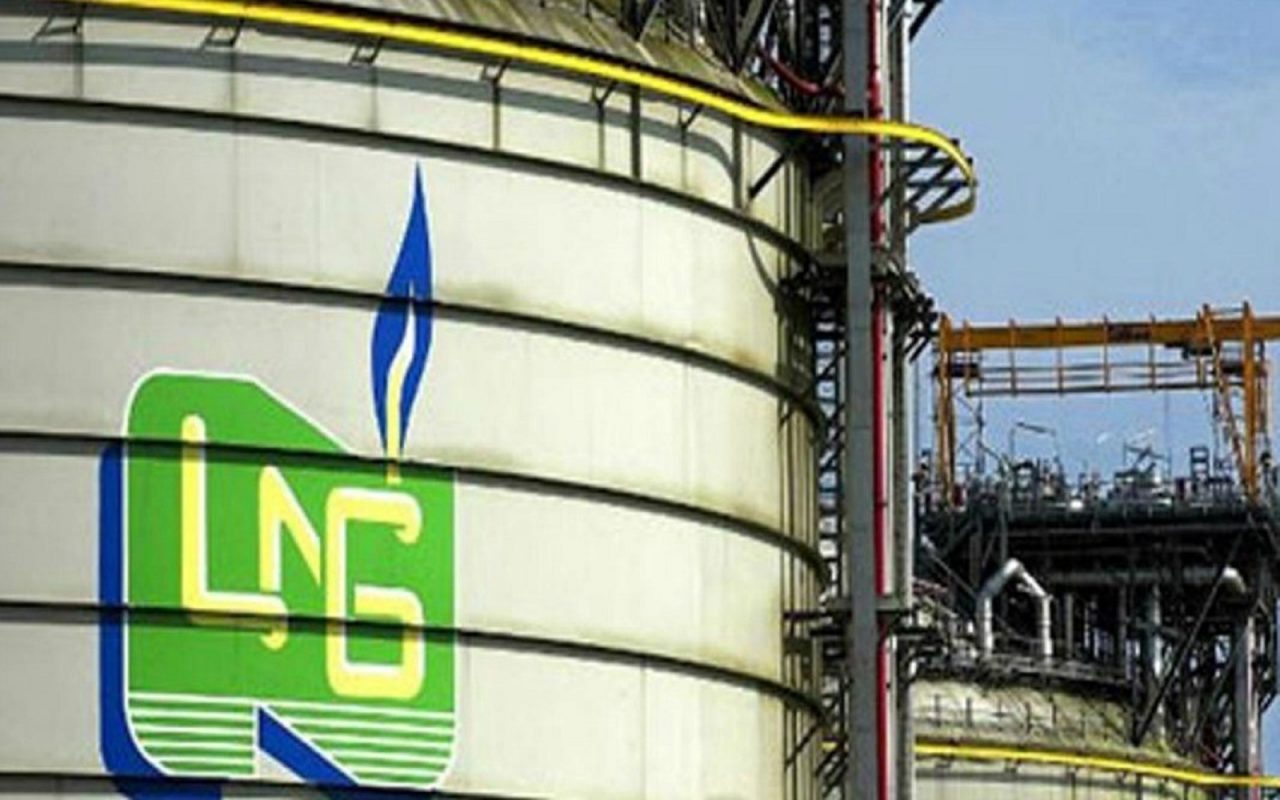
Global market analysts have provided a detailed market overview predicting that prices of Liquefied natural gas (LNG), are likely to come under sustained pressure in 2026 as the market absorbs the largest supply wave in the industry’s history.
Bernstein analysts stated this in a note published on Friday.
Analysts led by Neil Beveridge forecast global LNG demand to rise to around 441 million tonnes per annum (mtpa) in 2026, up about 8.5 per cent year on year. Growth is expected to be driven almost entirely by Asia, while Europe’s LNG imports are seen stabilizing near 120 mtpa, assuming only a limited return of Russian pipeline gas.
Thinking ahead, the Nigerian LNG has sustained investment hoping to key into the growth opportunities during the year.
LEADERSHIP reports that the $10 billion Nigeria LNG Limited Train-7 gas project, is racing towards completion phase as contractors handling the project continues to reinvigorate efforts to meet projected timeline for delivery.
In June last year the project reached 80 per cent completion as announced by the company.
The NLNG Train 7 Project, a major expansion of Nigeria LNG Limited’s facilities on Bonny Island, is designed to boost Nigeria’s LNG production capacity by 35 per cent from 22 to 30 million tons per year (MTPA) by adding one complete liquefaction train and associated utilities.
This is a key step in leveraging Nigeria’s vast gas reserves for global energy needs, with significant job creation and training programs underway as construction progresses towards completion.
Since commencing operations in 1999 with a two-train plant, NLNG rapidly expanded to a six-train facility, delivering over 6,000 LNG cargoes to international buyers.
This remarkable growth has earned the firm a reputation for operational excellence, which the Train 7 project will enhance.
The Final Investment Decision (FID) for Train 7 was made on December 27, 2019, while in May 2020, the Engineering, Procurement, and Construction (EPC) contract was awarded to the SCD JV Consortium, which includes affiliates of Saipem, Chiyoda, and Daewoo.
LEADERSHIP findings shows that the project handling consortium have made significant progress to ensure the delivery time is met.
Our correspondent learnt that the company management and stakeholders have mounted enormous pressure on the contractors, and have provided local capacity training which is part of the project component.
Confirming progress so far made to LEADERSHIP, Dr. Sophia Horsfall, General Manager, External Relations and Sustainable Development, NLNG, said efforts have been intensified by all parties to the project to ensure all hurdles are overcome.
“The overall project completion is about 88 per cent. We are on track despite a range of global and local challenges, as with most global organisations involved in similar projects. However, NLNG and its EPC Contractor remain committed to delivering the project within the realigned schedule” Horsfall asserted in a response to LEADERSHIP inquiries.
This NLNG T7 project is a key part of both NLNG’s and Nigeria’s growth and expansion, which will deliver an increased production of 30 MTPA of LNG by developing a 7th Complete Train (CT) and a Common Liquefaction Unit, one new LNG jetty (in addition to two existing jetties), one new Condensate Stabilization Unit (CSU), utilities, flares, and associated infrastructure.
New facilities will also be developed to accommodate up to 7,500 people, a new Marine Offloading Facility will be realised, and the existing Former Aggregates Berth will be upgraded.
The project will be developed in compliance with the requirements of the 2010 Nigerian Oil and Gas Industry Content Development Act (NOGICD): part of the engineering will be developed in Lagos, and several materials including the galvanized steel structures will be purchased or manufactured by local companies. Piping materials, pressure vessels, cables, and other equipment and materials will be also purchased accordingly.
In line with the project plans 331 young Nigerians recently graduated from the NLNG Train 7 Human Capital Development (HCD) Basic Training Programme, a statutory Nigerian Content requirement designed to strengthen the country’s technical workforce and reduce dependence on expatriate labour.
On the training, Horsfall, said the company’s aggressive investment in human capital was “not charity, but a business decision anchored on Nigeria’s economic future.”
“The most valuable of all capital is human capita. For us at NLNG, investing in people is not just corporate responsibility it is a catalyst for a thriving economy and a sustainable future,”Horsfall declared.
She noted that the Train 7 HCD Programme mandated under the NOGICD Act (2010) is a strategic pillar of NLNG’s Nigerian Content Plan and “a worthwhile investment in the future of our country and our industry.”
According to her, the programme has already proven its economic importance.
“From inception to date, Train 7 has created over 10,000 direct and indirect jobs. It has also delivered more than 70 million safe man-hours without Lost Time Injury, while enabling massive technology transfer to Nigerians at all levels.”
The Executive Secretary of the Nigerian Content Development and Monitoring Board (NCDMB) Felix Omatsola Ogbe, said the programme was a model for how Nigerian Content could directly support long-term economic growth.
“The HCD component of the Train 7 Project is a testament to the successful implementation of our Human Capital Development Guidelines, 2020. It is deliberately designed to secure a sustainable talent pipeline for Nigeria’s oil and gas industry.”
He stressed that Train 7, one of Africa’s biggest gas infrastructure projects, was reshaping Nigeria’s technical capacity landscape.
“This project has not only created jobs; it is grooming young Nigerians with advanced technical and managerial competencies needed to drive the future of the gas sector,” he added.
The graduating Batch A trainees were selected from 848 applicants on the NCDMB NOGIC JQS portal and underwent a structured year-long curriculum that combined classroom instruction, professional certifications and hands-on training on a live LNG facility.
Their training covered: Engineering, ICT, Welding and Fabrication, Marine and Offshore Services, Quality Management Systems, Non-Destructive Testing (NDT), Facility Management and Maintenance, and Health, Safety & Environment (HSE).
Trainees also received healthcare coverage, mentorship, laptops with licensed software, housing and feeding allowances.
In 2025, European imports surged as inventories were rebuilt and Russian flows were displaced, while LNG demand fell across key Asian markets including China, Japan and India due to weaker gas consumption growth and higher domestic and pipeline supply.
On the supply side, 2026 marks a turning point. Bernstein highlights that around 45 mtpa of new LNG capacity began ramping up in 2025, with another 48 mtpa scheduled to start up in 2026.
Major projects coming online include Golden Pass LNG, Qatar’s North Field Expansion phases, Scarborough and Nigeria LNG Train 7. Combined, roughly 93 mtpa of new capacity is expected to enter the market across 2025 and 2026.
As a result, Bernstein expects the LNG market to revert to net long from 2026 onward, with supply additions averaging around 50 mtpa per year through 2028.
Adjusting for ramp-ups, the broker estimates that about 150 mtpa of incremental LNG supply will hit the market between 2026 and 2028, equivalent to adding roughly 35% of current global demand in just three years.
“This will get absorbed by the market, but at lower prices,” the analysts wrote. “This shift from a sellers to a buyers market benefits downstream gas companies over upstream supplier.”
The team forecasts spot LNG prices to fall from around $12 per mmbtu in 2025 to average about $9 per mmbtu over 2026 to 202.
Prices remain elevated for now due to lower European gas inventories and seasonal heating demand, the analysts added, but see these supports fading as new supply ramps up.
If incremental volumes cannot be absorbed, the downside risk is significant, with spot prices potentially falling toward the marginal cash cost of LNG supply, estimated at $5 to $6 per mmbtu, raising the risk of production shut-ins in North America.
Meanwhile, upside risks include higher Henry Hub gas prices, as stronger domestic demand in the U.S. could constrain LNG exports and tighten the global market.
Bernstein also flags that the wave of new supply is likely to slow the pace of new project sanctions.
After a record year in 2025, when around 68 mtpa of projects reached final investment decision, the broker expects fewer approvals in 2026 as the JKM–Henry Hub price spread has narrowed. Only the lowest-cost projects are likely to advance in the near term, with higher-cost or marginal developments facing deferral.
While the near-term outlook is dominated by oversupply and lower prices, analysts stress that longer-term demand growth remains intact. Asia is expected to account for the vast majority of LNG demand growth through 2030, supported by coal-to-gas switching and energy security policies.