From reproductive rights to climate change to Big Tech, The Independent is on the ground when the story is developing. Whether it’s investigating the financials of Elon Musk’s pro-Trump PAC or producing our latest documentary, ‘The A Word’, which shines a light on the American women fighting for reproductive rights, we know how important it is to parse out the facts from the messaging.
At such a critical moment in US history, we need reporters on the ground. Your donation allows us to keep sending journalists to speak to both sides of the story.
The Independent is trusted by Americans across the entire political spectrum. And unlike many other quality news outlets, we choose not to lock Americans out of our reporting and analysis with paywalls. We believe quality journalism should be available to everyone, paid for by those who can afford it.
Your support makes all the difference.
Read more
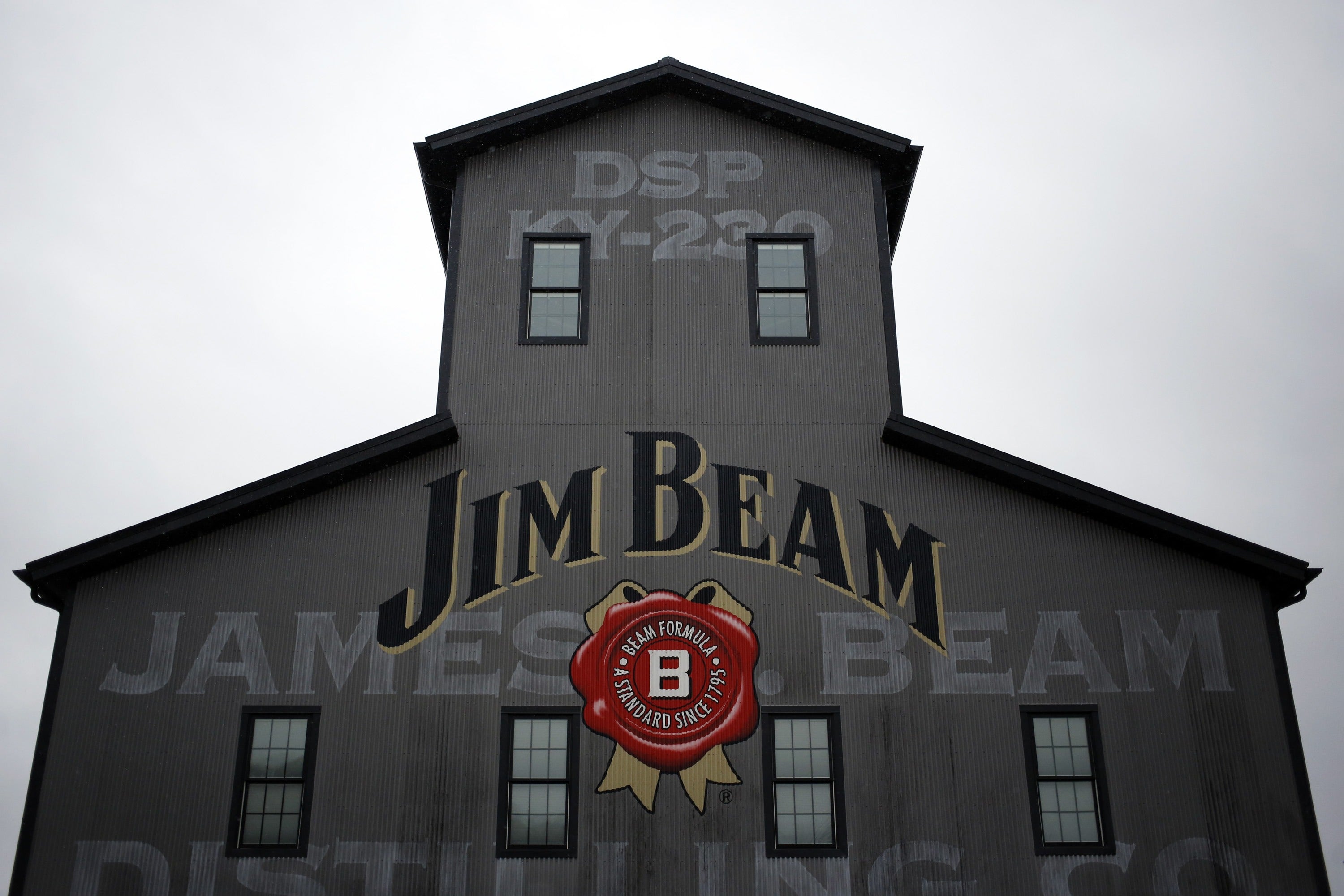
Jim Beam, one of the largest makers of American whiskey globally, is shutting down bourbon production at one of its Kentucky distilleries for a year.
The move comes amid President Donald Trump’s trade war with Canada, which has contributed to a significant decline in U.S. liquor sales after the country ushered in a boycott of American booze, and as more young adults are cutting back on drinking.
Jim Beam, owned by Suntory Global Spirits, is one of Kentucky’s biggest bourbon producers.
The Bluegrass state’s $9 billion whiskey bourbon industry has been struggling to manage its abundant supply of liquor against the drop in demand.
In a statement, the company said it was shutting down production at its Clermont distillery on January 1, 2026, though the visitors’ center on the site is to remain open, according to the Lexington Herald Leader.
open image in gallery
Jim Beam, one of the largest makers of American whiskey globally, is shutting down bourbon production at one of its Kentucky distilleries for a year (Getty)
“We are always assessing production levels to best meet consumer demand and recently met with our team to discuss our volumes for 2026,” the statement said. “We’ve shared with our teams that while we will continue to distill at our [Freddie Booker Noe] craft distillery in Clermont and at our larger Booker Noe distillery in Boston, we plan to pause distillation at our main distillery on the James B. Beam campus for 2026 while we take the opportunity to invest in site enhancements.”
There were nearly 1,500 employees at the James B. Beam Distilling Co. in Kentucky last year, according to the newspaper. The company said it was assessing “how best to utilize our workforce during this transition” in a statement to the outlet, and added it was in discussions with the union.
In March, following sweeping tariffs imposed by Trump, many Canadians decided to boycott American liquor in protest.
Industry group Distilled Spirits Council of the United States said that U.S. spirits exports plummeted 85 percent, falling below $10 million in the second quarter of 2025, which CEO Chris Swonger blamed on “persistent trade tensions.”

open image in gallery
President Donald Trump’s trade war with Canada has contributed to a significant decline in U.S. liquor sales (Getty)
Swonger warned the figures signaled “a shift away from our great American spirits brands” and urged Trump “to help facilitate a lasting return to tariff-free trade with our longstanding trading partners.”
Trump suspended trade talks with Canada in October after an ad shared by Ontario premier Doug Ford featured spliced clips from Ronald Reagan’s 1987 address, where the late president said tariffs caused trade wars and economic disaster.
Canada and the U.S. have since agreed to launch formal discussions to review their trade agreement in mid-January, according to Canadian Prime Minister Mark Carney.
The president’s tariffs are not the only headache for the U.S. liquor industry — a drastic change in drinking habits is also having an impact on sales.
A record high percentage of U.S. adults (53 percent) said moderate drinking is bad for their health, up from 28 percent in 2015, according to a Gallup poll published in August.
The uptick in doubt about alcohol’s benefits is largely driven by young adults — the age group that is most likely to believe drinking “one or two drinks a day” can cause health hazards.
The survey found that 54 percent of U.S. adults said they drink alcoholic beverages such as liquor, wine or beer, which is lower than at any other point in the past three decades.