NATO’s top military commander in Europe warned that Russia, China, Iran and North Korea are deepening their strategic cooperation in ways that threaten Alliance security, with coordination visible from Ukraine’s battlefields to the Arctic Ocean.
General Alexus G. Grynkewich, Supreme Allied Commander Europe, told a security conference in Salen, Sweden on Saturday that the four nations are aligning their interests against the West through military, technological and economic collaboration that extends across multiple theaters.
“When I look around the globe, Russia, China, Iran, North Korea, and others are increasing their collaboration and cooperation as their interests align against us,” Grynkewich said, pointing to Chinese funding of Russia’s war economy, Iranian weapons deliveries, and North Korean troops deployed to Russia’s border with Ukraine.
The assessment marks one of the clearest public statements from NATO’s operational leadership about what the Alliance views as an emerging axis of authoritarian powers working in concert to challenge Western security architecture.
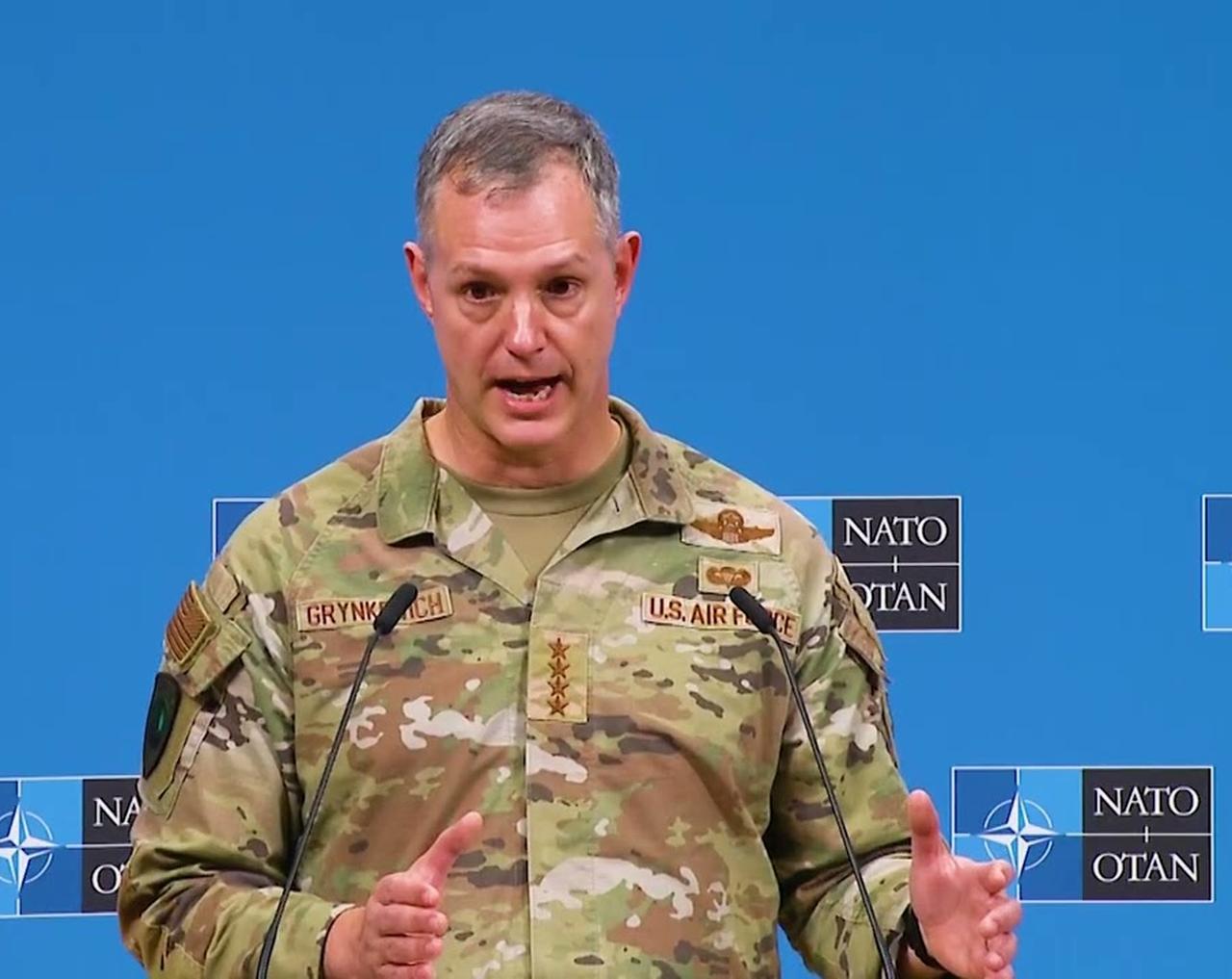

NATO’s Supreme Allied Commander of Europe General Alexus G. Grynkewich speaking about NATO’s rapid response capabilities on Sep. 12, 2025. (Photo via EU Debates)
Arctic emerges as strategic competition zone
Grynkewich highlighted the Arctic as a growing area of concern, describing the region as having become “a frontline for strategic competition” as melting ice opens new shipping routes and access to natural resources.
Russian and Chinese naval vessels are conducting joint patrols with increasing frequency in Arctic waters, he said, while Chinese icebreakers and research ships operate in the region for what Grynkewich characterized as military rather than peaceful purposes.
“They are not studying seals and polar bears,” the general said when asked about Chinese research activity. “They are conducting bathymetric surveys—trying to understand how to counter NATO capabilities on and under the sea.”
Russia continues testing advanced military capabilities in the Barents Sea while hybrid threats proliferate across Northern Europe, including airspace violations, GPS interference and shadow-fleet operations threatening critical underwater infrastructure in the Baltic Sea, according to Grynkewich.
NATO has responded by establishing Baltic Sentry to protect undersea infrastructure and Eastern Sentry to integrate air and missile defenses on the Alliance’s eastern flank. The command recently realigned its joint force boundaries to consolidate Arctic operations under Joint Force Command Norfolk.
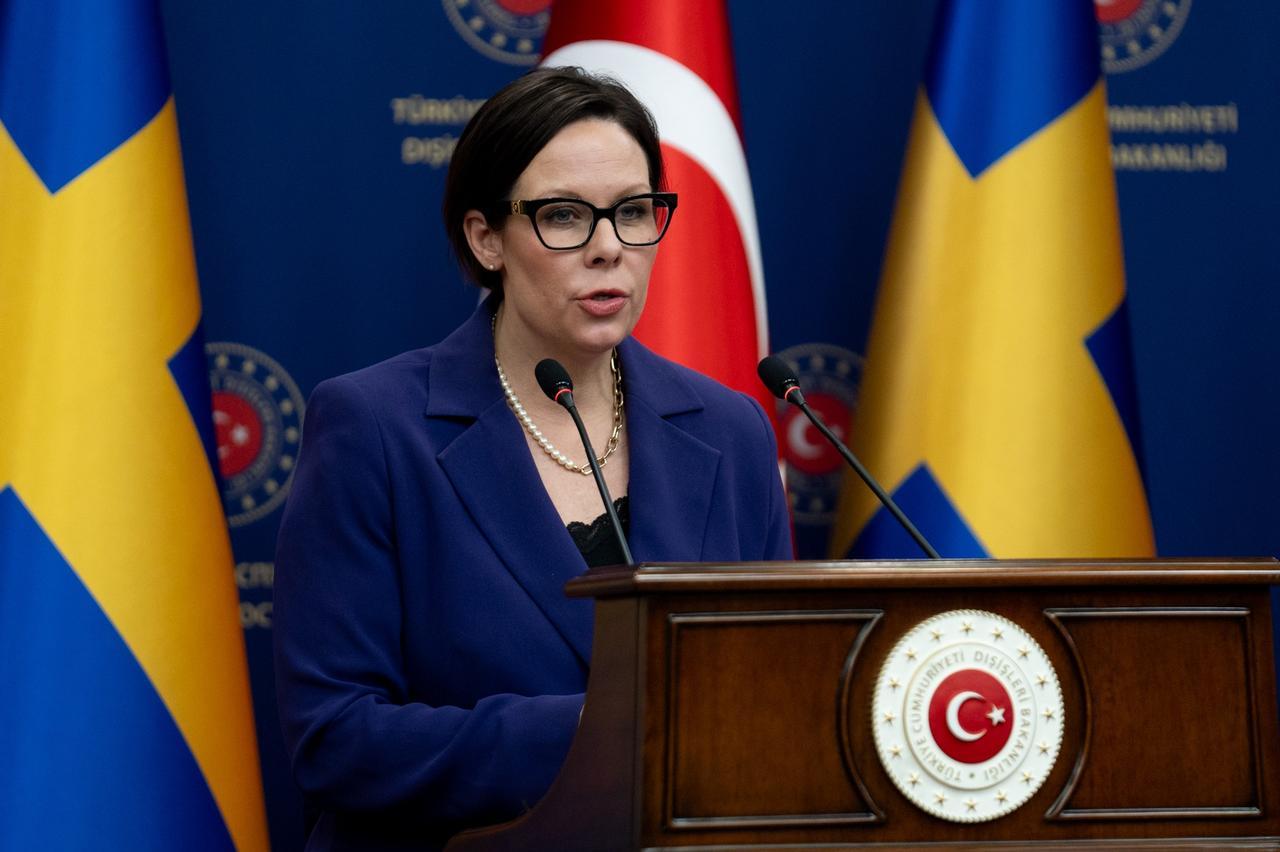
Foreign Minister Hakan Fidan (not seen) holds a joint press conference with Swedish Foreign Minister Maria Malmer Stenergard and Swedish Justice Minister Gunnar Strommer (not seen) after the Türkiye-Sweden Security Compact Meeting in Ankara, Türkiye, Jan. 21, 2025. (AA Photo)
Sweden praised as model ally, industrial cooperation emphasized
The NATO commander singled out Sweden for exceptional performance during its first two years of Alliance membership, calling the Nordic nation “a model for societal resilience” and praising its defense industrial base.
Sweden serves as framework nation for forward land forces in Finland, contributes personnel to NATO commands including those supporting Ukraine, and participates in operations across Europe. Grynkewich noted Sweden’s approach to cross-border industrial cooperation as an example for other allies.
“I recently heard the phrase ‘Made with Sweden,’ rather than ‘Made in Sweden.’ That mindset matters,” he said, advocating for collaborative production partnerships that span the Atlantic and extend to partners like Japan and South Korea.
The general acknowledged that defense industrial capacity, not funding, now represents NATO’s primary constraint. While calling the 2025 Hague Summit investment pledge historic, he stressed that financial commitments must translate into actual equipment arriving in allied arsenals.
No immediate threat to NATO territory assessed
When asked directly whether NATO faces an immediate threat, Grynkewich said he does not believe such a threat exists, citing Russia’s deep commitment of forces and economic resources to Ukraine and Moscow’s understanding of Alliance military power.
“Russia knows it cannot afford to take us on,” he said, crediting Ukraine with standing “on the front lines of European defense.”
However, he warned that Chinese and Russian maritime activity near NATO territory could escalate quickly as Arctic ice recedes and access increases. Chinese vessels have patrolled with Russian ships not only along Russia’s northern coast but also north of Alaska and near Canada, he noted.
Grynkewich declined to comment on recent statements by U.S. President Donald Trump, saying commentary on political rhetoric falls outside his role as a military officer. He pointed instead to ongoing discussions among NATO’s 32 permanent representatives in Brussels as evidence of healthy alliance dialogue.
The general, who has served as Supreme Allied Commander Europe for six months, identified personnel welfare and warfighting readiness as his continuing priorities. He described NATO as ready to fight immediately while requiring constant sharpening of capabilities at headquarters and unit levels.
On defense innovation, Grynkewich said Ukraine demonstrates that adaptability itself must become a core capability, with weapons programs designed to evolve and modify over time rather than remaining static across long acquisition cycles.

January 11, 2026 10:58 PM GMT+03:00