When the first cold mornings arrive and the garden falls silent, many wonder what happens to the bees and wasps that buzzed around in the summer.
Do they disappear with the frost? Do they all die? The answer is more complex: each species has specific strategies to survive the winter, and some even take advantage of mild winters to maintain giant colonies that can become pests.
Bee Strategies
Social bees (honeybee): the colony does not disband. The workers form a “ball” around the queen and generate heat by contracting their wing muscles. They rotate positions to withstand the cold, as long as they have sufficient honey reserves.
Bumblebees: the entire colony dies in the fall except for the new fertilized queens, which hibernate under leaves, stones, or in soil crevices. In spring, they establish a new nest from scratch.
Solitary bees: they do not live in hives. Some spend the winter as adults in cavities; others as larvae or pupae in hollow stems or wood galleries. The carpenter bee, for example, leaves its offspring in tunnels it excavates and the adults hibernate there.
Wasp Strategies
Social wasps (yellow jackets, paper wasps): the large nests die with the frost, only the fertilized queens survive, taking refuge under bark, hollow trunks, or human structures. Sometimes they hibernate in attics, which can lead to unexpected encounters in the middle of winter.
Solitary wasps: they spend the winter as juveniles buried in the soil or in dry stems. They are not usually aggressive and help control garden pests.
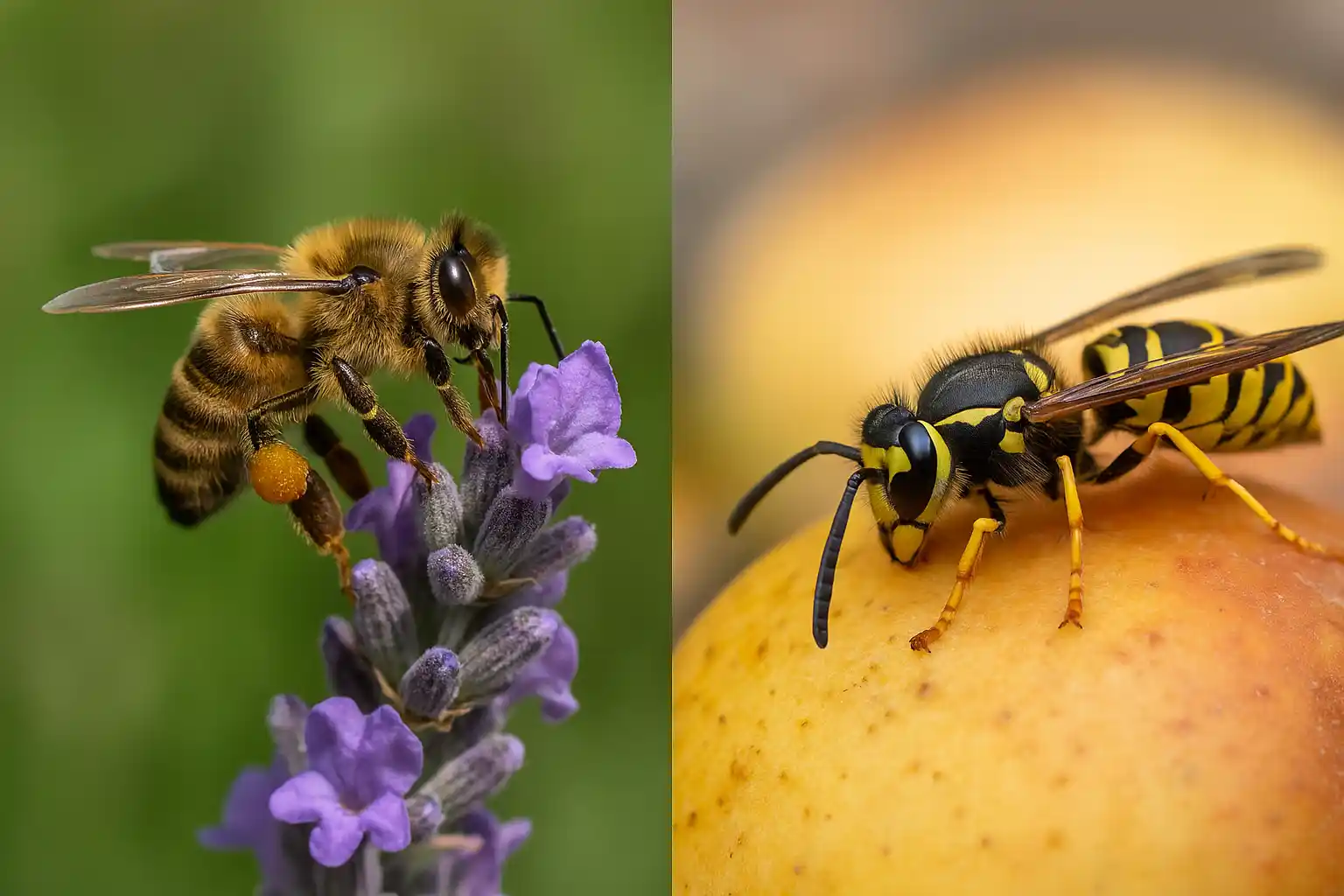 Explore the intriguing life of bees and wasps in winter.
The Phenomenon of Supercolonies
In the southeastern United States, scientists have observed a concerning phenomenon: some colonies of the southern yellow jacket wasp (Vespula squamosa) become perennial. Instead of dying in winter, they continue to grow year after year.
Colonies with 250,000 individuals and more than 100 queens have been documented.
Some nests reach 475,000 cells, with an estimated consumption of 5 million arthropod prey.
A study published in Ecology and Evolution in 2022 analyzed eight perennial colonies in Alabama and found they were led by multiple queens (about 20 per nest), with great genetic diversity and enormous predatory capacity.
Researchers warn that global warming and mild winters favor the expansion of these supercolonies.
How to Help Pollinators
The good news is that, in most gardens, bees and wasps remain allies. To protect them:
Leave part of the garden uncleaned until well into spring: leaf litter acts as an insulating blanket.
Delay deep cleaning for a few weeks to avoid destroying shelters.
Consult local agricultural services about the emergence times of these species.
If a very large yellow jacket nest is detected active in winter or spring, it is not advisable to remove it on your own: specialized personnel and protective equipment are required.
In a warmer world, the silence of the garden in winter no longer means the absence of insects. Bees and wasps are adjusting their cycles and, in some cases, thriving more than ever. Understanding their strategies is key to protecting pollinators, controlling problematic supercolonies, and coexisting more intelligently with these insects.