A leading Catholic Church official in Tokyo said Pope Leo XIV is setting a new tone for post-Francis governance by prioritizing listening, synodal methods, and the voices of diocesan bishops during an Extraordinary Consistory of Cardinals held Jan. 7 and 8 at the Vatican.
Jan 12, 2026
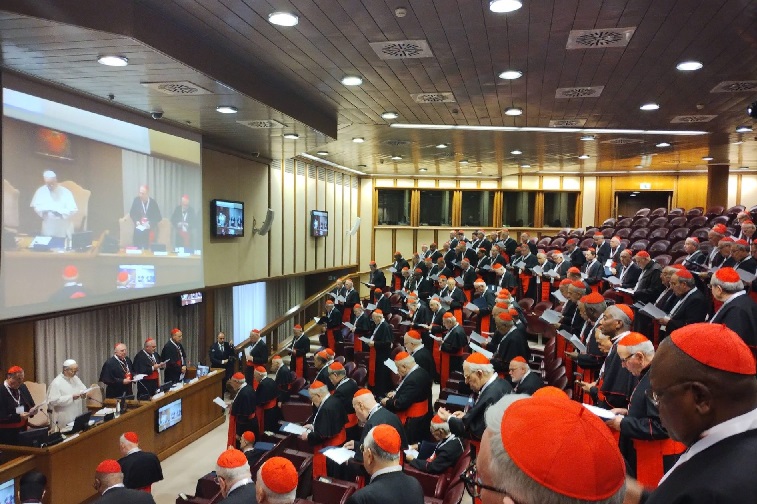
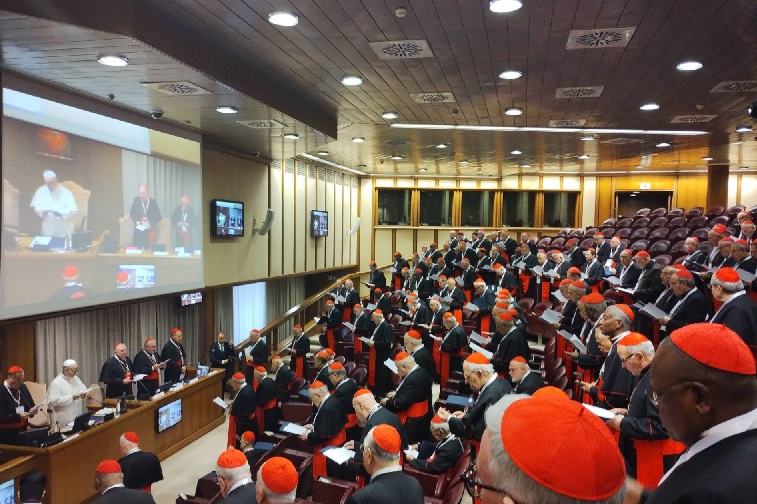
Cardinals from around the world stand in prayer during an Extraordinary Consistory at the Vatican, reflecting the Church’s renewed emphasis on listening, synodality, and collective discernment. Photo credit: Cardinal Isao Kikuchi/Archdiocese of Tokyo
TOKYO: In a reflection shared after the meeting, Cardinal Isao Kikuchi described the gathering as a deliberate effort by the Pope to hear directly from cardinals around the world, particularly those serving in local Churches, as the global Catholic Church discerns its pastoral priorities.
The extraordinary consistory brought together about 170 of the Church’s 245 cardinals, including both voting and non-voting members.
Kikuchi noted that some elderly cardinals attended in wheelchairs, underscoring their determination to fulfill responsibilities entrusted to them by the Pope.
The meeting followed concerns raised during the general congregation of cardinals held after the death of Pope Francis and before the papal election, when it was pointed out that many newly appointed cardinals did not know one another.
According to Kikuchi, many expressed the view that extraordinary consistories should be convened regularly to strengthen collegiality within the College of Cardinals.
Pope Leo XIV convened the gathering after the close of the Holy Year and the completion of initiatives set by his predecessor.
Cardinals were notified in early November and were required to make their own travel and accommodation arrangements, with no financial support from the Vatican.
Ahead of the meeting, the Pope sent a letter to all cardinals asking for their reflections on four issues: rereading The Joy of the Gospel in relation to missionary activity; assessing the implementation of the Apostolic Constitution Predicate Evangelium on Roman Curia reform; making use of the fruits of the Synod on Synodality; and considering the future of liturgy amid diverse traditions.
Rather than lengthy interventions, the two-day gathering was structured around three sessions of “Conversation in the Spirit,” a synodal method also used during the recent global synodal assemblies.
Cardinals were grouped by language and further divided between those serving in Vatican institutions and those working as diocesan bishops.
Kikuchi said the Pope emphasized at the outset that he had come to hear the voices of the cardinals and listened attentively throughout the discussions.
While the Pope is regularly available to cardinals based in Rome, this meeting was intended to focus especially on the experiences and perspectives of those serving in dioceses.
During the first spiritual conversation, participants selected two priorities for deeper discussion: the Synod and The Joy of the Gospel. Cardinals were also given the option to submit written reflections directly to the Pope by email.
The second day began with an early morning Mass in St. Peter’s Basilica, followed by prayer, spiritual conversation, and shared meals, including lunch served by the Pope. The gathering concluded with papal remarks and the singing of the Te Deum.
Kikuchi, who participated in the recent Synod and is involved in its implementation in Japan, said he was encouraged by the Pope’s decision to use spiritual conversation to discern the Church’s pastoral direction and by the opportunity to hear about challenges faced by different regions.
The Pope has expressed his intention to convene another College of Cardinals later this year and to hold similar gatherings annually.
Kikuchi said the January consistory signaled a renewed commitment to synodal governance, reinforcing the Church’s path of walking together as the people of God, a direction rooted in the legacy of the Second Vatican Council.–licas.news