*This article has been corrected from its broadcast to say that the Syrian Democratic Forces are a multiethnic military group, not solely Kurdish.
Syria (MNN) — Last week in Aleppo, Syria, another cycle of clashes and a so-called “ceasefire” took place between the Syrian government and predominantly Kurdish fighters. It was only one of several ceasefires the city has seen this past year, with the most recent taking place a few weeks ago in December.
“We in the Levant area — Lebanon and Syria — we’re used to there being supposed ceasefires that don’t really feel like ceasefires. We could kind of consider it ‘a reduced amount of clashes,’” says Pierre Houssney with Horizons International.
Photo courtesy of Ahmed Akacha via Pexels
“The north of Aleppo, there’s a couple areas that are predominantly Kurdish. That’s the issue right now: the government of Syria really wants to assert its control over the entire nation, and the Kurdish people have aspirations to have their own autonomy.”
Under the Assad regime, north Aleppo was basically autonomous. Under the new Syrian government, which includes men formerly considered terrorists, Houssney says Kurds don’t expect good things. Case in point: On Friday, Kurdish fighters (which included the multiethnic Syrian Democratic Forces) refused to leave Aleppo during a brief, government-declared ceasefire.
“They don’t have any reason to trust that these so-called government forces are going to do good things with their mothers and their daughters and their wives and their children,” Houssney says. “The government sent buses to these areas [in the ceasefire] and said, ‘Here, fighters, get on the buses.’ It’s like, who’s going to get on that bus?”
A year after Assad
“Ever since the past year, when the Syrian President Bashar Al-Assad left, it’s been an increased atmosphere of chaos. Some regions [of Syria] have become more stable, some regions have become less stable,” says Houssney. “Things are fluctuating at [such] a rate that it’s hard, honestly, to keep up with, even for us who live in the region and hear a lot of the headlines.”
Though the Aleppo conflict is grave, with tens of thousands displaced, Houssney says it will likely blow over without causing a refugee crisis. However, “Some Kurdish believers I have talked to about this believe that this whole thing is just a distraction by the Syrian regime,” he says, “to distract from the fact that they just allowed Israel to occupy a large part of southern Syria.”
Find your place in the story
Even amid Syria’s chaos, God is at work. You can partner with Horizons to support their growing network of church planters.
(Photo courtesy of Horizons International)
“A lot of the believers that came to Christ as Syrian refugees in Lebanon at our ministry centers and our partner churches, a lot of them have now gone back to that area of North Aleppo,” says Houssney.
“[Our ministry] is supporting, resourcing, training, strategizing with these believers, helping them to establish these [churches and] ministries and hopefully even Christian schools within Syria in the next three to five years.”
Pray for peace in Syria. Pray for stability and for religious freedom. “We are just praying that the conditions would be right so that the Kingdom of God can be building in Syria and rebuild the very broken society after all these years of civil war,” says Houssney.
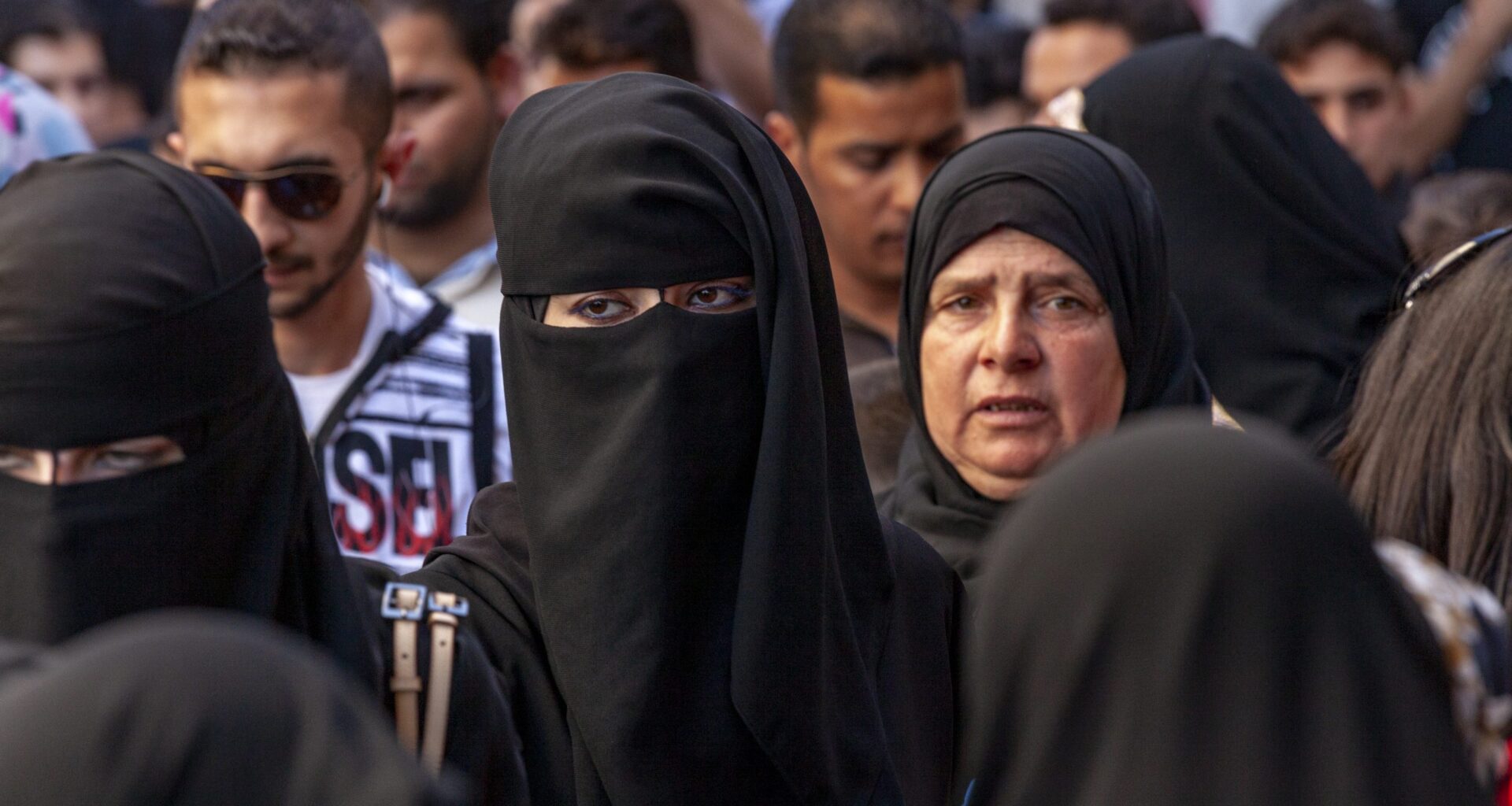
Header photo: Women wearing niqabs, veils worn by Muslim women that cover all of the face except the eyes, walk down the road in Damascus, Syria. (Photo courtesy of IMB)