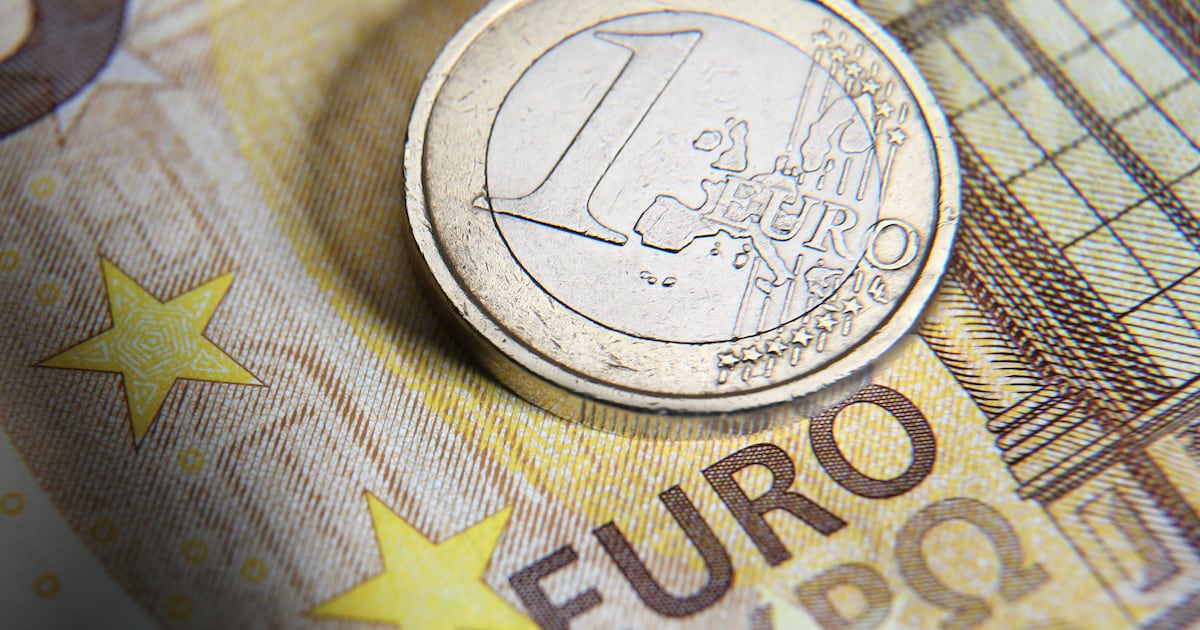
Bulgaria has just become the 21st member of the euro zone, leaving six member states of the European Union (including Denmark and Sweden) outside.
So far, Bulgarians haven’t shown the same enthusiasm for the euro as Ireland did when euro notes and coins were issued for the first time on New Year’s Day 2002. The Irish Central Bank opened that day with a skeleton staff, not expecting much demand for the new notes, it being a public holiday. However, substantial queues formed, and the governor himself was pressed into service to help with issuing notes to the eager public.
Six years earlier, in 1996, Ireland and Sweden undertook separate research studies to assess whether, on balance, adopting the euro would be beneficial.
Lars Calmfors headed the Swedish research team, which examined not just the economic but also the political implications. Given three big European projects in train at that time – the single market, the euro, and defence – his team concluded that Sweden could be politically sidelined if it stayed out of more than one of these. That political risk outweighed the possible small negative economic effects of the Economic and Monetary Union (EMU).
[ Bulgaria faces political turmoil on the eve of euro entryOpens in new window ]
In the event, Sweden chose to stay solo on both defence and the currency, though it ultimately joined Nato in 2024 after Russia’s invasion of Ukraine.
The fears that Sweden could be sidelined on EU economic policy if it did not participate in EMU were, to some extent, realised. While EU finance ministers meet regularly, the Eurogroup of ministers is where the most important discussion of economic policy takes place.
In the period after the 2008 financial crash, crucial EU debate took place at Eurogroup meetings, with the wider finance ministers’ grouping being less influential.
An Economic and Social Research Institute (ESRI) team led by Patrick Honohan, Terry Baker and myself conducted Ireland’s equivalent study of potential economic risks and benefits of joining the EMU. Our economic analysis was fairly similar to the Swedish study.
The ESRI study concluded there would be a limited economic benefit to Ireland joining the euro. There would be lower interest rates, encouraging investment, but this benefit would be partly offset by the loss of monetary policy independence.
Following on the report’s publication, there was extensive debate, with some UCD economists arguing that the loss of monetary independence would be more damaging.
None of those involved in the Irish debate at that time paid much attention to the possible danger that the euro zone could contribute to a financial bubble because of the ease with which credit could be expanded. Before monetary union, Belgian economist Paul de Grauwe, in a 1998 Financial Times article, had been a solitary voice that had predicted such an outcome.
In the event, on joining the euro, Ireland enjoyed lower interest rates, and investment and growth boomed. However, the low euro interest rates, accompanied by a failure of banking regulation, facilitated the overexpansion of domestic credit, leading to the financial crisis of 2008-13.
Latvia and Iceland had even more severe financial crises at that time, though they were not euro members. Excessive credit expansion and regulatory failure was not exclusively a danger of the EMU.
But if euro zone membership may have contributed to the financial crisis in Ireland, Spain, Portugal and Greece, membership proved beneficial in terms of the subsequent bailout. The terms were more generous than were available to the non-euro countries, Latvia and Iceland.
[ Six economic flashpoints to watch out for in 2026Opens in new window ]
The belief that monetary independence could ease the pain of economic shocks proved less significant in practice for Ireland than was anticipated in the pre-EMU debate. The financial crisis affected the domestic economy, but had very limited effect on the export sector. While unemployment peaked at over 15 per cent in 2011, graduate employment increased every year through the crisis.
If Ireland had been able to devalue, this would have done little to expand employment in the domestic economy to offset the lost employment in construction and related sectors. However, for Iceland, outside the euro, the ability to devalue proved valuable in facilitating growth in its important tourist industry.
[ ‘Down to the wire’: ECB’s digital euro project faces decisive vote in 2026Opens in new window ]
The value of the constitutional independence of the European Central Bank barely figured in the 1990s debate, but is a vital safeguard. Its US counterpart, the Federal Reserve Bank, enjoys no such guarantee of independence and has been the subject of many verbal threats from the Trump administration. The attempted removal of one of its directors is currently working its way through the court system.
Politicising the monetary authority could have potentially serious economic consequences for the US, jeopardising the willingness to lend to a highly indebted US government.