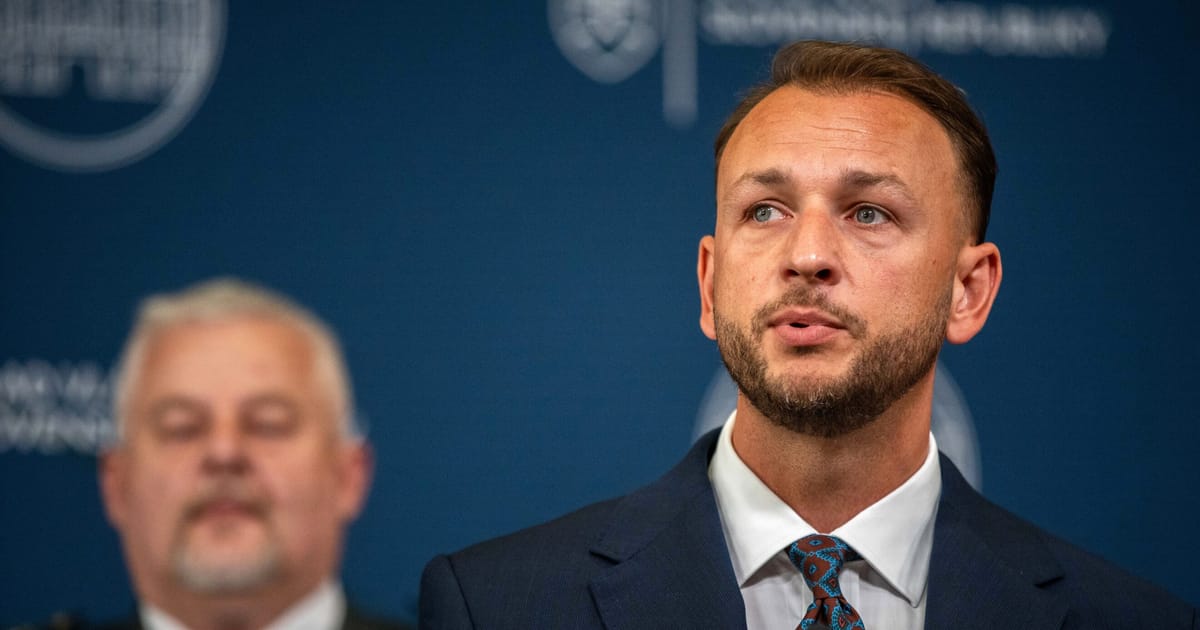
Interior Minister Matúš Šutaj Eštok, who heads the country’s police force, condemned violence in general but added “it must be noted that the public space [in Slovakia] has long faced polarizing and dehumanizing statements, which increase tensions in society. Not even an alleged attack on a commentator can diminish his responsibility for words that helped inflame emotions and divide the public.”
Environment Minister Tomáš Taraba, meanwhile, wrote on social media that “Commentator Schutz” is known for his “extremely aggressive statements toward people.”
Taraba, who was elected to the Slovak parliament in 2020 for the far-right Our Slovakia People’s Party, said “such violent attacks must be condemned, even with people who belong in the hands of the law.” He added that the Slovak justice system “does not work and pretends that journalists are above the law.”
Police in Košice said they were “actively and intensively” investigating the attack on Schutz as an assault, with spokesperson Jana Illésová saying the journalist had been discovered by a passerby on the floor of the washroom.
Slovakia has experience of violence on media, none more shocking than the 2018 murders of investigative journalist Ján Kuciak and his fiancée, Martina Kušnírová, which led to the resignation of the government at the time, also led by Fico.
The prime minister himself was severely injured in a shooting in May 2024 that he blamed at least partly on Slovak media.