 사진 확대
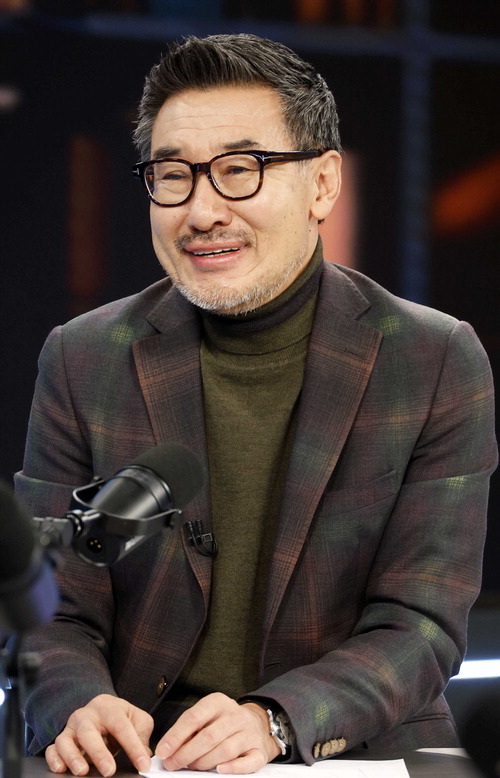
사진 확대 “What I learned from Jensen Huang is that technology companies must eventually bet on technology. That’s the ‘leadership of technology’.”
In a recent interview with Maeil Business Newspaper, Baro AI CEO Lee Yong-deok said, “The 13 years I spent in Nvidia became an important foundation for AI’s start-up.”
He was the head of Nvidia’s branch for 13 years before establishing Baro AI in 2019. I watched the site from the time when CUDA, the core of Nvidia’s ecosystem, first appeared, and worked with Nvidia CEO Jensen Huang every time he visited Korea.
CEO Lee is currently leading an artificial intelligence (AI) infrastructure start-up called AI. This experience played a decisive role in AI start-ups and R&D activities right after leaving Nvidia.
“NVIDIA invests about 20% of its sales in R&D every year,” he said. “This bold R&D investment has created graphics processing unit (GPU) technology leadership and enabled its unrivaled status today.” “Based on that experience, Baro AI has also continued to invest 30% of its total sales in R&D,” he added.
CEO Lee has established himself as a promising start-up that presents a new form of data center, which is currently considered the basis of AI infrastructure, as a result of continuous investment in research and development since his start-up six years ago. Baro AI opened Baro Space, a modular AI data center, in Pyeongtaek last year.
This is the first case of implementing a hybrid modular AI computing center (HACC) architecture developed independently in Korea. Unlike conventional super-large centralized data centers, HACC is an AI computing center composed of small, high-performance cell units.
The cell unit structure has the advantage of fast construction and high cost-effectiveness as it can be replicated and expanded like Lego blocks. He explained, “AI’s data center is a structure that allows you to select and use only as many GPUs as you need.”
Another feature of the AI data center is its modular water cooling system. Water cooling technology that applies its own patent reduces power consumption by 30-35% compared to air-cooling.
AI is focused on supporting the pre-AI development cycle beyond just supplying servers. It provides comprehensive solutions ranging from development environment consulting to AI server production, cloud and software construction, and operation training. CEO Lee said, “We are in charge of all the rest of the infrastructure so that customers can focus only on AI development. We are creating an ecosystem where we can try to transform AI, whether it is a traditional company or a start-up.”
Another thing CEO Lee learned from Nvidia is its execution ability. “The essence of Nvidia’s success lies in its execution,” he said. “The most important factor in maintaining technical leadership is, in the end, fast execution.” The growth of AI is also mainly attributed to such execution power.
His philosophy of prioritizing implementation continues in the educational field. CEO Lee is currently serving as a representative of Dream & Futures, which supports technology start-ups, and a professor of art and technology at Sogang University, teaching entrepreneurship to students. Many talented people who are already active on the front lines of the Korean information technology (IT) industry are his students.
“We have a lot of dreams, but we feel very rewarded in the process of providing practical help to young people who have difficulty implementing them and coaching them to actually move toward their goals,” Lee said.
[Reporter Ahn Seonje]