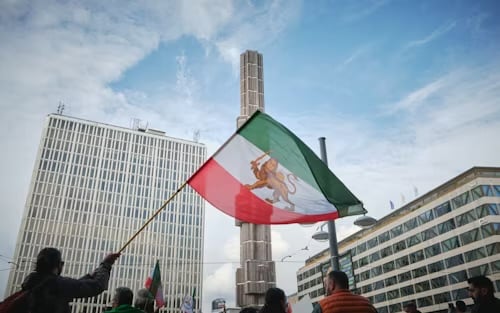
Debates over Zohran Mamdani’s rhetoric on Israel often proceed as though Israel were the only relevant comparison. That framing is too narrow. What gives Mamdani’s language its broader significance is not simply what it says about Israel, but what it declines to say elsewhere—particularly when anti-Zionism functions less as critique than as a political instrument. Iran offers a useful test case precisely because it shares Mamdani’s categorical hostility to Zionism, while embodying everything his liberal politics claim to oppose: theocratic coercion, repression of dissent, and violence justified in the language of resistance. How Mamdani navigates—or avoids—this case, reveal his political limits.
Unsplash, Free to use, 2025
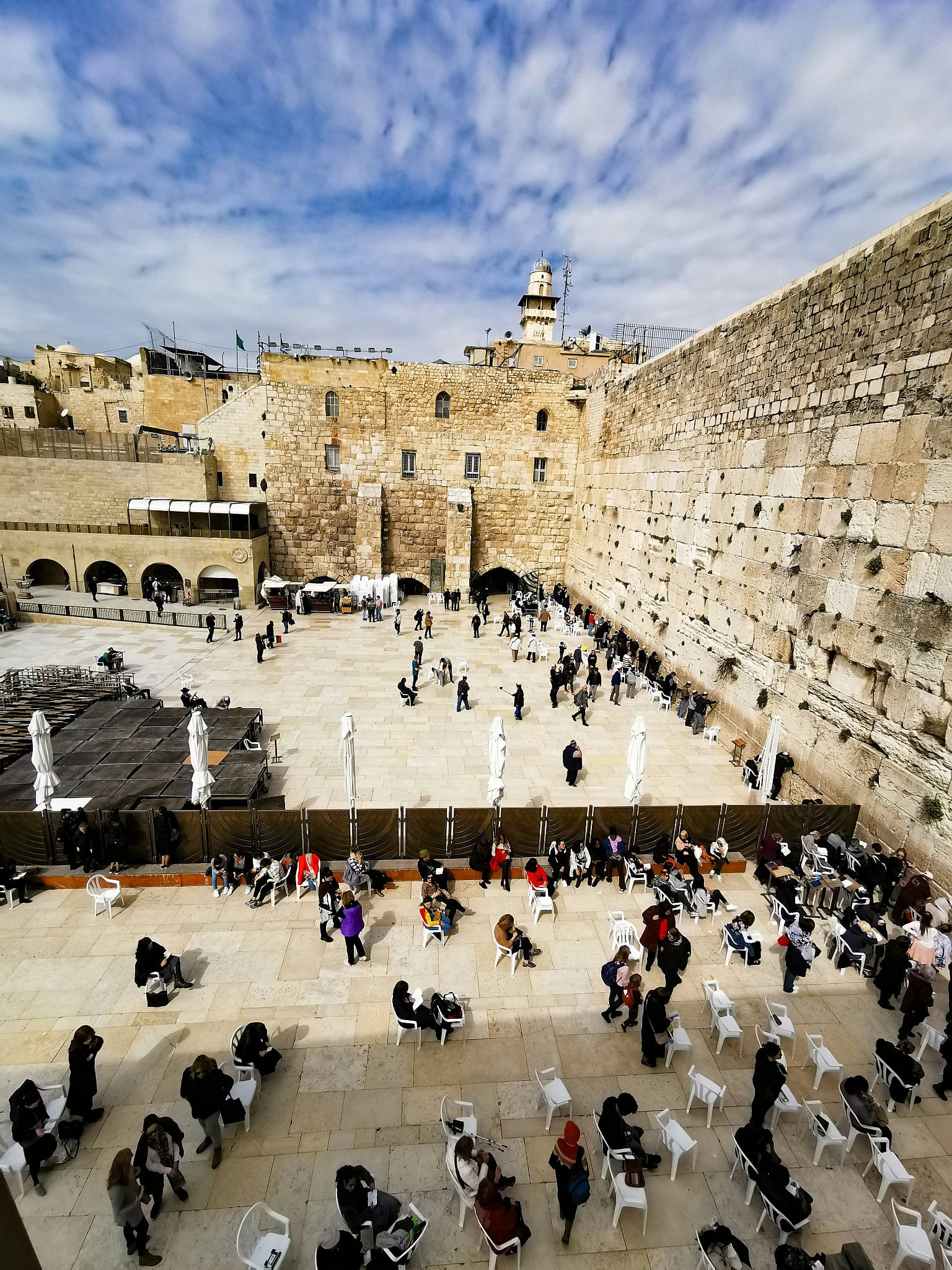
When you search online for what Mayor Mamdani has said about Israel, you get the usual pro-Palestinian talking points, calling Israel the libels we are familiar with. He says emphatically: “We are on the brink of a genocide of Palestinians in Gaza right now,” also declaring that “the occupation and apartheid must end.” He called Israel “an apartheid state” and “genocidal” in reference to the war in Gaza. He thinks the state is a “project built on inequality” and fits the definition of “apartheid under international law.” He said “like all nations, I believe Israel has a right to exist, and a responsibility to uphold international law,” and that he would recognize Israel, but not as a Jewish state. He says he refuses to recognize Israel as a Jewish state, because he doesn’t “recognize any state’s right to exist with a system of hierarchy on the basis of race or religion.”

Unsplash, Free to use, 2025
In fact, one can find quite a few quotes about Israel from the newly serving mayor, but something you cannot get from him is a direct condemnation of Iran.
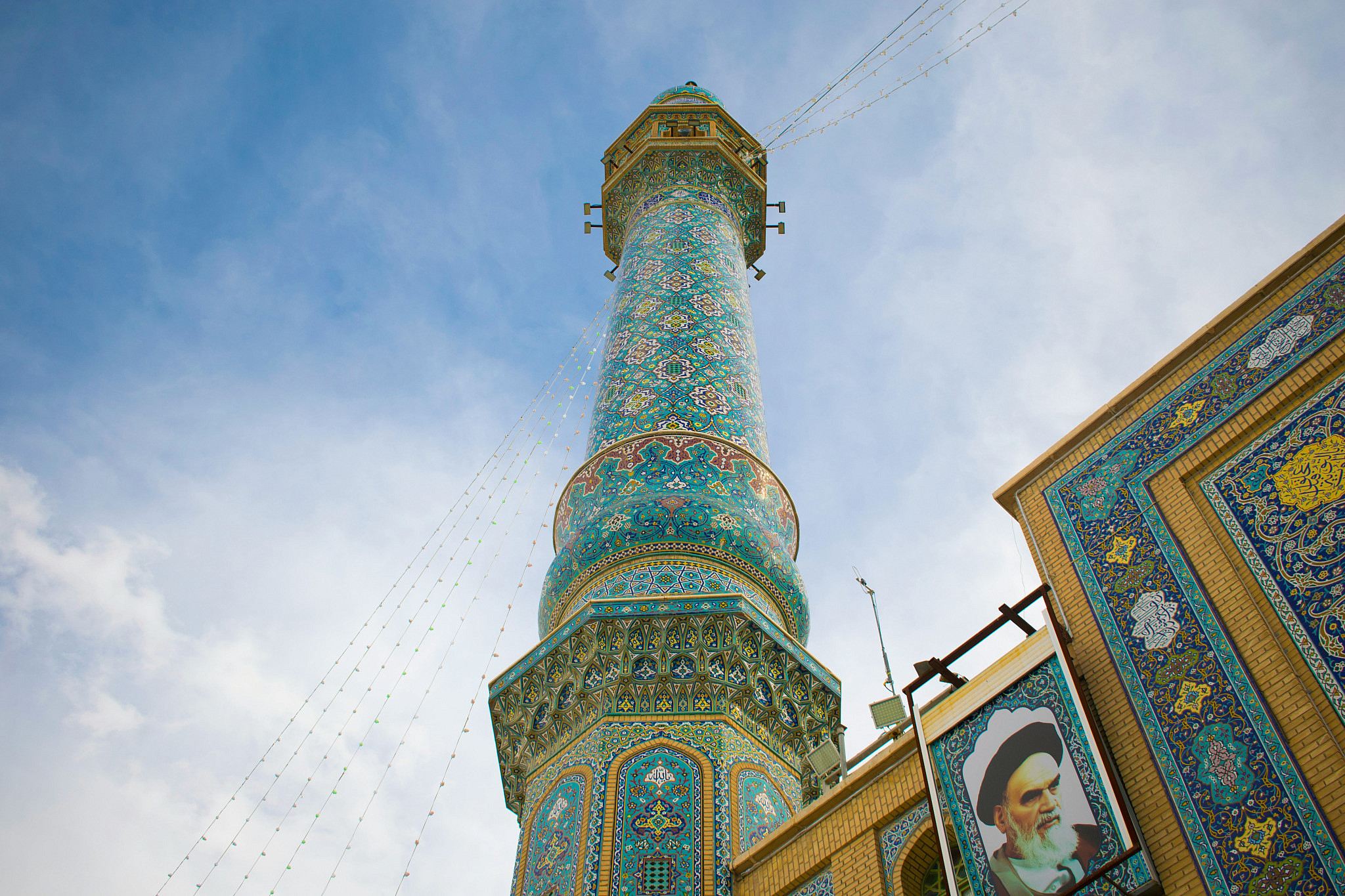
I can list a number of reasons why he should condemn Iran, but let me just give you a couple: First, as I will mention later, Mamdani has said that he opposes all ethno-religious states and supports “equal rights for all”—and Iran, being an Islamic Republic, is a “religious state.” Second, Iran is well-known for its human rights abuses, which is enough motive in itself. Third, on Quds day, Iran burns Israeli flags, chants its favorite anti-Zionist sayings during the hajj rituals, has “curse be on the Jews” and “we love to fight against the Zionists” as slogans, and if those don’t do it, they also call for the death of England and America.
I say all of these uncomfortable things to point out that Mayor Mandami chooses not to condemn or speak out about Iran, Pakistan, or Afghanistan. He does partake in the Pakistan Day Mela (Street Fair/Parade) in Brooklyn, but he hasn’t spoken out about its 1973 constitution declaring Islam to be the state religion. In fact, there are 27 officially Islamic states, 13 Christian, 2 Buddhist, and you know who the only Jewish one is.
Unsplash, Free to use, 2025
In contrast to his clarity about Israel, Mamdani has offered no explicit critique of Iran’s theocratic regime, even as Tehran’s media and politicians celebrated his election in unmistakable terms. During a parliamentary session, Iranian lawmaker Abolghasem Jarareh declared that “Zohran Mamdani’s victory shows the strength of the slogan ‘Death to Israel!’” and joined fellow MPs in chanting it on the chamber floor. In the same report, Tehran University academic Foad Izadi described Mamdani’s victory as “the arrival of the message of 13 Aban in New York,” using the Iranian calendar name for November 4, 1979—the day revolutionary students seized the U.S. Embassy in Tehran, an act later elevated by the Islamic Republic into a founding moment of its identity. Mamdani’s public record, however, contains no direct condemnation of the regime’s defining abuses: the imprisonment of women for refusing hijab, the lethal suppression of protesters, or the routine deflection of domestic failure onto foreign and Jewish enemies. This silence is not accidental.
—”His politics converge with Iran on Israel, but diverge sharply on coercion and religious authority. Unable to resolve that contradiction, he opts for omission. Jews bear the cost of that omission: a politics that echoes the regime’s language about Israel while declining responsibility for the environments that make such statements intelligible and accepted.”
Polling data shows these critiques are not confined to organized advocacy groups. A Honan Strategy Group poll conducted in July 2025 found that 54% of Jewish New York voters believed Mamdani’s rhetoric increased ethnic and religious tensions, while 53% said his statements on Israel made them feel less safe as Jews. Given New York’s long history of progressive Jewish voting, these figures show a rupture not between left and right, but between anti-Zionists and those who believe Jewish people have the right to self-determination. That divide became more obvious when Mamdani addressed the phrase “globalize the intifada,” a slogan Jewish communities rightly understand as invoking the Second Intifada of 2000–2005, during which more than 1,000 Israeli civilians were killed. Jewish audiences scarcely need reminders of mass killing: more than that number were murdered on October 7th, an event many Jews can still feel as if it were yesterday. Mamdani’s response to the slogan was to say he would “discourage” its use, while declining to label it violent on the grounds that he did not wish to police “the language of the oppressed.” The distinction he draws is revealing: language tied to Jewish civilian deaths is treated in context, while Jewish fear is treated without one.
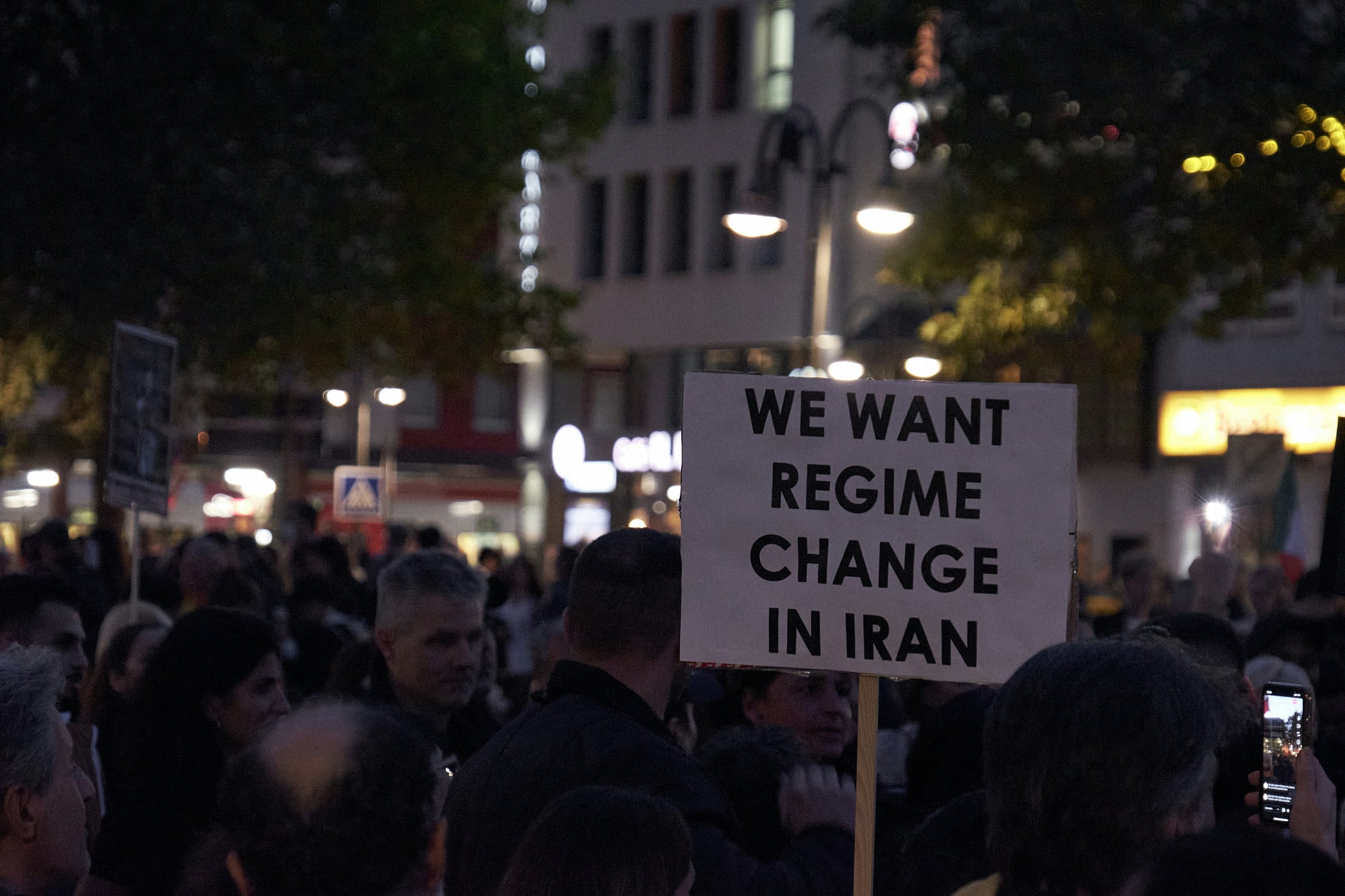
What gives these domestic controversies resonance is not how Mamdani speaks, but how anti-Zionism functions in ways already familiar to authoritarian contexts—most clearly in Iran. Since late 2025, Iran has faced nationwide protests driven by inflation exceeding 45%, youth unemployment near 30%, and a collapsing currency. The state’s response has been lethal, with at least 538 protesters killed and more than 10,600 detained. Rather than confront those failures directly, Iranian authorities have redirected blame outward, attributing unrest to Israel and “Zionist interference.” During a televised parliamentary session, lawmakers chanted “Death to Israel” while accusing foreign enemies of orchestrating the protests. The parallel is structural, not rhetorical: when anti-Zionism becomes the default explanation for political breakdown, it ceases to operate as critique and instead serves as a mechanism for antisemitic conspiratorial thinking.
—”At that point, anti-Zionism ceases to utilize reason and instead begins interpreting every fact through its own conditions. Evidence no longer challenges the framework; it is absorbed by it.”
The result is something as absurd as imagining Jewish people orchestrating protests in a country that formally prohibits Israelis from entering. Iran’s accusations collapse under even modest scrutiny. The Jews who live in Iran would almost certainly prefer not to be caught starting a revolution, given the precarious and dangerous position they already occupy.
The claim is not that Mamdani endorses Islamist theology. It’s that his treatment of Israel as uniquely illegitimate reproduces the same structure, in which Jewish self-determination is denied categorically rather than conditionally. Iran, though Shiʿa rather than Sunni, has repeatedly relied on anti-Zionism to deflect internal failure, blaming Israel and foreign enemies for domestic unrest, and using it to rationalize repression. When Western politicians echo this language without confronting how it functions under authoritarian rule, the effect is not critique but validation.
The liberal critique of Mamdani, then, is not that he criticizes Israel—a position shared by many Jews—but that he cannot remain consistent. He condemns Israel categorically while declining to speak with any force about regimes that imprison women for refusing hijab, execute dissidents, or kill protesters in the streets. When Iran shut down nationwide internet access in January 2026 to suppress protest coordination, digital rights groups described it as a “textbook authoritarian blackout.” Yet repression of this kind rarely appears in Mamdani’s vocabulary with the urgency it has for Israel. This inconsistency is not incidental. It reflects a politics in which anti-Zionism becomes the organizing axis, displacing concern for human rights. In that sense, Mamdani’s rhetoric is not merely inadequate; it’s flawed, reproducing the logic by which authoritarian regimes excuse themselves.
Kile Jones holds two Masters Degrees (M.T.S., S.T.M.) in Religious Studies from Boston University. He is the Founder of Claremont Journal of Religion, and “Interview an Atheist at Church Day.” He has written extensively in the fields of philosophy, religion, and society. His work has been published in Philosophy Now, The Humanist, Routledge Guide, and Free Inquiry.