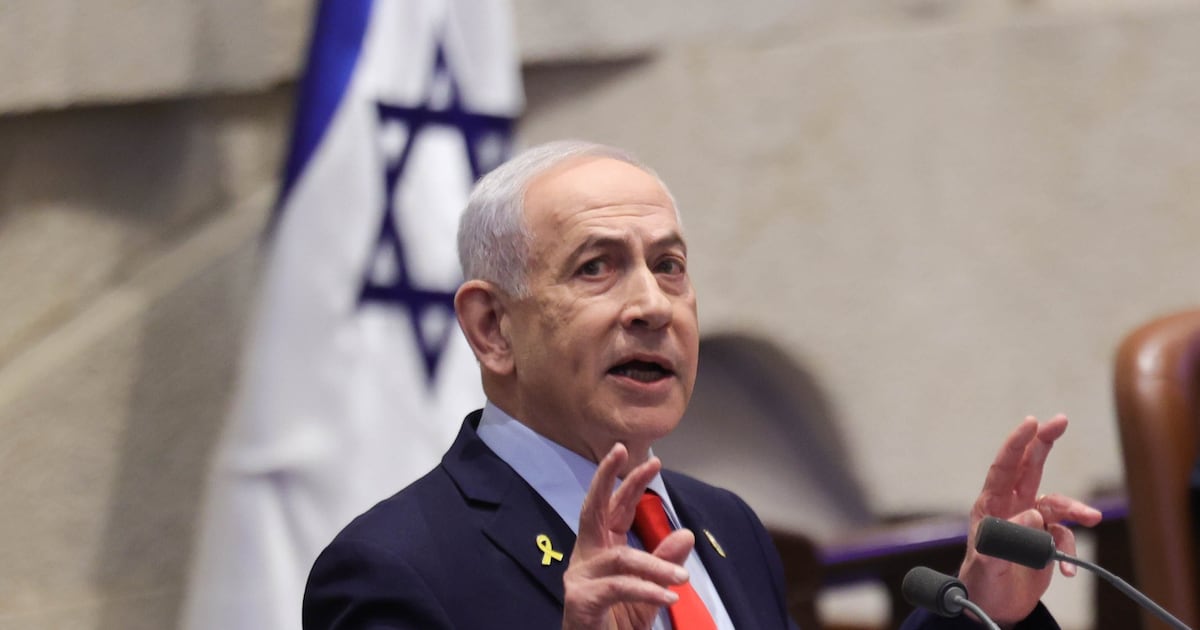
As Israelis monitor events in Iran closely, there is rare agreement across most of the political spectrum over the desired outcome: regime change.
Iran says it will target Israel if US president Donald Trump follows through on his threat to strike Iran in response to the deaths of demonstrators.
Israel is unlikely to initiate any military action against Iran, partly because such a scenario could play into the hands of the regime, but can be expected to hit back forcefully if attacked. The state of alert has already been increased, with the focus believed to be on air defence.
Israelis have been advised that no changes are necessary to regular routines, but they are already discussing a possible return to sleeping in bomb shelters.
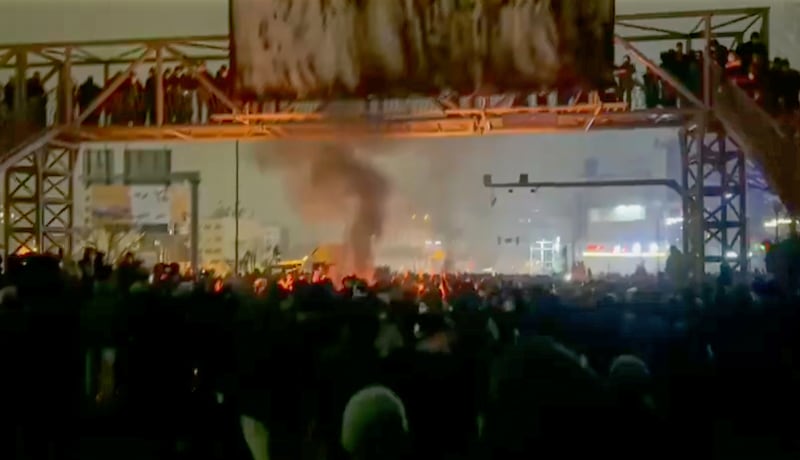
The demonstrations in Iran began on December 28th and have spread across the country. Photograph: UGC via AP
The two states fought a 12-day war in June during which there were extensively reported Mossad operations inside Iran. Heritage minister Amichai Eliyahu recently revealed that Israeli agents are active in Iran.
“When we struck Iran last year, we were on their territory and knew how to prepare the ground for the attack. I can assure you that our people are working there right now,” he said in an army radio interview.
Referring to possible Israeli action, he added: “Are they now acting directly to topple the regime? No. Are they acting to ensure that Iran cannot threaten us from all other aspects? Yes.”
[ Iran says it is ready for US talks but ‘fully prepared for war’Opens in new window ]
Following the interview, Israeli prime minister Binyamin Netanyahu ordered ministers to refrain from commenting on events in Iran.
Mr Netanyahu said on Sunday that Israel is “closely following what is happening in Iran,” and condemned the regime’s “mass massacres of innocent civilians,” as activists reported the death toll continuing to rise.
“We all hope that the Persian nation will soon be freed from the yoke of tyranny, and when that day comes, Israel and Iran will once again be loyal partners in building a future of prosperity and peace for both peoples,” he said.
For much of his political career Netanyahu has made thwarting Iran’s nuclear programme his top priority, raising the issue in speech after speech in apocalyptic terms, arguing that an Iranian nuclear bomb will present an existential threat to Israel. Tehran claims its nuclear programme is peaceful.
Before the fall of the Shah in 1979, Israel and Iran were close allies and major trading partners, including Israeli arms supplies. During the subsequent reign of the Islamic Republic the two countries have been locked in a decades-long struggle, with Iran utilising proxies across the region to attack Israel.
Regime change in Iran would be regarded in Israel as the ultimate victory.