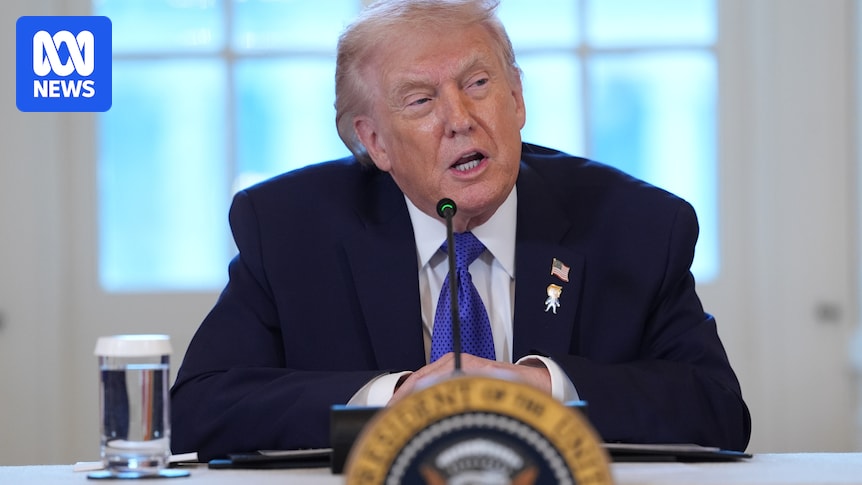
Donald Trump’s war on everything is expanding and accelerating.
In the past week, the US president has plucked the Venezuelan president from his home and threatened Cuba and Colombia while openly discussing military action against Iran and perhaps even Greenland.
He has now launched a criminal investigation into Jerome Powell, the chairman of the US Federal Reserve, America’s central bank and one of the last institutions that has refused to buckle to the US president’s will.
Both the military action in Latin America and the attack against the Fed’s authority could potentially have serious ramifications for Australia.
There is no guarantee either will succeed. His bid to mount charges against former FBI director James Comey and the New York attorney-general went down in flames last November after being dismissed by a federal judge.
And his ambitions to control Venezuela could become mired in the same frustrations that greeted the US in Iraq and Afghanistan.
But Trump’s intentions are clear. The investigation into Powell, who has weathered a barrage of insults and taunts in the past year, is as much a warning for his replacement as it is retribution to Powell for thumbing his nose at Trump.
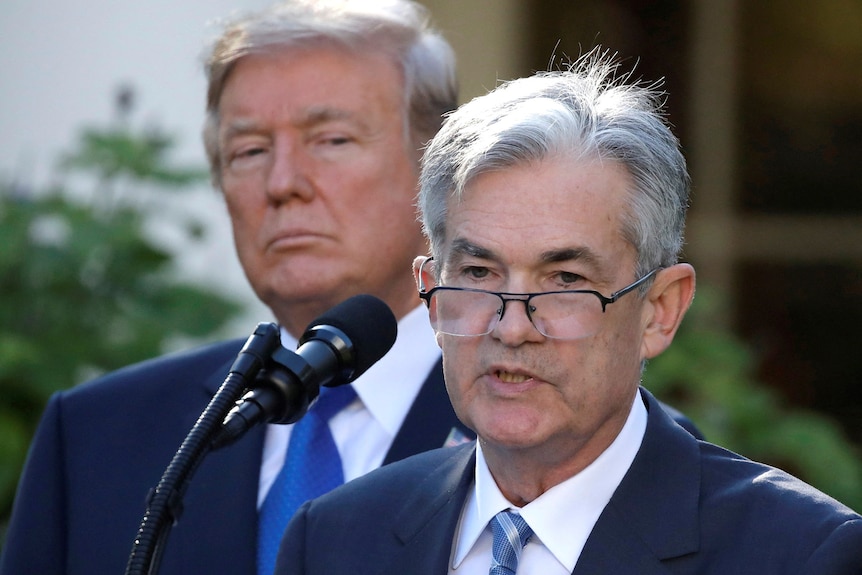
Jerome Powell (right) and Donald Trump have had a turbulent relationship for many years. (Reuters: Carlos Barria)
From now on, monetary policy will be dictated by the White House or, at the very least, strongly influenced. Either way, the era of central bank independence, enshrined by the US Congress and by the parliaments of most developed economies, is about to be overturned.
That spells trouble.
Given this is America, the world’s biggest economy with the global reserve currency, the ramifications are enormous. Curbing inflation and maintaining employment will now take a back seat to the president’s whims.
Meanwhile, the White House’s determination to take greater control of Central and South America is a renewed attempt to repel China’s growing economic influence in America’s backyard.
China, of course, just happens to be Australia’s biggest economic partner.
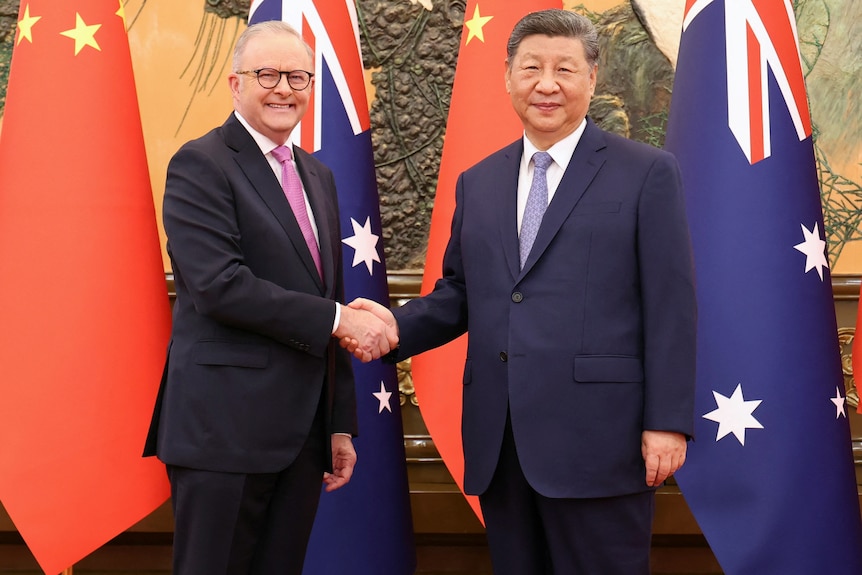
Chinese President Xi Jinping and Australian Prime Minister Anthony Albanese shake hands in Beijing, China July 15, 2025. (China Daily via Reuters)
Who will replace Powell?
Kevin Hassett, Trump’s top economic adviser, is widely tipped to be the next Fed chairman.
He is incredibly well credentialed for the role.
A former professor of economics at the Columbia Graduate Business School and New York University, he also spent a decade with the US Federal Reserve Board of Governors as a research economist.
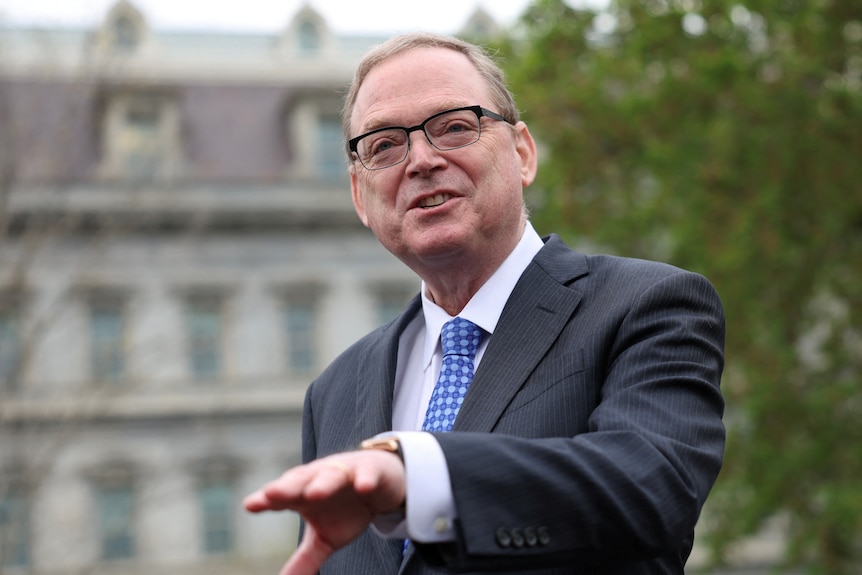
Kevin Hassett is tipped to take the job. (Reuters: Kevin Lamarque)
Hassett has also worked on almost every Republican presidential campaign since the turn of the century, including with John McCain, George W Bush and Mitt Romney and served in Trump’s first presidency.
But will he be able to stand up to the president?
Jerome Powell learnt the hard way. Appointed by Trump during his first presidency, he cut rates in 2019 after being berated by the president, a move that attracted a great deal of criticism and, at the time, chipped away some market confidence in him as chairman.
This time around, despite three interest rate cuts last year, he has steadfastly refused to be cajoled or taunted by Trump even after the president openly canvassed the idea of sacking him last June.
What happens if America loses its safe-haven status?
Why does Trump want interest rate cuts immediately to emergency levels?
Mostly it’s because the US federal deficit is projected at $US1.7 trillion ($2.5 trillion) this year. That shortfall needs to be financed by debt, which now stands at an eye-watering $US38 trillion.
Interest costs on that debt are now so big, they are the second-largest spending item in the budget. So, cut interest rates and you reduce budget pressure and slow down the deficit growth.
Looks simple.
The downside is that inflation could again gain a foothold if rates are cut too aggressively.
And that is where the danger lies. America’s status as the reserve currency makes it the ultimate safe haven for investors.
So much money flows into the US, because of that status, that its interest rates are automatically discounted.
Damaging that reputation, by attempting to muscle rates lower, could have precisely the opposite effect.
Money markets, sensing a rise in inflation, would push rates higher as there would be a flight of capital to some other haven.
It’s already underway. Gold prices continue to breach new records as investors — including the world’s major central banks — decrease their reliance on US government debt and load up on precious metals.
For Australia, our dollar will likely strengthen against the greenback along with a rise in global inflation, which will only add to global uncertainty and make the Reserve Bank’s job even more difficult.
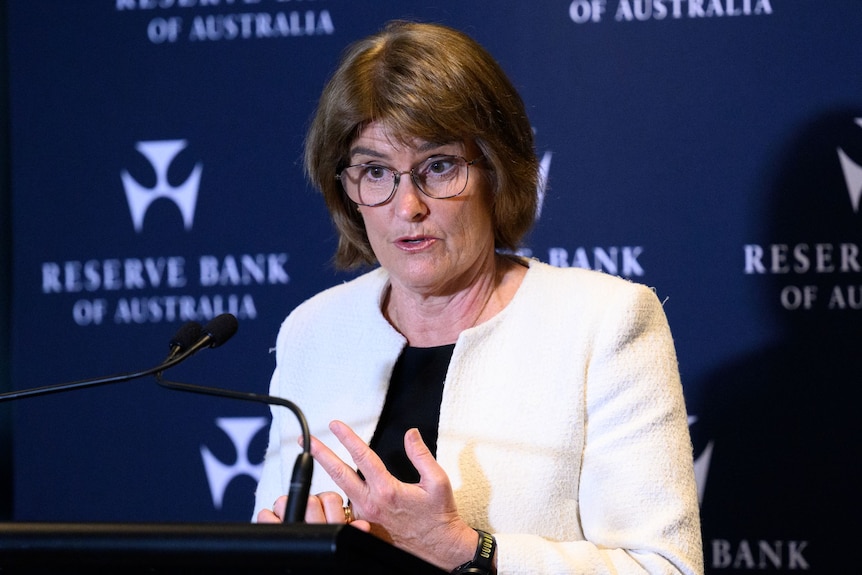
Reserve Bank governor Michele Bullock discusses the RBA’s difficult decision to keep rates on hold at the December 2025 meeting. (AAP: Dan Himbrechts)
China’s Latin American incursion
Since the turn of the century, China has diligently built a network of influence spanning the globe that is based on commerce.
There was the Belt and Road Initiative, a vast infrastructure program across Asia and Africa financed by Beijing that delivered economic and diplomatic dividends.
It pushed deep into the Pacific and spent heavily throughout Latin America.
From Venezuela to Brazil, Bolivia to Peru and Chile, China financed the construction of ports and railways and hunted out strategic stakes in resources projects to feed its growing demand for raw materials, all while providing links for its exports to Central and South America.
It ropes in politicians and technocrats, provides assistance on security, all designed to create linkages that cannot easily be unwound.
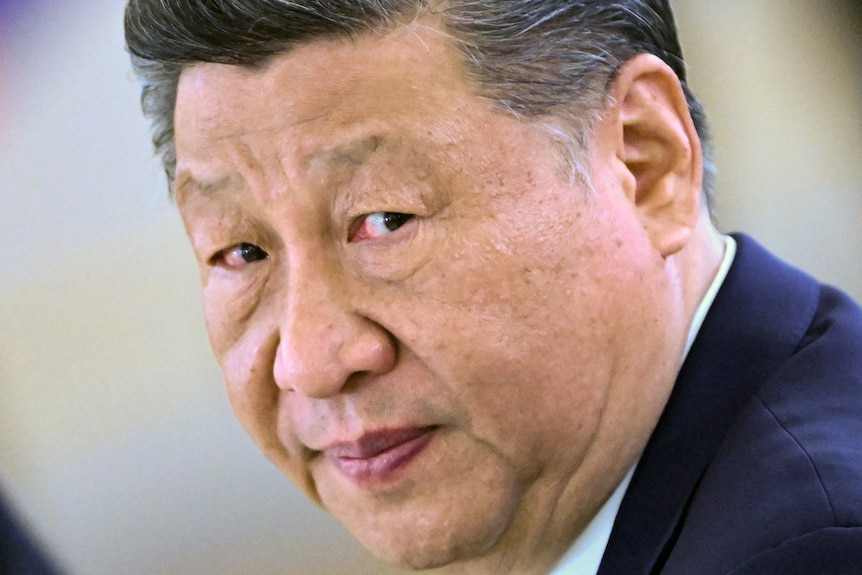
Chinese President Xi Jinping has been investing heavily in Latin America. (Reuters: Kirill Kudryavtsev/Pool)
Its trade with Latin America now exceeds $US500 billion annually, with more than 670 million consumers who now rely on Chinese imports while China eyes off critical minerals, base metals and energy including oil.
Washington now views this as a threat in its own backyard, particularly since the release of its National Security Strategy, released in November, which commits the US to keeping the hemisphere free of “hostile foreign incursion or ownership of key assets”.
No prizes for guessing who the hostile foreign power is.
Breaking the ties that bind
This is a return to what was known as the Monroe Doctrine, a strategy that harks back to president James Monroe in the 1820s, who promised to stay out of European affairs if the Europeans left the Americas to Washington.
But the Trump administration is unlikely to be content merely controlling the Americas and will probably look to Australia and Japan to help maintain its power in the Pacific.
If, however, it is concerned with China’s economic influence over South America, what would it make of Australia?
Our economic fortunes are so tied to China that we rank 105 out of 145 countries when it comes to economic complexity, largely because we export a handful of raw materials to mostly one country.
According to the annual Harvard University list, we have now fallen behind Botswana, a developing nation in southern Africa.
Back in 2015, former US president Barack Obama quietly asked if Australia could stop selling so much iron ore to China.
Donald Trump may demand it.
Loading