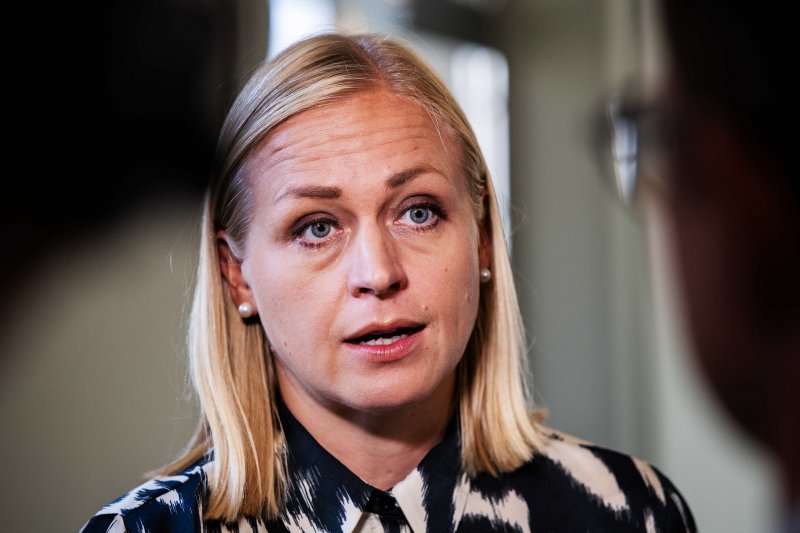
Photo credit: areena.yle.fi
On January 12, the foreign ministers of Finland and Sweden called for stronger sanctions against Russia, emphasizing the need for more robust measures in response to ongoing tensions.
The Finnish Foreign Minister Elina Valtonen and her Swedish colleague Maria Malmer Stenergard said that the EU must develop a full ban on maritime transport of Russian energy sources in coordination with the G7 countries, and also strengthen restrictions on imports and exports of luxury goods, News.Az reports, citing foreign media.
The parties stressed the need for close coordination with partners in the “Group of Seven” and other international participants to intensify pressure on Moscow for its aggression against Ukraine.
According to the document, the EU should intensify pressure on Russia in response to Russian attacks on Ukraine, which do not stop.
Among the proposed steps is a complete ban on shipping for all vessels carrying Russian fossil energy commodities from Russian ports; this would significantly raise transportation costs and complicate trade.
There are also plans to tighten restrictions on the export of Russian fertilizers to the EU, as they are the third-largest category of goods Russia exports to the bloc; the current quotas are considered too generous and effectively do not constrain trade.
The document also proposes removing threshold values for luxury items to prevent their export from the EU to Russia. „European luxury items have symbolic and political significance beyond their monetary value“, – explain the diplomats.
According to Elina Valtonen, the threat from Russia is long-term, and pressure must continue regardless of any possible ceasefire or peace agreement.
Maria Malmer Stenergard also assesses the potential economic losses for Russia from the ban on fertilizer imports to the EU at about €1.4 billion.
On October 23, the European Union finally approved the 19th package of sanctions against Russia. The measures are aimed at reducing Russia’s revenues through energy, financial, and trade restrictions and provide for a gradual ban on the import of liquefied natural gas (LNG).