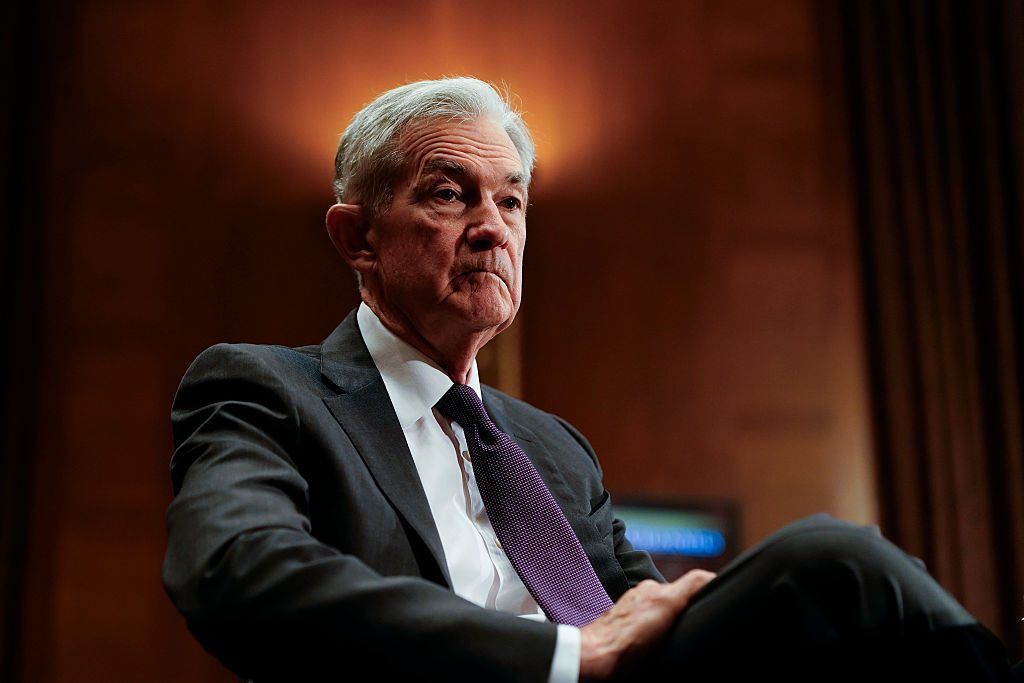
On Sunday, it was announced that US federal prosecutors had opened a criminal investigation into Federal Reserve chair Jerome Powell. In a highly unorthodox video message, Powell said it was related to testimony he had given to a Senate committee regarding the renovation of federal buildings. He also said he believed it was initiated by President Donald Trump because the Fed has thus far refused to cut interest rates. So, will this stand-off threaten the Fed’s independence?
The whole idea of central bank independence is premised on an idea that virtually all modern economists believe in: that it is a natural state of affairs. But it isn’t. It is a relatively new phenomenon and while the US has had it for longer than other countries, the Fed, in its current formation, has only existed for a little over 100 years. Also, its independence is enshrined in a much broader political goal. Unlike the European Central Bank, it is not just concerned about inflation, but also employment rates. Those who defend the principle of central bank independence claim that it delivers better results. But that’s not necessarily so.
As we have seen since the 2008 financial crisis and the pandemic, all central banks have struggled to tame inflation and create stable economies. Throughout this period and because of the turmoil, we have seen the return of politics and breakdown of consensus. Central bank independence worked when most agreed on what central banks should do to stabilise the economy. If society agrees that inflation is bad, then there’s no need to saddle the central bank with the whims and volatility of politics. That, however, has disappeared. Without that consensus, you cannot have independence. Because in politics, independence without consensus is tyranny.
Trump, for his part, does not agree with the consensus views on low inflation. He says he does, and he campaigns on it, but if he did care about low inflation he wouldn’t attack the Fed like this. As with other governmental departments, the President no doubt wants to challenge what he perceives as the progressive groupthink which is blocking his agenda. Yet it is certainly true that voters have lost trust in central banks and their independence. If they cannot solve economic problems as apolitical institutions, then it is natural for voters to think politicians should overhaul them and change their priorities. That in itself is not a draconian or authoritarian idea. Indeed, in a liberal society, it would be useful to have a democratic structure for central banks, where elected governments could have a say over what actually happens.
As for the US, it is likely that Trump’s actions will weaken the dollar and cryptocurrencies will play a destabilising role, allowing the Fed to issue more government debt. Naturally, investors will look for something robust, so we are likely to see a continued increase in gold and silver.
Time will tell whether this breakdown of consensus and the end of central bank independence will be a good or a bad thing for Western democracies. Even still, policymakers should quickly come to terms with this new reality.
This is an excerpt from UnHerd‘s Econoclasts podcast, edited for clarity.