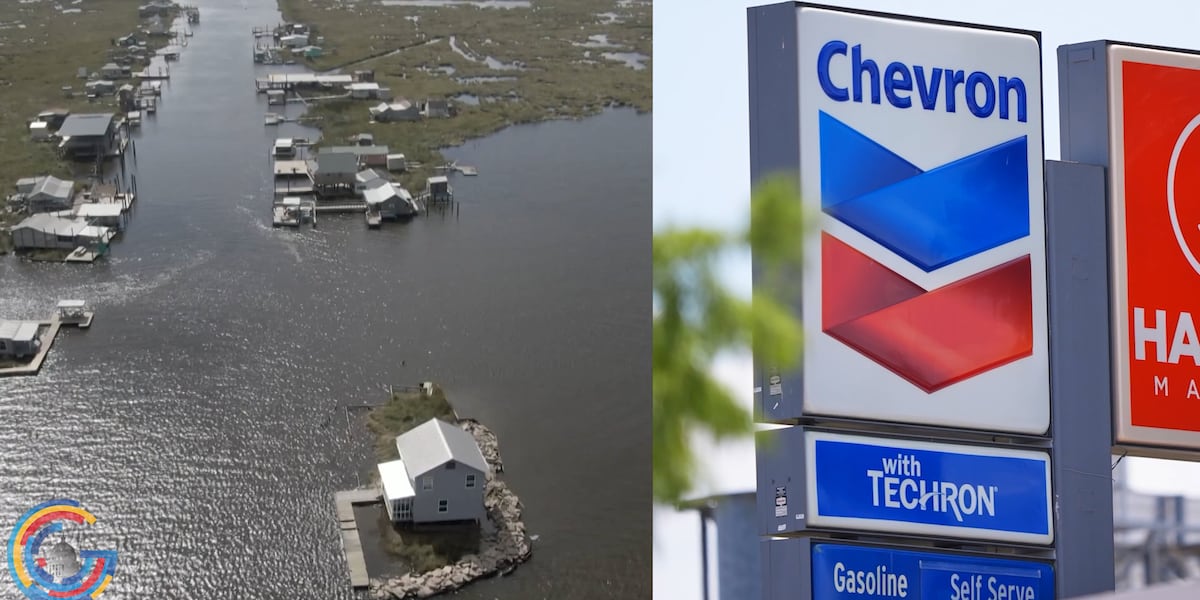
WASHINGTON (Gray DC) – The Supreme Court heard arguments on Monday in case that could be pivotal both for coastline communities and oil companies.
Before the high court Monday, justices heard arguments from local communities in Louisiana who sued oil companies for damaging their coast. But the key issue before the justices doesn’t have to do with the lawsuits themselves, but rather where they should be argued.
Before the Supreme Court Monday, Chevron squared off against Louisiana coastal communities over a case centering on alleged damage to wetlands along the Gulf coast.
It came before the justices after a state jury ruled that the oil company must pay $745 million for wetlands restoration in Plaquemines Parish, just south of New Orleans. But Chevron wants the case moved to federal court instead, which is typically friendlier for big oil. The company argued that because they had federal contracts to produce aviation fuel in Louisiana back in World War II that their case belongs in federal court.
Tommy Faucheux is the President of Louisiana Mid-Continent Oil and Gas Association:
“These companies then, as they have for decades, continue to lean in, to be part of the energy security and national security of this country. And so I think they these cases should be in federal court.”
But the state and local communities say the case is best left in Louisiana state courts, according to Louisiana Attorney General Liz Murrill:
“These are pure questions of state law. And the state has an interest in having its courts and ultimately its Supreme Court, who is the ultimate decision maker about the interpretation and application of state law.”
Some of the justices questioned Chevron’s argument, and openly asked just how far the oil companies could go if they rule in favor of them.
Chief Justice John Roberts:
“It’s hard to see where you stop. I mean, is it a butterfly effect? You know, the butterfly flaps its wings, it has the end result halfway around the world.”
Associate Justice Sonia Sotomayor:
“If we define it as capriciously as you do, I’m not sure what the stopping point would be or how we would limit the application of this case.
The case may have implications for other other lawsuits against oil companies for environmental damage.
Copyright 2026 Gray DC. All rights reserved.