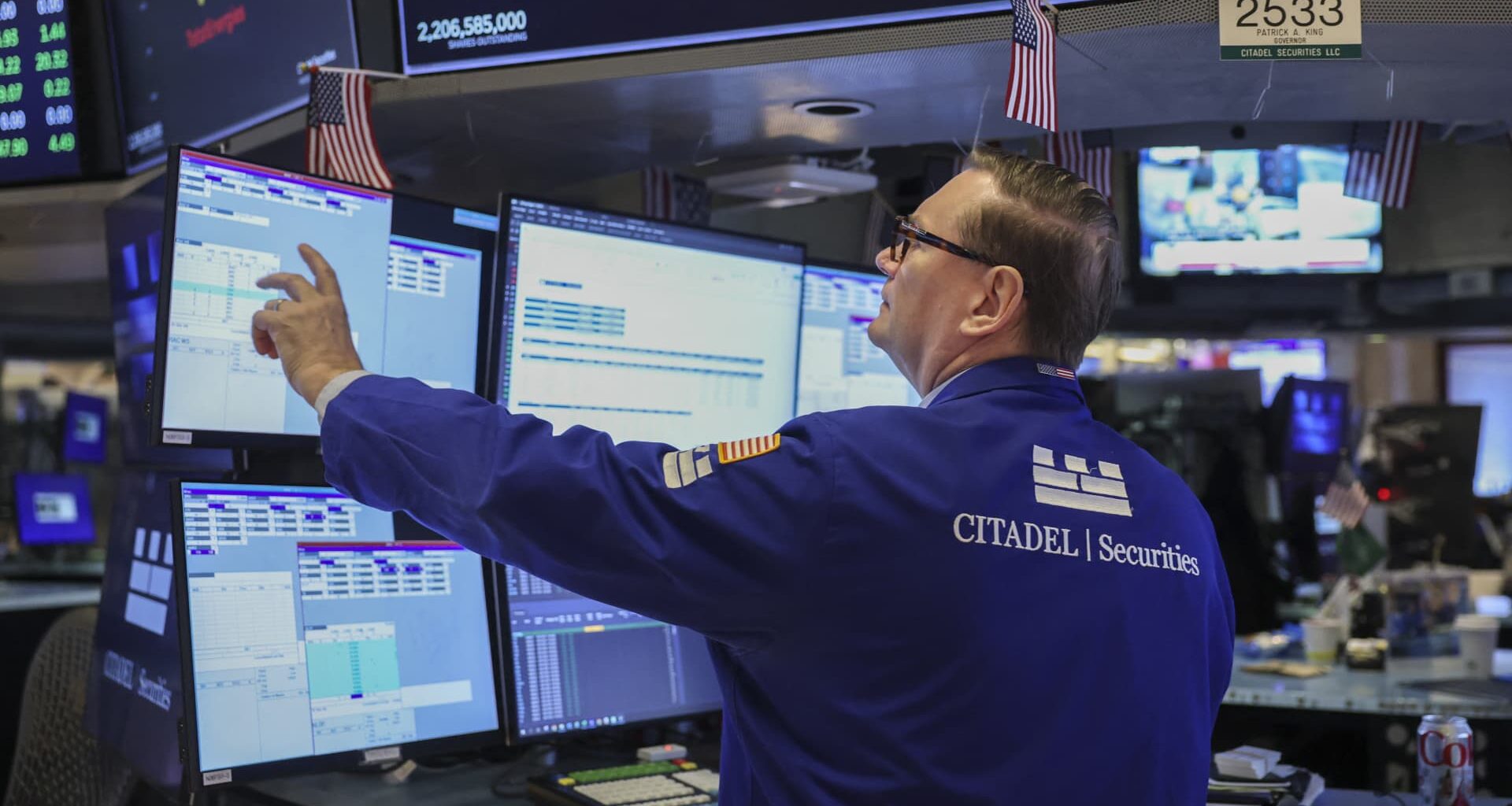
A trader works on the floor of the New York Stock Exchange (NYSE) in New York on January 12, 2026.
Angela Weiss | Afp | Getty Images
The S&P 500 was relatively unchanged on Tuesday as investors sold JPMorgan despite better-than-expected numbers and grappled with volatility from a flurry of President Donald Trump proposals floated in the past few days.
The broad-based index hovered around the flatline, while the Dow Jones Industrial Average shed 301 points, or 0.6%. The Nasdaq Composite rose 0.3%, led by a 7% jump in shares of Advanced Micro Devices and Intel after the stocks received upgrades at KeyBanc.
JPMorgan dipped 3%, even after the company’s fourth-quarter results beat on the top and bottom lines. While both companywide and equities trading revenue increased in the quarter, investment banking fees fell and missed expectations.
The company’s CFO, Jeremy Barnum, also signaled that the banking industry could push back against Trump’s call for a one-year 10% cap on credit card interest rates, which he declared late Friday. Goldman Sachs followed JPMorgan lower, declining more than 1%. Other financial stocks such as Mastercard and Visa traded down roughly 4% each, putting them among the day’s worst performers. The State Street Financial Select Sector SPDR ETF (XLF) and Invesco KBW Bank ETF (KBWB) were under pressure as well.
Trump’s demand for credit card price controls came amid a slew of other calls from the president last week, including that defense companies should not be permitted to issue dividends or stock buybacks and that large institutional investors should be banned from buying more single-family homes.
“There are real questions as to whether or not you know those changes can be affected out of the executive branch without Congressional involvement or approval,” said Tim Holland, chief investment officer at Orion. “The path forward isn’t necessarily clear.”
Trump also said Monday evening that Microsoft is going to announce changes that will ensure Americans won’t be met with rising utility costs as a result of its datacenter buildout endeavors. Shares were last down more than 1%.
Meanwhile, oil prices jumped after Trump canceled all meetings with Iran — a top OPEC producer — and told protesters that “help is on its way.” This comes just a day after he said that any country doing business with Iran will be subjected to a 25% tariff “on any and all business being done” with the U.S.
Stocks had received a bit of boost before pulling back earlier Tuesday after the December consumer price index report showed that core CPI — excluding food and energy — rose 0.2% on the month and 2.6% on the year, below the 0.3% and 2.8%, respectively, that economists polled by Dow Jones had estimated.
The monthly figure for headline inflation increased 0.3% in December, putting the annual rate at 2.7%. Both figures matched Dow Jones forecasts.
The CPI data came days after the December jobs report showed a somewhat weaker, yet stable, labor market, likely encouraging the Fed to hold off on interest rate cuts at their first meeting of the year later this month. Fed funds futures are pricing in two quarter point cuts this year, starting in June, according to the CME FedWatch tool.
Wall Street is coming off a record setting session, when the S&P 500 and Dow Industrials both hit all-time closing highs as investors looked past news of the Department of Justice’s criminal investigation into Federal Reserve Chair Jerome Powell. The Russell 2000 index of small company shares also reached an all-time high.
Trump knocked Powell yet again Tuesday, calling him either “incompetent” or “crooked” as concerns surrounding central bank independence remain.