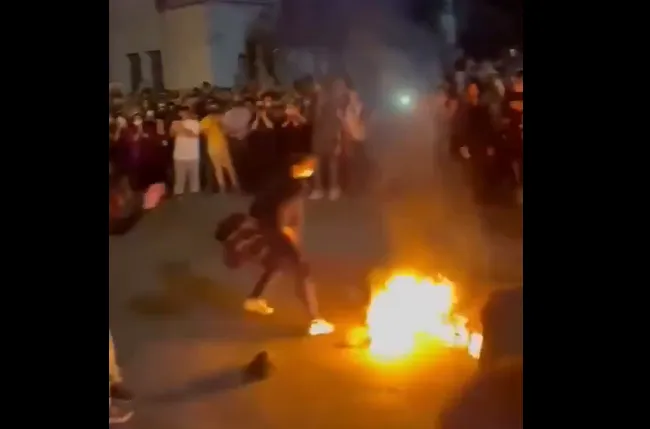
The recent wave of protests in Iran has drawn global attention, not merely because of their scale but because of the nature of the acts being carried out during these demonstrations. Images and videos circulating on social media show protesters setting fire to mosques and tombs, while some women are seen burning the burqa with cigarettes. To many observers familiar with Islamic culture and religious sensitivities, these acts raise profound questions about the identity, motivation, and ideological grounding of those involved.
In Islamic societies, mosques are not merely buildings; they are sacred spaces of worship, community, and spiritual refuge. Burning a mosque is considered an extreme act of desecration, one that even deeply disgruntled Muslim populations historically avoid. Similarly, while debates around women’s dress codes exist within Muslim societies, the burqa remains a religious and cultural symbol for millions. Muslim women may contest, reinterpret, or even abandon certain practices, but deliberately burning a burqa with cigarettes carries a symbolism that appears less like internal dissent and more like ideological provocation.
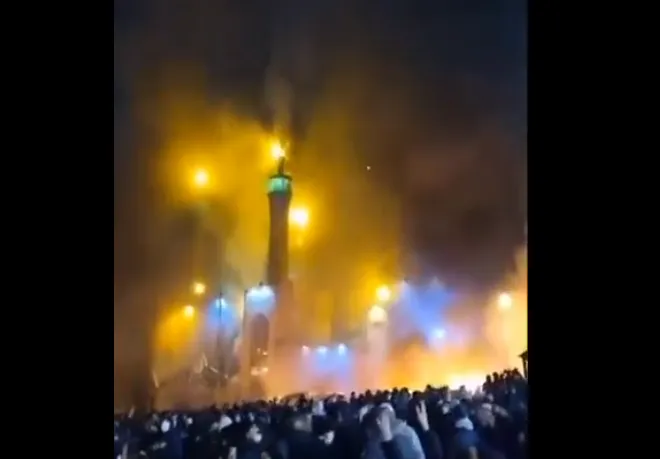 Protesters Set Mosque on Fire
These symbolic acts have led some analysts to argue that the protests cannot be understood purely as a spontaneous, indigenous uprising driven by Muslim masses. The argument put forward is that while Muslim men may commit acts of violence and Muslim women may defy norms in various ways, attacking the sanctity of mosques and deliberately humiliating religious symbols crosses a civilisational red line rarely breached from within. This perception has fuelled suspicions of external ideological engineering rather than organic public anger.
From the very early days of the protests, allegations emerged that foreign intelligence agencies—particularly Israel’s Mossad—were playing a direct role in shaping and amplifying unrest. These suspicions intensified dramatically on December 29, when the Mossad took the unprecedented step of openly addressing Iranians in the Persian language via its official Twitter account. In a highly provocative message, the agency urged people to take to the streets.
“Go out together into the streets. The time has come,” the Mossad wrote. It went even further, stating, “We are with you. Not only from a distance and verbally. We are with you in the field.”
This statement was extraordinary by intelligence community standards. Intelligence agencies typically operate in secrecy, relying on deniability and covert channels. An open acknowledgment—especially one implying physical presence on the ground—was interpreted by many as confirmation of direct operational involvement. It blurred the line between psychological warfare, information operations, and kinetic interference in another sovereign nation’s internal affairs.
This was not an isolated context. Just months earlier, in June, Israel had reportedly deployed hundreds of Mossad agents during a 12-day conflict that inflicted substantial damage on Iran’s strategic capabilities. According to multiple reports, the operation targeted Iran’s nuclear facilities, ballistic missile infrastructure, and air defense systems, and resulted in the killing of dozens of senior military and intelligence officials. That operation demonstrated Mossad’s deep penetration capabilities within Iran and its willingness to conduct aggressive operations on Iranian soil.
Against this backdrop, the protests appear less like an isolated domestic uprising and more like one component of a broader pressure campaign. This interpretation gains further weight when viewed alongside developments in U.S. military posture. Following renewed threats by former U.S. President Donald Trump against Iran, military observers and flight tracking services reported a surge in American military aircraft movements. Dozens of U.S. air-refueling tankers and heavy transport aircraft—including C-5 and C-17s—were observed departing from U.S. bases and from a U.S. airbase in the United Kingdom, heading east toward presumed Middle Eastern deployment points.
Such large-scale logistical movements are rarely routine. Historically, they have preceded or accompanied major military escalations. To critics, this suggests that Washington and Tel Aviv may be preparing for coordinated action against Iran, using internal unrest as diplomatic and moral justification.
Within this framework, the protests are viewed as serving a dual purpose: weakening Iran internally while providing external actors with a narrative of regime illegitimacy. The argument is that intelligence agencies such as Mossad, possibly in coordination with the CIA, are backing and amplifying these protests to create a pretext for further sanctions, covert operations, or even direct military confrontation.
This does not mean that Iran lacks genuine internal problems or that public dissatisfaction is entirely manufactured. Economic hardship, political repression, and social restrictions have undeniably created frustration among segments of Iranian society. However, the concern raised by critics is that legitimate grievances are being hijacked, radicalised, and symbolically weaponised by foreign actors pursuing strategic objectives.
The burning of mosques and religious symbols, the unprecedented public statements by Mossad, the recent history of covert Israeli operations inside Iran, and the visible military preparations by the United States together form a pattern that cannot be ignored. Whether one agrees with this interpretation or not, it underscores a crucial reality of modern geopolitics: protests are no longer just expressions of public anger. They have become arenas of hybrid warfare, where symbols, social media, intelligence agencies, and military power intersect—often with consequences far beyond the streets where demonstrations begin.
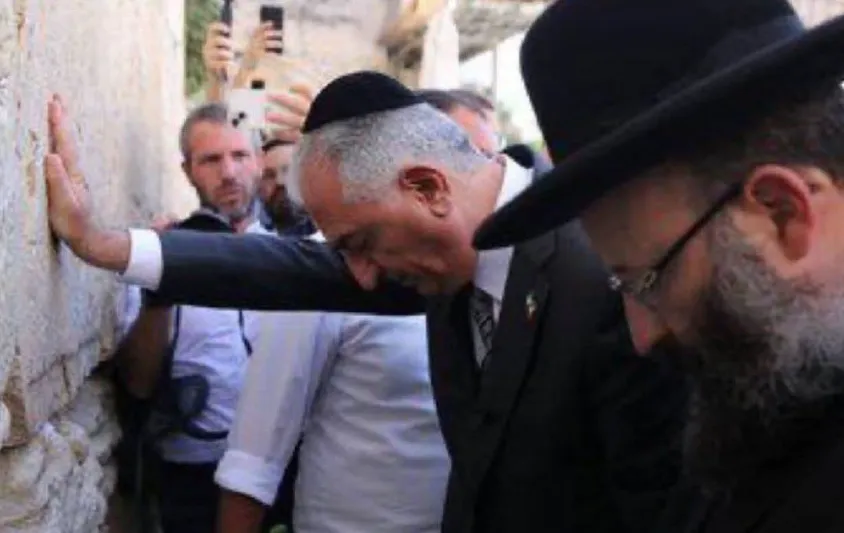 Reza Pahlavi, made his first official visit to Jerusalem.
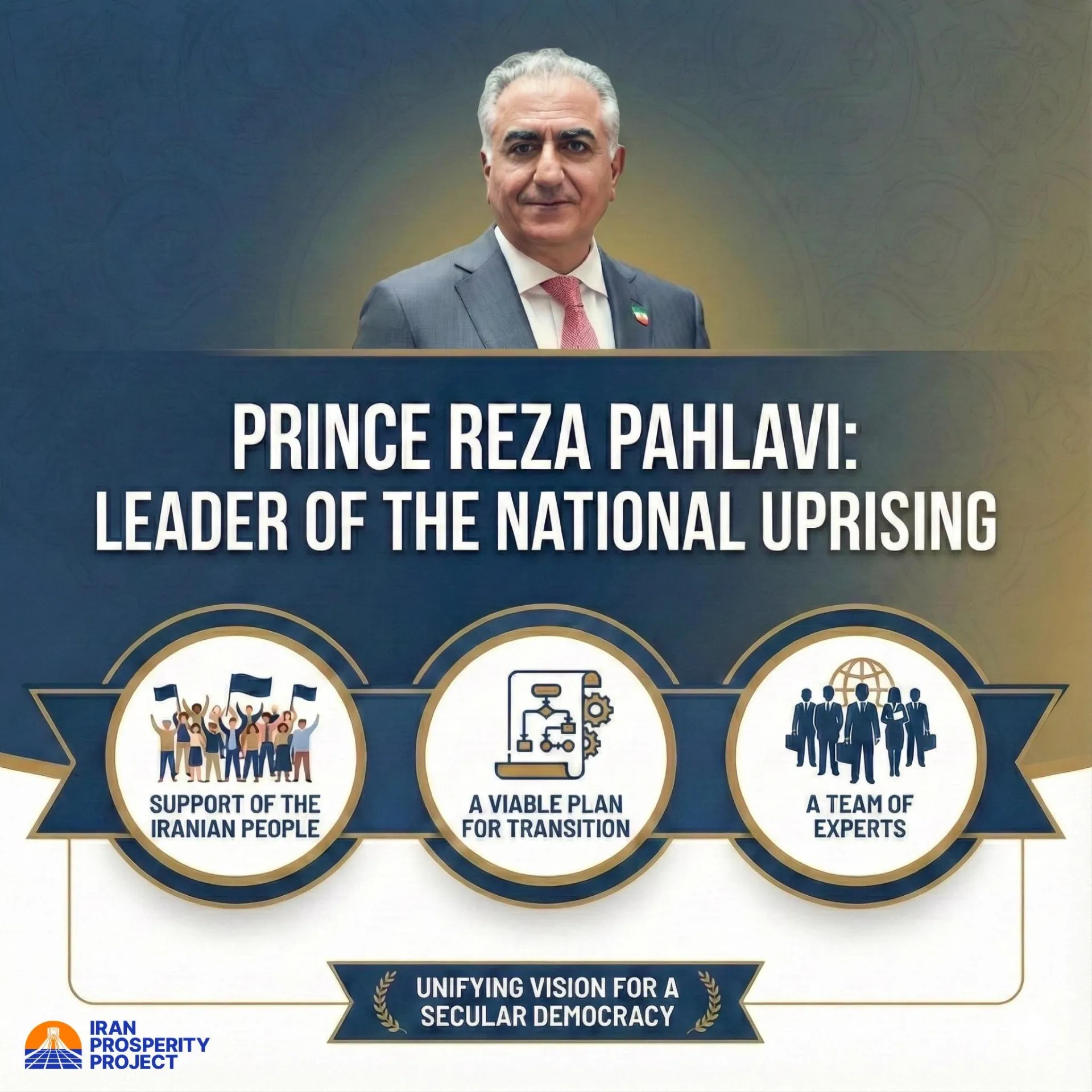
Moreover US–Israeli backing of Reza Pahlavi, widely seen as aligned with Mossad interests, raises serious questions about who is truly driving the unrest in Iran. The pattern of arson attacks and the killing of police officers point to forces operating beyond spontaneous public protest, suggesting external orchestration rather than an organic movement.