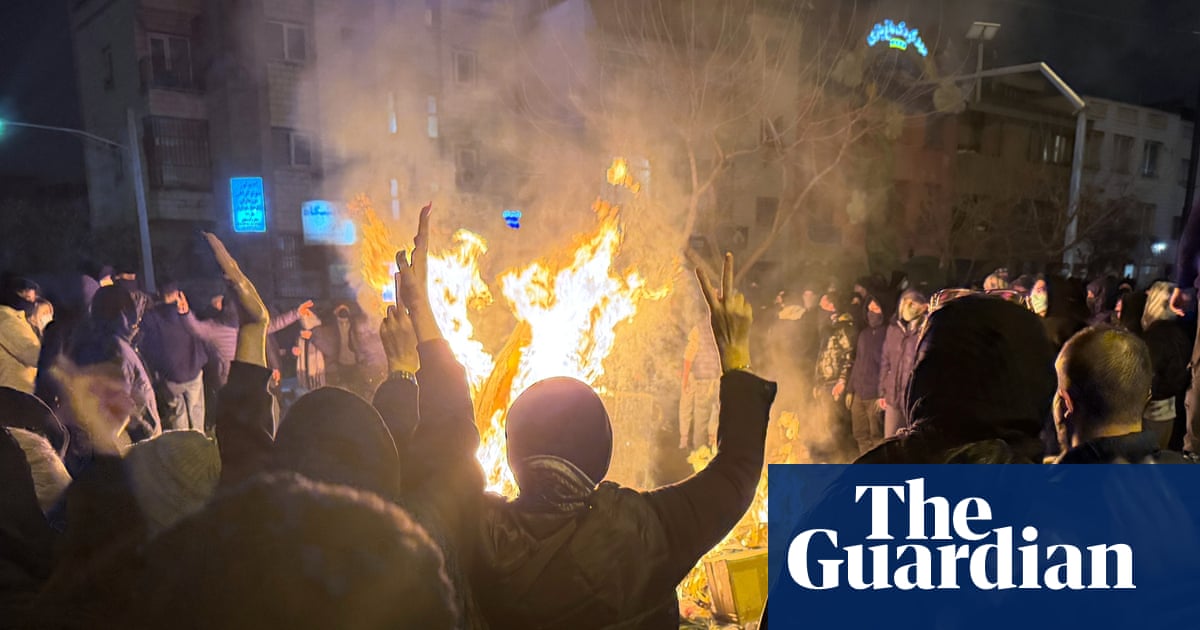
Escalating protests have swept through Iran in recent weeks, sparked by an economic crisis that has evolved into a widespread anti-government movement, and one of the most destabilising episodes of unrest the Iranian regime has faced in years.
Despite the internet blackout, reports have emerged that at least 2,000 people have been killed during the demonstrations, with hundreds of protesters sustaining gun shot wounds to the head and eyes. The Iranian government has accused the US of seeking to manufacture a pretext for military intervention, as US president Donald Trump has pledged that “help is on its way”.
Here is what we know so far:
Donald Trump has said the US “will take very strong action” against Iran if the regime starts to execute people as part of their crackdown on the spiralling protests. Trump told CBS News: “When they start killing thousands of people – and now you’re telling me about hanging. We’ll see how that’s going to work out for them.”
Erfan Soltani, a 26-year-old man arrested in connection with protests in the city of Karaj is scheduled to be executed on Wednesday, according to the Iranian Kurdish rights group, Hengaw. Authorities had told the family that the death sentence was final, Hengaw reported, citing a source close to the family.
The US president has urged the protests to continue, and again suggested US military action could follow. “Iranian Patriots, keep protesting – take over your institutions!!! … help is on its way,” Trump said in a post on Truth Social on Tuesday, a day after the White House press secretary said airstrikes were among “many, many options” the US president was considering.
More than 2,000 people have been killed in the protests – more than 90% of whom were demonstrators – and over 16,700 people have been arrested, the US-based Human Rights Activists News Agency (HRANA) said.
Doctors in Iran have described overwhelmed hospitals and emergency wings overflowing with protesters who had been shot. One ophthalmologist in Tehran has documented more than 400 eye injuries from gunshots in a single hospital.
The US state department has said US citizens should leave Iran now and “if safe to do so, consider departing Iran by land to Armenia or Türkiye”. The US virtual embassy for Iran says citizens should “plan alternative means of communication” due to “continued internet outages” and “have a plan for departing that does not rely on US government help”.
Donald Trump announced that he was cancelling meetings with Iranian officials “until the senseless killing” stops, signalling a possible breakdown in de-escalation efforts. Trump is expected to receive a briefing on Tuesday night on the scale of casualties in Iran.
Elon Musk’s SpaceX is offering people in Iran free internet through Starlink’s satellite service, according to Bloomberg News, as the internet blackout in the country surpassed the five-day mark.
Trump’s envoy Steve Witkoff met in secret with Reza Pahlavi, the exiled former Iranian crown prince, last weekend, Axios reported. A senior US official told the outlet the pair discussed the protests. In previous messages that have been blocked by the Iranian government internet shutdown, he has said that he is ready to lead a transition.
In response to Trump’s social media post that “help is on the way,” Iran’s UN ambassador Amir Saeid Iravani said the US president was inciting violence, threatening the country’s sovereignty and security and seeking to destabilise the government. “The United States and the Israeli regime bear direct and undeniable legal responsibility for the resulting loss of innocent civilian lives, particularly among the youth,” he wrote in a letter to the UN security council.
Russia on Tuesday condemned “subversive external interference” in Iran’s internal politics, saying any repeat of last year’s US strikes would have “disastrous consequences” for the Middle East and international security.
Britain, France, Germany and Italy all summoned Iranian ambassadors in protest over the crackdown. “The rising number of casualties in Iran is horrifying,” European Commission president Ursula von der Leyen posted on X. Underscoring international uncertainty over what comes next in Iran, which has been one of the dominant powers across the Middle East for decades, German Chancellor Friedrich Merz said he believed the government would fall.