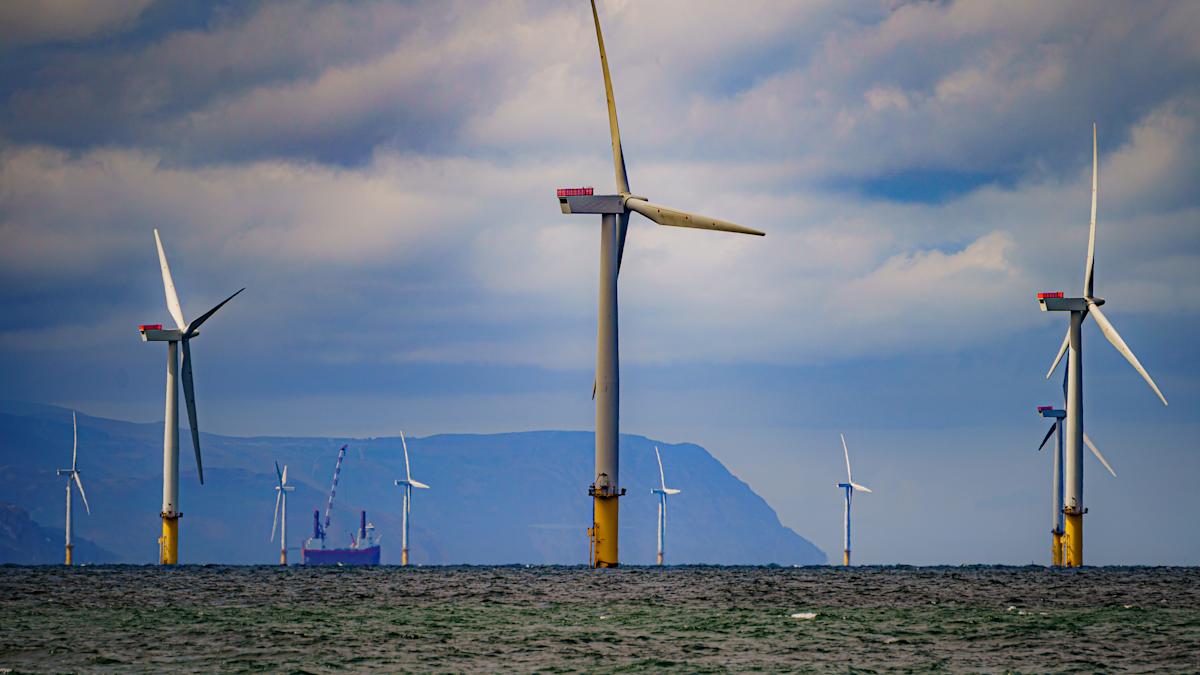
The Government has secured record amounts of offshore wind power in an auction that officials insisted is good for consumers and investment in the UK.
The latest round of contracts under flagship renewable energy auctions is delivering 8.4 gigawatts (GW) of offshore wind – the amount experts have said was needed this year to keep the Government on track to meet its “clean power” by 2030 pledge.
They comprise six new wind farm projects around the country, which will be paid £91 per megawatt hour on average for the power they generate, including Berwick Bank, in the North Sea – the first new Scottish scheme since 2022, and the largest planned offshore wind project in the world.

Energy Secretary Ed Miliband (PA)
Two others are at Dogger Bank South, off the coast of Yorkshire, and Norfolk Vanguard, off the East Anglian coast – two of the largest offshore wind farms in the world.
Awel Y Mor in the Irish Sea is the first Welsh project to win a contract in more than a decade.
The auction round has also backed two much more expensive schemes to develop floating offshore wind technologies, which see turbines mounted on floating platforms rather than fixed foundations.
The Department for Energy Security and Net Zero (DESNZ) said the new projects would generate enough electricity to power 12 million homes, deliver around £22 billion in private investment, support 7,000 jobs and help the UK tackle the climate crisis.
The price for offshore wind was agreed at 40% lower than the cost of building and operating a new gas power plant, according to a key industry metric.
Energy Secretary Ed Miliband said: “With these results, Britain is taking back control of our energy sovereignty.
“This is a historic win for those who want Britain to stand on our own two feet, controlling our own energy rather than depending on markets controlled by petrostates and dictators.”
Mr Miliband said hitting 8.4GW marked a “monumental step” towards Labour’s 2030 goal to remove almost all fossil fuels from the UK’s electricity supply
Under the auctions, developers bid to secure a guaranteed rate – or a strike price – they can charge for each megawatt hour (MWh) of power they generate.
If the market price of electricity falls below that, companies receive top-up payments, but if the price is higher, companies have to pay back the difference, with consumers paying the top-up and receiving the benefits back on bills.
The cost of offshore wind, seen as a key part of delivering the 2030 target, has risen in the last few years – after years of falling prices and booming development.
With this latest auction, the Government has secured a strike price of £91 per MWh on average or just over £65 in the commonly used benchmark of 2012 prices.
Story Continues