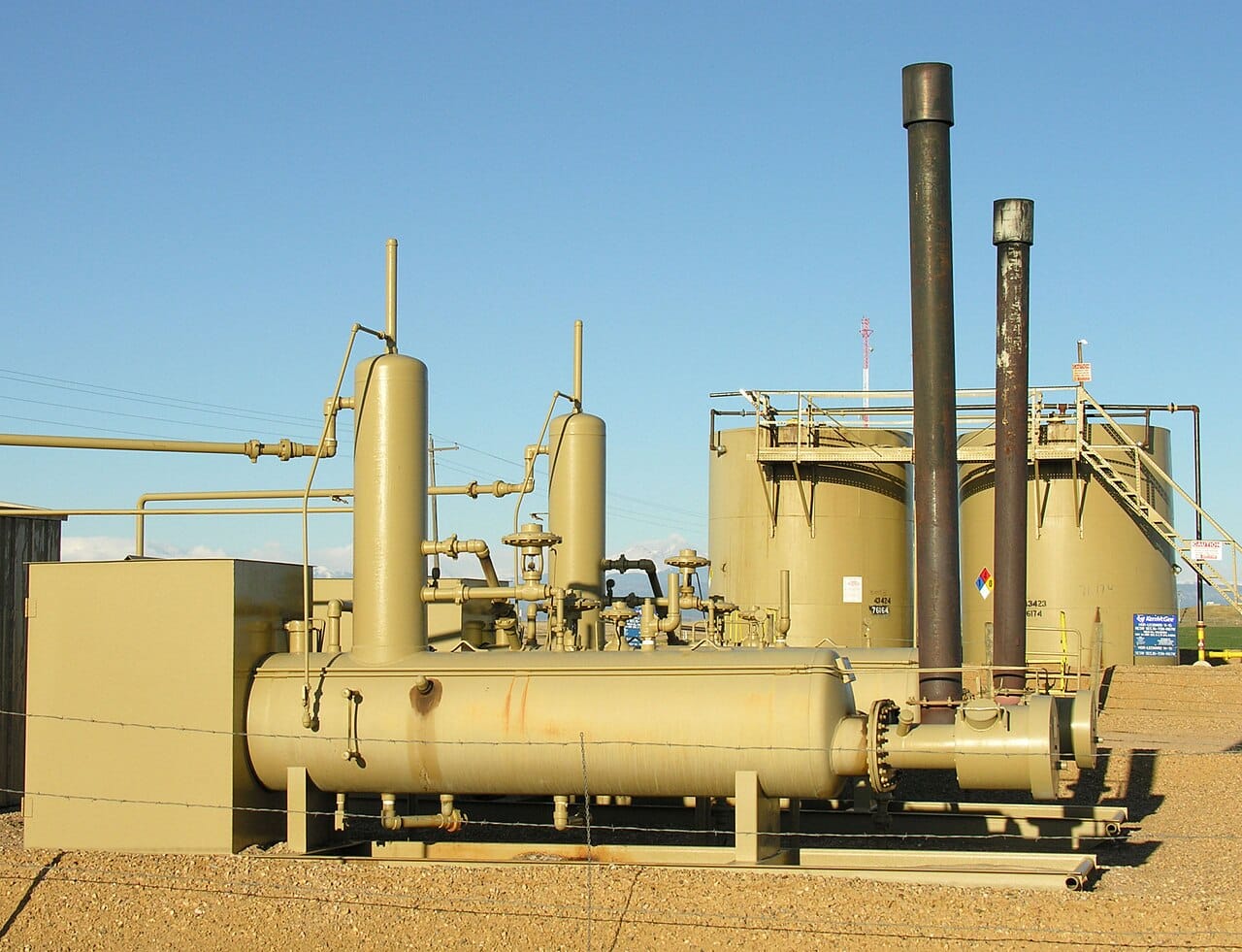
The Thessaloniki–Skopje pipeline restart reduces truck traffic and strengthens Greece’s Balkan fuel exports. Credit: Wikimedia Commons / Greg Goebel / CC BY SA 2.0
After more than a decade of inactivity, the Thessaloniki – Skopje oil pipeline has officially returned to operation, marking a notable shift in Greece’s energy and logistics positioning in Southeast Europe. The restart took place on New Year’s Eve, reviving infrastructure that had been dormant since 2013 and reintroducing a direct cross-border route for petroleum product exports into the Western Balkans.
Known as the Vardax pipeline, the system links HelleniQ Energy’s refinery in Thessaloniki with OKTA’s facilities in North Macedonia, creating what the company describes as a “vertical supply corridor” for traditional fuels. The reopening is widely seen as a strategic move, particularly as diesel remains one of the most important fuels across the broader Balkan region.
A pipeline built for scale: Capacity and product range
The Vardax pipeline is designed to transport up to 2.5 million tons per year of crude oil and refined petroleum products. Its portfolio includes key fuels such as diesel, kerosene, and gasoline, supporting multiple end markets where demand for dependable supply and stable pricing remains critical.
For Greece, the infrastructure offers an efficient export channel that complements existing maritime and road-based distribution options. For neighboring economies, it provides an additional supply line that reduces reliance on longer, more expensive transport chains.
Why the Thessaloniki – Skopje pipeline restart matters for Greece and the region
While the pipeline’s primary destination remains North Macedonia, the revival strengthens fuel access beyond a single market. The corridor also supports distribution toward Kosovo, southern Serbia, and Bulgaria, reinforcing Greece’s role as a practical logistics gateway into the Balkans.
This expanded reach increases Greece’s commercial influence in regional energy trade, particularly in sectors where conventional fuels still dominate transport and industrial activity. By enabling steady product flows through fixed infrastructure, rather than fragmented road delivery, the pipeline improves both reliability and scale.
Executive confirmation and early shipments
HelleniQ Energy CEO Andreas Shiamisis confirmed the restart during a company event earlier this week. According to the company, the pipeline has already carried its first shipment in recent days, with a second delivery expected shortly.
Shiamisis emphasized that the route functions as a key supply channel for traditional fuels, with diesel positioned as the primary product due to its importance in Balkan transport networks. He also highlighted that the pipeline will help expand exports to multiple neighboring markets, strengthening Greece’s regional footprint in energy supply.
Reduced truck traffic and lower environmental pressure
Beyond geopolitics and export volumes, the pipeline’s return delivers clear logistical and urban benefits, especially for Thessaloniki. Over the past 13 years, fuel deliveries had largely depended on tanker trucks, creating sustained pressure on road infrastructure and adding to congestion in western parts of the city.
Pipeline transport offers a structurally different approach: fewer heavy vehicles on major roads, improved traffic flow, and lower emissions associated with road freight. In an era of stricter environmental expectations and growing urban mobility challenges, this is a meaningful operational advantage.
The Long Road Back: From 2002 expansion to 2013 shutdown
The Thessaloniki – Skopje pipeline was originally built in 2002 by Greece’s construction firms. It followed the acquisition of 81.51% of OKTA, the company that operated what was then North Macedonia’s only refinery, by a subsidiary of the former Hellenic Petroleum group (now known as HelleniQ Energy).
The system operated normally for years, until 2013, when the company chose to halt refining activity at OKTA, citing unfavorable economics. That decision effectively removed the commercial basis for the pipeline’s continued use, leading to its suspension.
Disputes, arbitration, and a key financial turning point for the Thessaloniki – Skopje pipeline
Efforts to restore operations faced persistent delays driven by unresolved legal and financial issues between HelleniQ Energy and the government of North Macedonia. A major sticking point involved contractual commitments tied to the purchase of at least 500,000 tons of oil annually, obligations that were reportedly not met.
The dispute escalated to international arbitration at the Interational Criminal Court (ICC) in Paris, which ruled in favor of HelleniQ Energy and awarded the company $12.98 million in damages. Although the ruling strengthened the company’s position, the prolonged failure to settle the payment contributed to years of friction and slowed progress toward the final approvals required for full reactivation.