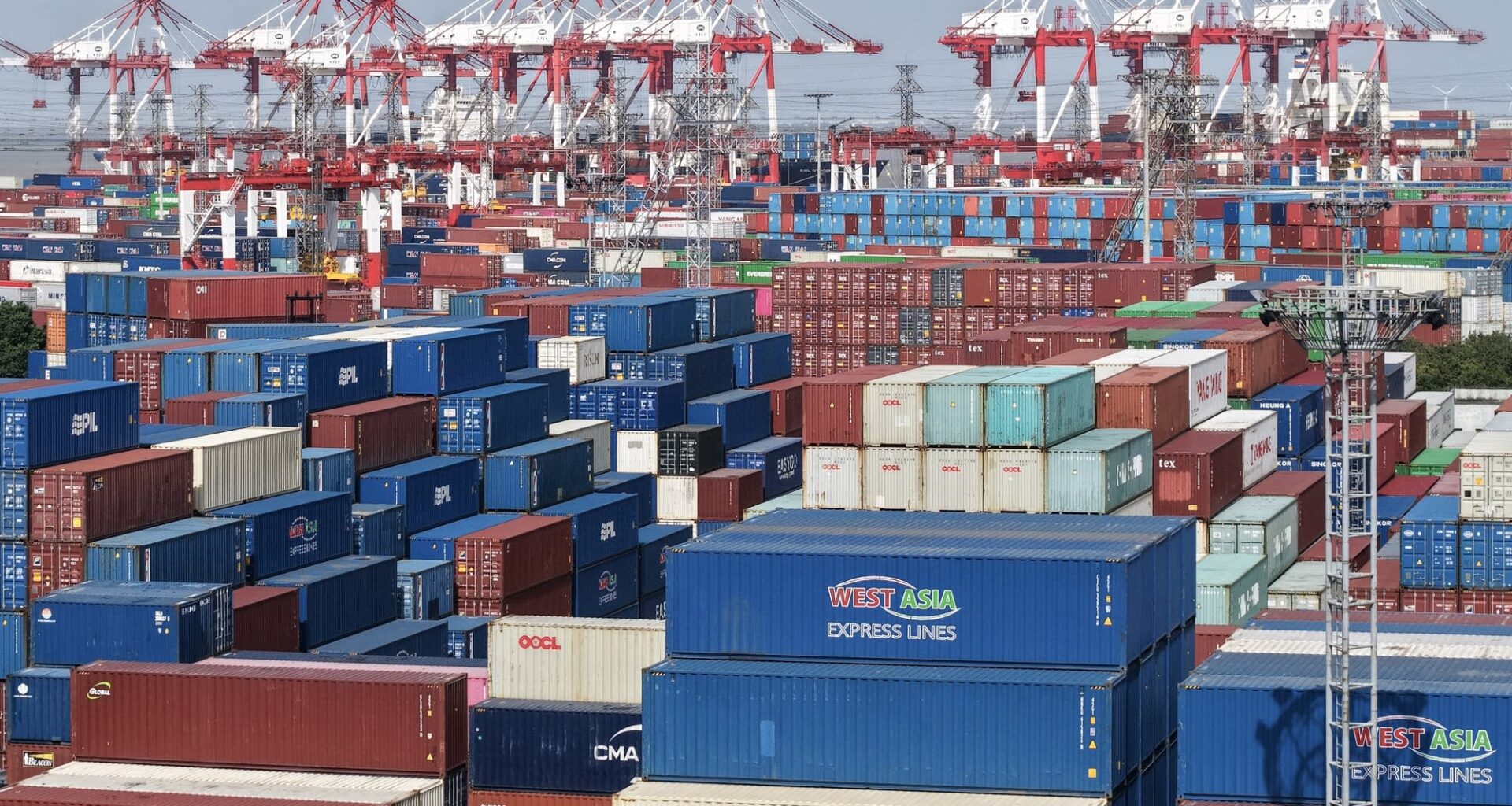
After the U.S., China has the world’s second-biggest economy. It is also the world’s top exporter, with a sizable lead over the U.S.
And those exports have been growing by leaps and bounds — in spite of all of the tariffs that the Trump administration has imposed on Chinese exports to the U.S., in an effort to reduce our trade deficit with China.
While those import taxes seem to be shrinking U.S. trade with China — and its accompanying trade deficit — China’s trade surplus with the world actually grew last year, by a whopping 20%. Chinese exports grew to pretty much everyplace in the world except the U.S.
China’s trade boom matters to U.S. businesses and consumers, said Jennifer Lee, senior economist at BMO Capital Markets Economics.
“I think everyone should be always concerned about China,” she said.
Lee said China is so dominant in producing consumer goods, rare-earth minerals, and more, that its costs of labor and production set the bar against which other countries — including the U.S. — have to compete.
But now, with tariffs boosting the cost of Chinese imports, consumers are facing more price inflation, said Gary Hufbauer, senior fellow at the Peterson Institute for International Economics.
“The things they will notice, are all the stuff in Target or Walmart: furniture, clothing, electronics, a lot of that stuff comes from China. Prices are now somewhat higher than they would otherwise be,” he said.
Also, Hufbauer said U.S. factories are hurting because of the decline in trade with China.
“A lot of imports from China are intermediate goods which go into producing manufactured goods. The firms can’t get them, and they’re more expensive,” he said.
And as a result? Manufacturing employment was down in the U.S. in 2025, Hufbauer said.
U.S. agriculture is suffering, too — from the decline in exports due to China’s trade retaliation.
“It’s very painful for farmers. Especially soybeans — China doesn’t just buy from the U.S., they buy from Brazil or other countries,” Hufbauer said.
Another reason all of this matters is that China is the U.S.’ biggest competitor in global markets.
And in that race, China appears to be winning, by selling more to Africa, South America, Asia, the Middle East. Its biggest companies now dominate in the technologies electrifying the planet, said BMO’s Jennifer Lee.
“They’re still way ahead of everybody else in terms of production of anything clean energy-related,” she said.
Plus, China isn’t competing so much on its low cost of production anymore, said Columbia Business School climate economist Gernot Wagner.
“China is no longer the cheapest for labor. China is the place for advanced manufacturing. Robotics is certainly something China dominates these days,” he said.
That used to be the U.S., Wagner said.
Related Topics